
As an affiliate, we may earn a commission from qualifying purchases. We get commissions for purchases made through links on this website from Amazon and other third parties.
Cold press juicers sound ideal on paper: better yield, less foam, smoother juice, and a more premium feel than fast centrifugal machines. The real question is whether those benefits are worth the slower pace, larger footprint, and higher price.
That is why the best cold press juicer is not the same for everyone. Some buyers want hands-free batch loading. Others just want less foam and better greens performance without hating the cleanup afterward.
If you are still deciding whether you even need this category, read Cold Press Juicer Buying Guide and Are Juicers Worth It? after this. If smoothies are still your main habit, the best blenders for smoothies may be the better place to start.
What Makes a Good Cold Press Juicer
A good cold press juicer should extract juice with less foam, handle produce without constant fighting, and clean up easily enough that you will actually use it more than twice. Yield matters, but so do hopper size, chute design, pulp texture, and whether the machine fits your kitchen.
That last point matters more than people admit. Slow juicers are attractive because they promise a better juice experience, but if setup and cleanup feel like work every time, the machine loses value fast.
Quick Picks
- Best Overall: Nama J2 Cold Press Juicer for hands-free loading and strong all-around home use.
- Budget Pick: Kuvings AUTO10 Cold Press Juicer for large hopper convenience and quieter juicing.
- Premium Pick: Hurom H70 Cold Press Juicer for easier cleanup and a more refined low-pulp setup.
- Best for Daily Use: Omega H3000D Cold Press Juicer for straightforward slow-juicing habits.
- Best Value: Cold Press Juicer Machine with 6.5-Inch Feed Chute for buyers who want a wider chute and multi-use positioning at a lower entry point.
Best Overall
Budget Pick
Premium Pick
Best for Daily Use
Best Value
Comparison Table
| Product | Best For | Key Strength | Main Tradeoff |
|---|---|---|---|
| Nama J2 Cold Press Juicer | High-convenience slow juicing | Self-feeding hopper and hands-free workflow | Premium price and bigger footprint |
| Kuvings AUTO10 Cold Press Juicer | Bigger batch prep | Huge hopper and quieter operation | Still a large machine for home kitchens |
| Hurom H70 Cold Press Juicer | Easier cleanup | Strainer-free cleanup angle with compact premium build | Price stays high for a smaller-capacity buyer |
| Omega H3000D Cold Press Juicer | Simple daily use | Slow masticating juicing with smoother low-foam positioning | Less flashy convenience than self-feeding rivals |
| Cold Press Juicer Machine 6.5-Inch Feed Chute | Lower-cost entry into slow juicing | Wide chute and multi-use claims | Brand depth and long-term confidence are thinner |
Quick Decision Guide
- Pick Nama J2 if you want the easiest high-end home experience and like batch loading.
- Pick Kuvings AUTO10 if hopper size and low-prep loading matter most.
- Pick Hurom H70 if cleanup is your biggest barrier to slow juicing.
- Pick Omega H3000D if you want a simpler daily-use slow juicer from a known juicing brand.
- Pick the 6.5-inch feed chute model if you want a lower-cost wide-chute option and accept more uncertainty.
Skip this category if speed matters more than juice texture, or if you mostly want whole-fruit drinks. In that case, the best juicer for smoothies and juice or the best smoothie maker may fit better.
Top Picks
1 / 5
Nama J2 Cold Press Juicer

Hopper
Self-feeding wide-mouth hopper
Workflow
Hands-free recipe loading
Juice Style
Low-foam slow-juicing positioning
Use Case
Batch-friendly home juicing
Tradeoff
Premium pricing and larger footprint
The Nama J2 leads because it addresses the biggest slow-juicer pain point: constant feeding and babysitting. The self-feeding hopper lets you load more produce at once, which makes the machine feel closer to a useful kitchen tool and less like a hobby project.
That convenience is the real advantage. Cold press juicers already ask you to accept slower speed in exchange for texture and yield. A hands-free design makes that trade feel more reasonable. If you plan to juice often, that matters more than tiny spec differences.
Why It Wins:
- Self-feeding design lowers the effort barrier.
- Better fit for recipe batches and busier routines.
- Strong premium positioning around yield and lower waste.
What To Keep In Mind:
- Expensive for a first juicer.
- Counter space and cleanup still matter, even with better workflow.
Bottom Line: Choose this if you want a premium cold press juicer that solves more of the day-to-day hassle than most rivals.
2 / 5
Kuvings AUTO10 Cold Press Juicer

Hopper
100 oz batch hopper
Motor
240W slow-juicing motor
Noise
Quiet operation positioning
Use Case
Larger home juice prep
Tradeoff
Bulky system for smaller kitchens
Kuvings gets the budget spot mostly because it brings big-hopper convenience into the conversation without making the whole category feel as exclusive as Nama. The 3-liter hopper, automatic cutting support, and quieter workflow make batch juicing more approachable.
It is still not truly cheap in an absolute sense. Cold press juicers rarely are. But relative to the high-end premium lane, this gives you a lot of the convenience story without forcing you into the most expensive option first.
Why It Wins:
- Very large hopper reduces ingredient babysitting.
- Quiet-use angle helps if morning noise matters.
- Better value than many premium self-feeding machines.
What To Keep In Mind:
- Large hopper means large machine.
- Better for committed juicers than occasional dabblers.
Bottom Line: Buy this if you want hands-free-style convenience and larger batch loading without going straight to the priciest option.
3 / 5
Hurom H70 Cold Press Juicer
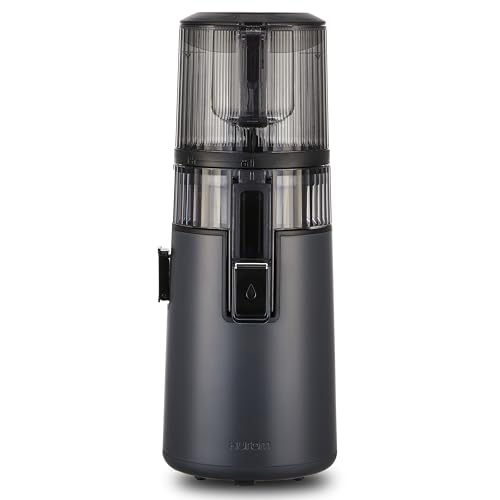
Cleanup
Strainer-free easy-clean design
Style
Self-feeding compact premium build
Juice Texture
Low-pulp premium juicing angle
Use Case
Buyers who hate scrubbing mesh strainers
Tradeoff
High price for a convenience-focused feature set
Hurom stands out because it attacks the cleanup issue directly. The strainer-free easy-clean system is designed to avoid the mineral buildup and scrubbing that make many slow juicers annoying to own.
That is a real advantage if cleanup is what has kept you from using juicers consistently. Plenty of people like the idea of slow juicing and then stop because they hate washing screens. Hurom's value is not just juice quality. It is making ownership more realistic.
Why It Wins:
- Cleanup story is stronger than most cold press rivals.
- Refined premium build with self-feeding style convenience.
- Better fit for buyers who want low-friction ownership.
What To Keep In Mind:
- You are paying heavily for convenience and design refinement.
- Still best for people who know they will juice often.
Bottom Line: Pick this if cleanup is your biggest blocker and you want a premium machine that feels easier to live with.
4 / 5
Omega H3000D Cold Press Juicer

Motor
150W slow masticating motor
Speed
90-110 RPM range
Extraction
Triple-stage auger positioning
Juice Style
Smooth, lower-foam daily juice
Tradeoff
Less convenience drama than newer self-feeding machines
Omega gets the daily-use position because it feels like the straightforward slow juicer in the group. It is built around the classic reasons people buy this category: slower extraction, smoother juice, and better yield framing than fast centrifugal machines.
That simplicity can be a strength. Not everyone needs the biggest hopper or newest convenience concept. Some buyers just want a recognizable juicing brand and a machine they can use regularly without overthinking the purchase.
Why It Wins:
- Straightforward slow-juicing feature set.
- Strong daily-use fit if you already know you want masticating style.
- Easier to understand than more feature-heavy rivals.
What To Keep In Mind:
- Does not remove as much prep friction as self-feeding designs.
- Slower workflow is still part of the deal.
Bottom Line: Choose this if you want a more classic cold press juicer that supports steady routine use without chasing every premium feature.
5 / 5
Cold Press Juicer Machine 6.5-Inch Feed Chute

Chute
6.5-inch large feed chute
Use Case
Whole fruits and vegetables with less chopping
Extras
Multi-use positioning for juice, nut milk, and sorbet
Cleanup
Fewer-parts pitch
Tradeoff
Lower confidence than category-defining brands
This wide-chute model lands in the value spot because it tries to reduce one of the worst parts of home juicing: produce prep. A bigger feed chute and whole-produce angle can make a cheaper machine feel more usable than a technically better machine that demands more chopping every time.
The tradeoff is confidence. Compared with Nama, Kuvings, Hurom, or Omega, this kind of listing carries less brand reassurance. That does not make it automatically bad, but it does make it a more cautious recommendation.
Why It Wins:
- Wide chute lowers prep friction.
- Multi-use claims make the machine feel more versatile.
- Better entry point if you want to try cold press style first.
What To Keep In Mind:
- Long-term trust is thinner than with the established names.
- Value only works if you are comfortable with more brand uncertainty.
Bottom Line: Buy this if you want a lower-cost wide-chute entry into slow juicing and you are comfortable being a little less brand-loyal.
How to Choose the Right Cold Press Juicer
Start with your patience level
Cold press juicers are not for impatient use. They make more sense when you care about juice texture, lower foam, and produce yield enough to tolerate slower prep.
Focus on workflow, not just nutrient claims
The nutrition case around cold press versus other methods is more mixed than marketing often suggests. In real home use, hopper size, cleanup, and prep time usually matter more than hype about miracle nutrient differences.
Know what you juice most
Leafy greens, celery, and mixed produce favor stronger slow-juicer designs. Straight citrus use does not require this category at all. That is where a hand juicer for oranges can make more sense.
Be honest about your real habit
If you mostly want blended breakfasts, a juicer may not improve your life much. The best juicer for smoothies and juice or the best smoothie maker may give you more practical flexibility.
Frequently Asked Questions
Are cold press juicers really better?
They are usually better for lower-foam juice, smoother texture, and produce yield. They are not automatically better for speed, convenience, or value.
Is a cold press juicer worth it for home use?
Yes, if you plan to juice often and care about the juice experience enough to accept slower prep and higher cost.
Which cold press juicer is easiest to use?
The Nama J2 is the easiest all-around pick here because the self-feeding hopper reduces constant produce feeding.
Which cold press juicer is easiest to clean?
The Hurom H70 has the strongest cleanup angle in this group because it is built around a strainer-free easy-clean design.
Are cold press juicers better for greens?
They are usually a better fit than basic centrifugal machines when greens, celery, and lower-foam extraction matter.
Should I buy a cold press juicer or a centrifugal juicer?
Buy cold press if you want smoother juice and higher yield and accept slower work. Buy centrifugal if speed, lower cost, and quick single-glass use matter more.
If you are still deciding whether juicing fits your kitchen at all, start with the cold press juicer buying guide before choosing a machine. If you mostly juice citrus, a hand juicer for oranges may be easier to live with.