
As an affiliate, we may earn a commission from qualifying purchases. We get commissions for purchases made through links on this website from Amazon and other third parties.
Smoothies for high blood pressure should be built around fruits, vegetables, fiber, potassium-rich foods, and low-sodium ingredients. A smart blend can fit a DASH-style eating pattern, but it should not replace prescribed medication or medical care.
This is food guidance, not hypertension treatment. If you take blood pressure medicine, have kidney disease, follow a potassium restriction, have a history of oxalate kidney stones, or see unusual readings, ask your clinician how beet, potassium-rich, or supplement-style smoothies fit your plan.
Quick Answer
The best smoothies for high blood pressure use beets, berries, banana, spinach, plain yogurt or soy milk, oats, chia, flax, and unsweetened cocoa in measured amounts. Keep sodium low, skip sweetened mixes, and treat the smoothie as part of an overall eating pattern rich in vegetables, fruit, whole grains, beans, nuts, and low-fat dairy or suitable alternatives.
Beets can be useful in a smoothie because they bring nitrate, color, fiber, and earthy sweetness. Still, the overall pattern matters more than one ingredient.
At a Glance
- Best base: unsweetened soy milk, almond milk, low-fat dairy milk, plain kefir, or water.
- Best produce: beets, berries, banana, spinach, kale, cucumber, apple, and citrus in small amounts if tolerated.
- Best add-ins: oats, chia, flax, plain yogurt, kefir, unsweetened cocoa, cinnamon, ginger, or protein powder with low sodium.
- Best limit: sodium, added sugar, sweetened bottled shakes, salty protein powders, and giant portions.
- Best timing: breakfast, post-walk snack, or afternoon snack.
- Best caution: potassium restrictions, kidney disease, blood pressure medication changes, and beet-related kidney stone concerns.
- Best habit: use the smoothie to add produce, not to cancel out a salty diet.
For blood sugar overlap, compare smoothies for blood sugar control before adding large fruit portions.
If you are also considering supplement-style wellness support, use Gluco6 vs a low-carb diet as a comparison point for food-first thinking. It is not a blood pressure substitute, but it shows why measurable diet patterns usually deserve attention before add-ons.
Why This Recipe Works
A blood-pressure-friendly smoothie should look a lot like the DASH diet in drinkable form: fruits, vegetables, whole grains, nuts or seeds, and low-fat dairy or an unsweetened alternative. These foods tend to bring potassium, magnesium, calcium, fiber, and plant compounds while keeping sodium low.
Beets are the standout ingredient because they contain natural nitrates. In the body, nitrates can support nitric oxide pathways involved in blood vessel function. Berries bring fiber and color without needing much added sugar. Banana adds potassium and creaminess, though the portion should be measured if blood sugar is also a concern.
Plain yogurt, kefir, or soy milk can add protein and a smoother texture. Oats, chia, and flax add body and fiber. Unsweetened cocoa can fit in small amounts, but chocolate syrup, sweetened cocoa mixes, and dessert-style toppings do not fit the goal.
If you need the smoothie to be diabetes-friendly too, use the structure in smoothies for diabetics and keep the banana or beet portion measured.
Ingredients
Use this as a base for one smoothie:
- 1/4 to 1/2 cup peeled raw beet, diced small, or no-salt-added canned beet, drained
- 1/2 cup frozen raspberries, strawberries, or blueberries
- 1/2 small banana
- 1 packed cup baby spinach
- 3/4 cup unsweetened soy milk, almond milk, low-fat milk, or water
- 1/4 cup plain yogurt or kefir, optional
- 1 tablespoon old-fashioned oats
- 1 teaspoon chia seeds or ground flaxseed
- 1 teaspoon unsweetened cocoa powder, optional
- Ice as needed
- Cinnamon or ginger to taste
Choose no-salt-added canned beets if you are not using fresh. Check protein powder labels carefully if you add one because some ready-made shakes and powders contain more sodium than expected. For bigger protein blends, compare smoothies high calorie protein and keep sodium in view.
Equipment You Need
You need a blender, cutting board, knife, vegetable peeler, measuring cups, and measuring spoons. Raw beet is firm, so dice it small before blending. A high-speed blender gives the smoothest texture, but a regular blender can work if you add liquid first and blend longer.
Beets stain. Use a dark cutting board if possible, rinse the knife quickly, and wipe counters before the color settles.
Step-by-Step Method
- Prep the beet. Wash, peel, and dice raw beet, or drain no-salt-added canned beet.
- Add liquid first. Pour soy milk, almond milk, low-fat milk, or water into the blender.
- Add soft ingredients. Add berries, banana, spinach, yogurt or kefir, oats, chia or flax, and optional cocoa.
- Add beet and ice. Place the beet near the top if your blender handles firm produce well, or near the blades if it needs help.
- Blend until smooth. Run the blender for 60 to 90 seconds.
- Thin if needed. Add water or unsweetened liquid until the smoothie pours easily.
- Taste carefully. Use cinnamon, ginger, or vanilla for flavor instead of salt or syrup.
If the fruit portion is creeping up, do smoothies spike blood sugar will help you adjust the balance.
Time and Temperature Guide
This smoothie takes 10 minutes if the beet is already prepped and 15 minutes if you are peeling and dicing from scratch. Frozen berries and ice make the earthy beet flavor easier to enjoy.
Serve it cold and freshly blended. The color stays brightest when served right away, and the oats and seeds thicken as they sit.
Morning is a practical time because the smoothie can replace a lower-quality breakfast. It can also work after a walk or workout if it fits your day. For morning fit, see are smoothies in the morning healthy.
Best Variations
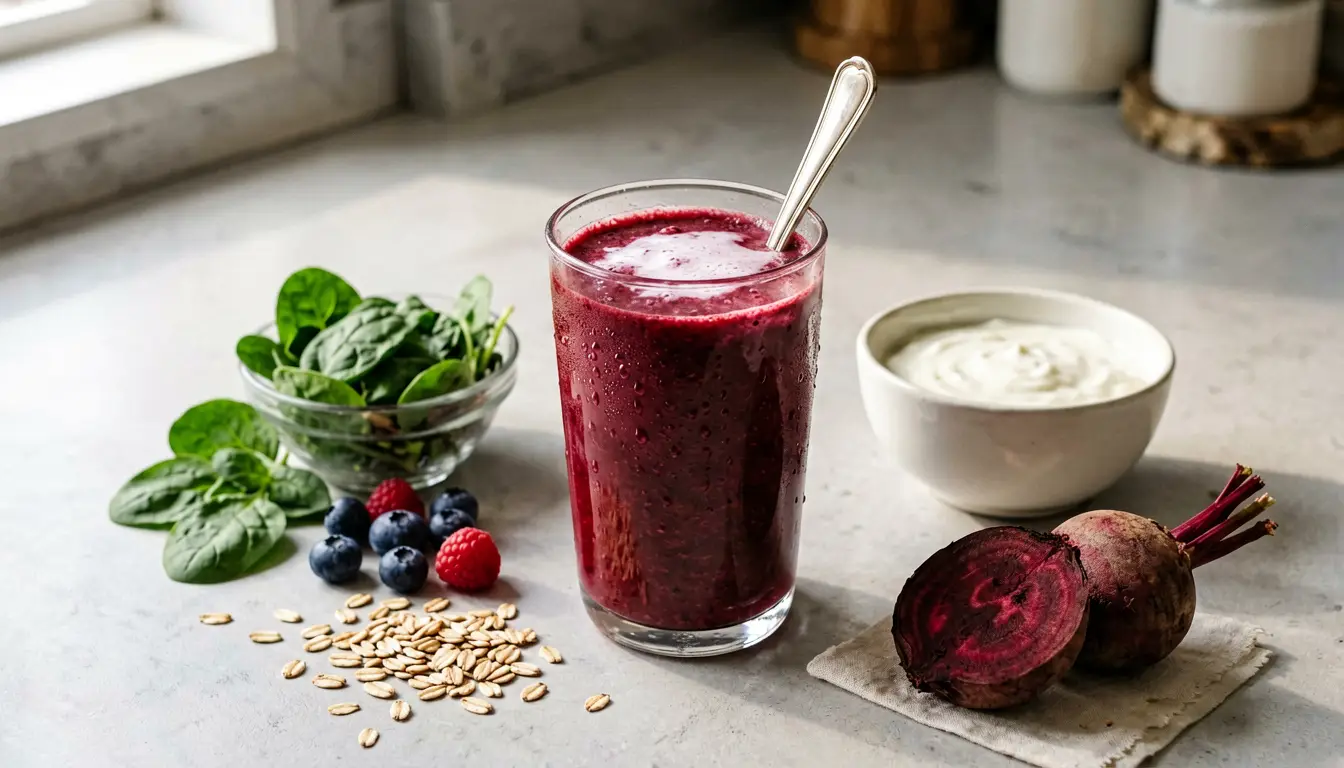
Classic beet berry smoothie: Use beet, raspberries, banana, spinach, soy milk, oats, and ice. This is the best starter version.
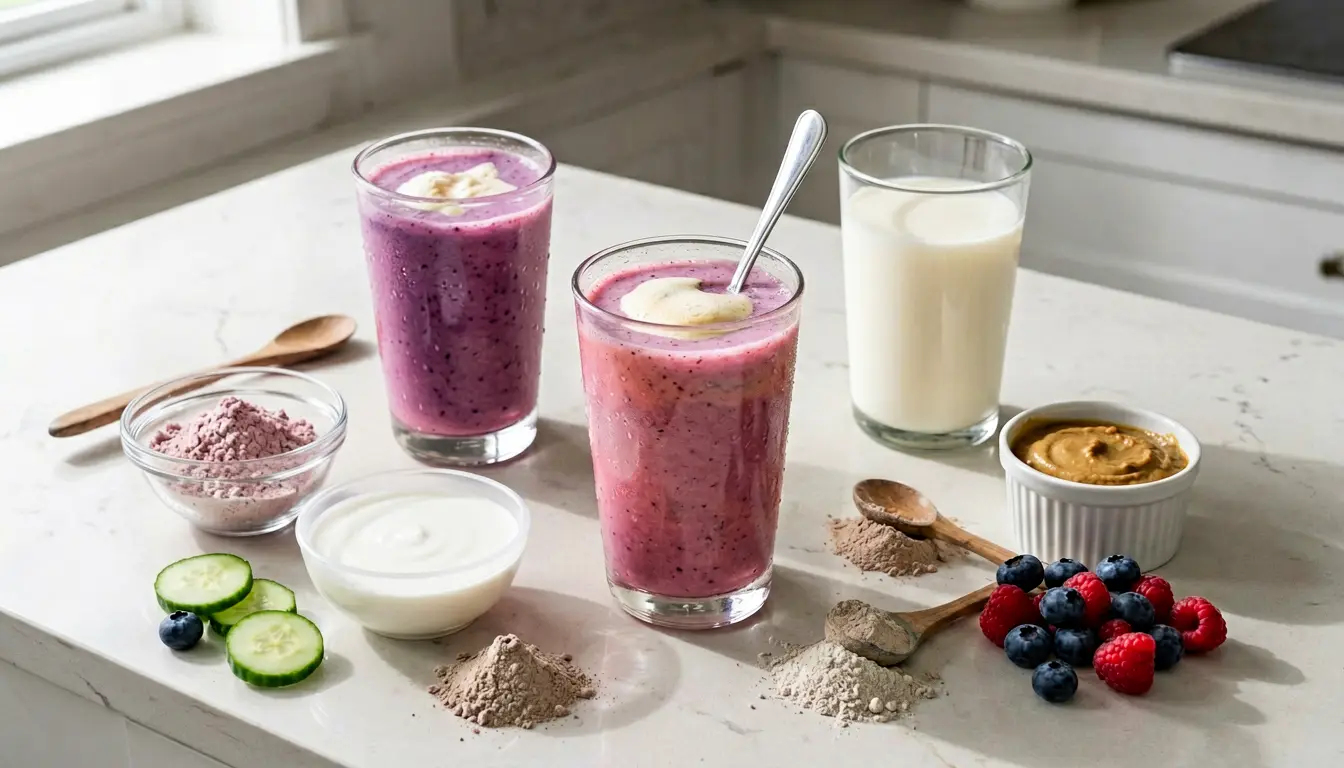
Chocolate berry beet smoothie: Add 1 teaspoon unsweetened cocoa and a little vanilla. Keep it cocoa-forward, not dessert-sweet.
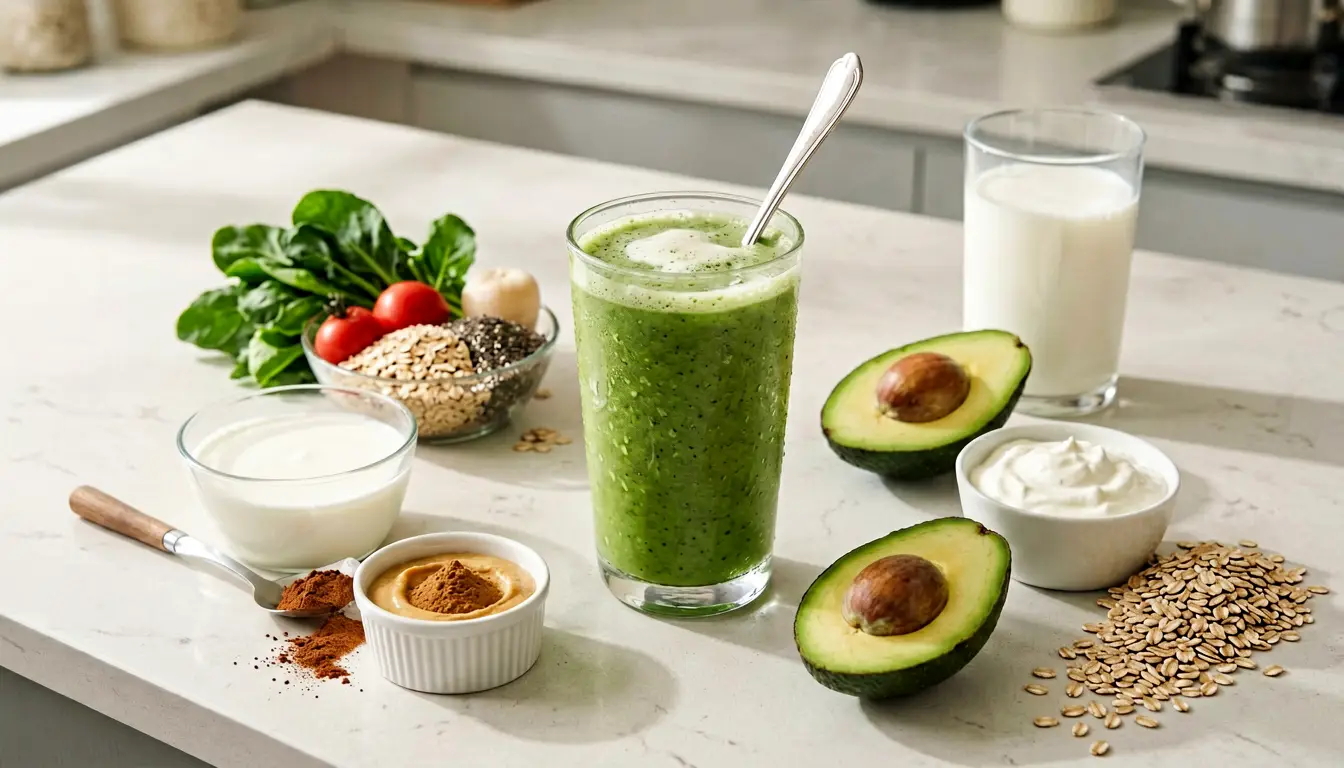
Green DASH smoothie: Skip cocoa and use spinach, cucumber, berries, banana, yogurt, flax, and water or unsweetened soy milk.
No-banana version: Use extra berries, a little avocado, and ice for creaminess. For more no-banana ideas, see smoothies recipes without bananas.
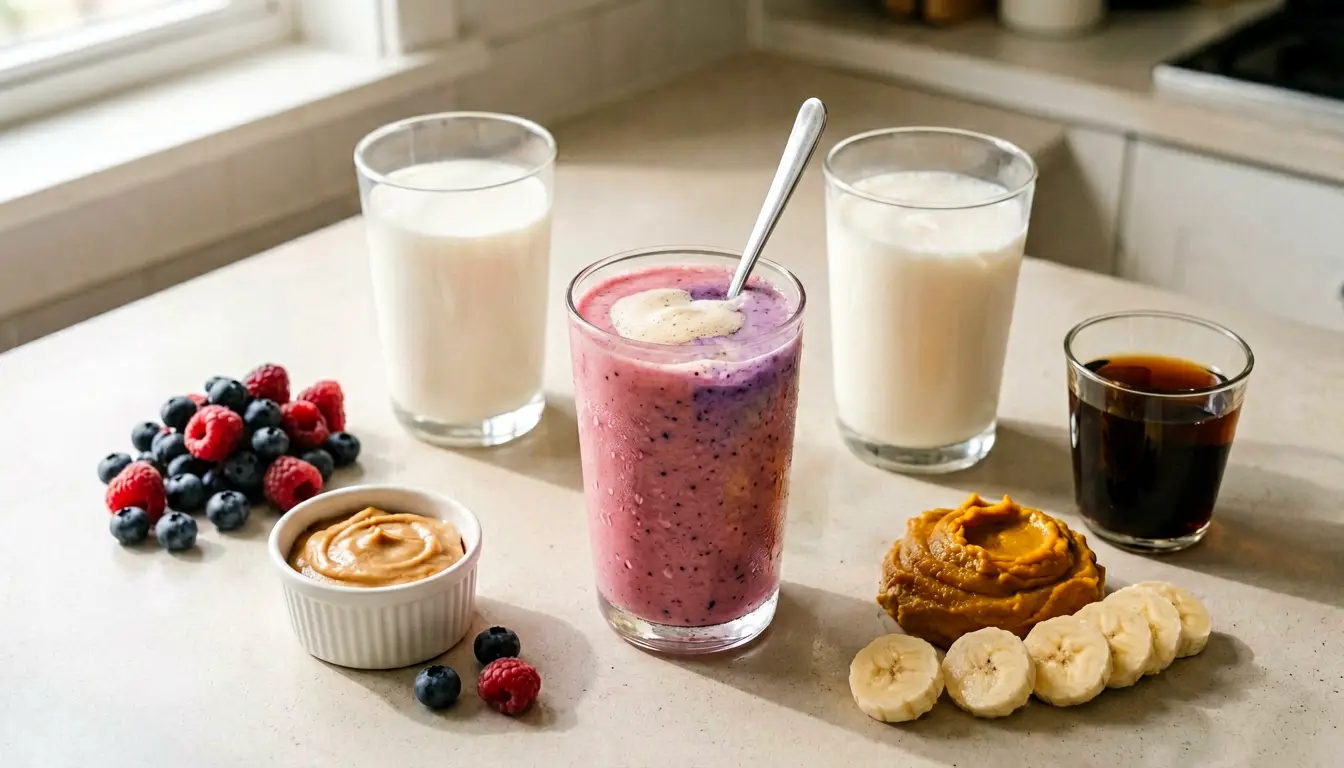
Dairy-free version: Use unsweetened almond milk or soy milk with chia or flax. Smoothies no milk has more liquid-base options if dairy does not work for you.
Lower-sugar version: Use more greens, fewer bananas, and berries as the main fruit. Best low-sugar smoothies for cravings can help with flavor ideas.
Common Mistakes
The biggest mistake is focusing on one "blood pressure ingredient" while ignoring sodium. A smoothie cannot undo a day built around salty packaged foods, restaurant meals, and processed meats.
Another mistake is using sweetened bottled protein shakes as the base. Some are high in sodium, added sugar, or both. Check the label before adding them to a blood-pressure-focused smoothie.
Do not overdo beets if you are prone to oxalate kidney stones or have been told to limit oxalates. Beet greens are also high in oxalates, so they are not automatically a better choice for everyone.
Do not use potassium-rich smoothies casually if you have kidney disease or take medications that affect potassium. Banana, beet, spinach, and dairy can all contribute potassium.
What to Serve With It
Serve this smoothie with a low-sodium breakfast or snack. Oatmeal, unsalted nuts, eggs with vegetables, plain yogurt, whole-grain toast, or a bean-and-vegetable meal can all fit depending on your nutrition needs.
If weight goals matter too, use best fruit smoothies for weight loss to keep the serving filling without turning it into a high-sugar drink. If you are buying smoothies out, are Juice Stop smoothies healthy can help you spot oversized, sweetened blends.
For related health-use blends, keep smoothies for constipation separate unless you know your gut handles beets, oats, and seeds well.
Storage and Reheating
This smoothie is best fresh, but you can prep beet cubes, berries, spinach, and banana in freezer bags. Keep oats, chia, flax, cocoa, and protein powder separate until blending.
Store leftovers in a sealed jar in the refrigerator for up to 24 hours. Shake or re-blend before drinking because the beet pulp and seeds can settle.
Do not reheat smoothies. If it is too cold, let it stand for 5 to 10 minutes and stir.
Frequently Asked Questions
What matters most before making smoothies for high blood pressure?
Keep the smoothie low in sodium, rich in produce, and balanced with fiber and protein. It should support a heart-smart eating pattern, not replace medication or medical advice.
Are beet smoothies good for high blood pressure?
Beet smoothies can fit a blood-pressure-friendly diet because beets contain nitrates, fiber, and potassium. They are not a cure, and some people need to limit beets because of kidney stone or kidney-related concerns.
Should I add protein powder?
You can, but check sodium, added sugar, and serving size. Plain yogurt, kefir, soy milk, and tofu can also add protein with a smoother ingredient list.
Can I use canned beets?
Yes, but choose no-salt-added canned beets and drain them. Regular canned beets can add more sodium than you want in a high blood pressure smoothie.
Is cocoa okay in this kind of smoothie?
Unsweetened cocoa can fit in small amounts. Avoid chocolate syrup, sweetened cocoa mix, and candy-style toppings.
When should I choose a different option?
Choose a different option if your clinician has limited potassium or oxalates, if you cannot check sodium on a packaged shake, or if your blood pressure readings need medical attention.