
As an affiliate, we may earn a commission from qualifying purchases. We get commissions for purchases made through links on this website from Amazon and other third parties.
Juicers and blenders can both turn produce into something drinkable, but they are not doing the same job. A juicer separates liquid from pulp. A blender keeps everything together unless you strain it later.
That one difference changes almost everything: texture, cleanup, yield, fullness, and whether the drink feels more like juice or more like a smoothie. If you want the shortest answer, a blender is usually the better tool for most kitchens because it is more versatile and keeps the fiber. A juicer makes more sense when you specifically want clear juice and know you will use it often.
Quick Answer
A blender is usually the better first buy because it does more, keeps the fiber, and can still make juice-like drinks if you strain them. A juicer is the better choice only when thin, pulp-free juice is the main goal and you care enough about that texture to justify a dedicated appliance.
In other words, blenders win on flexibility and everyday value. Juicers win on true juice texture.
Key Differences
Texture and fiber
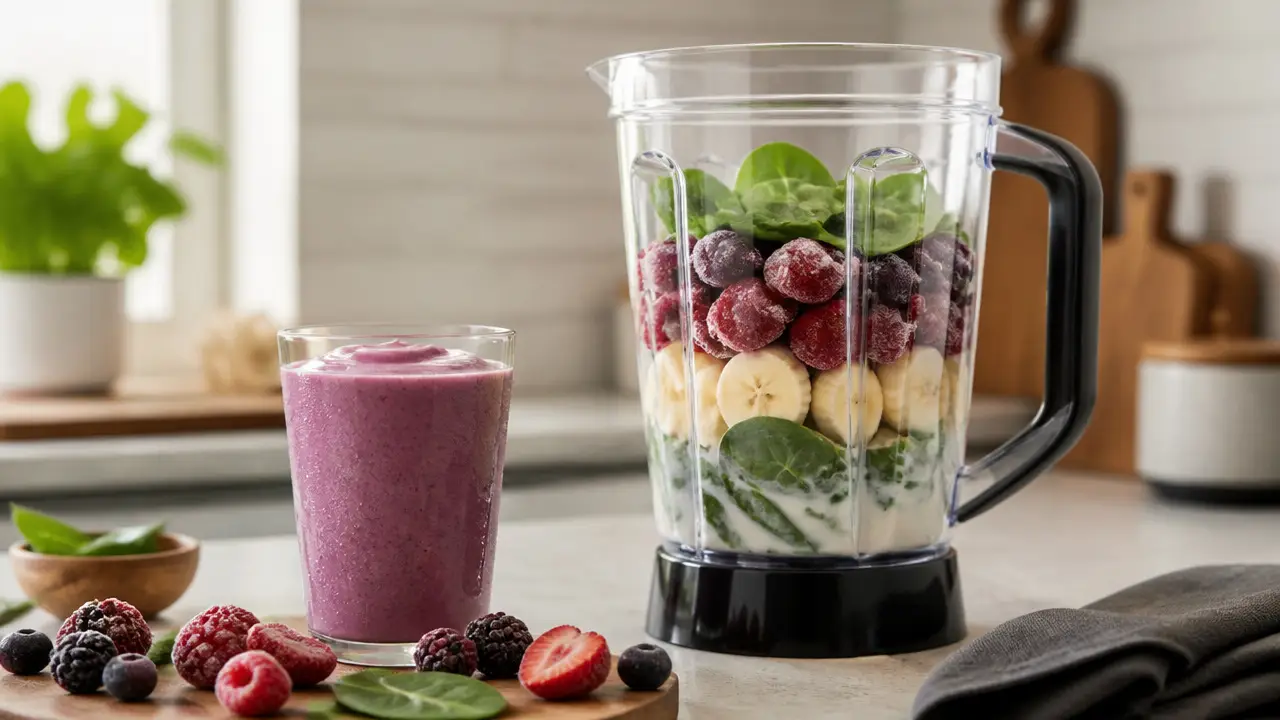
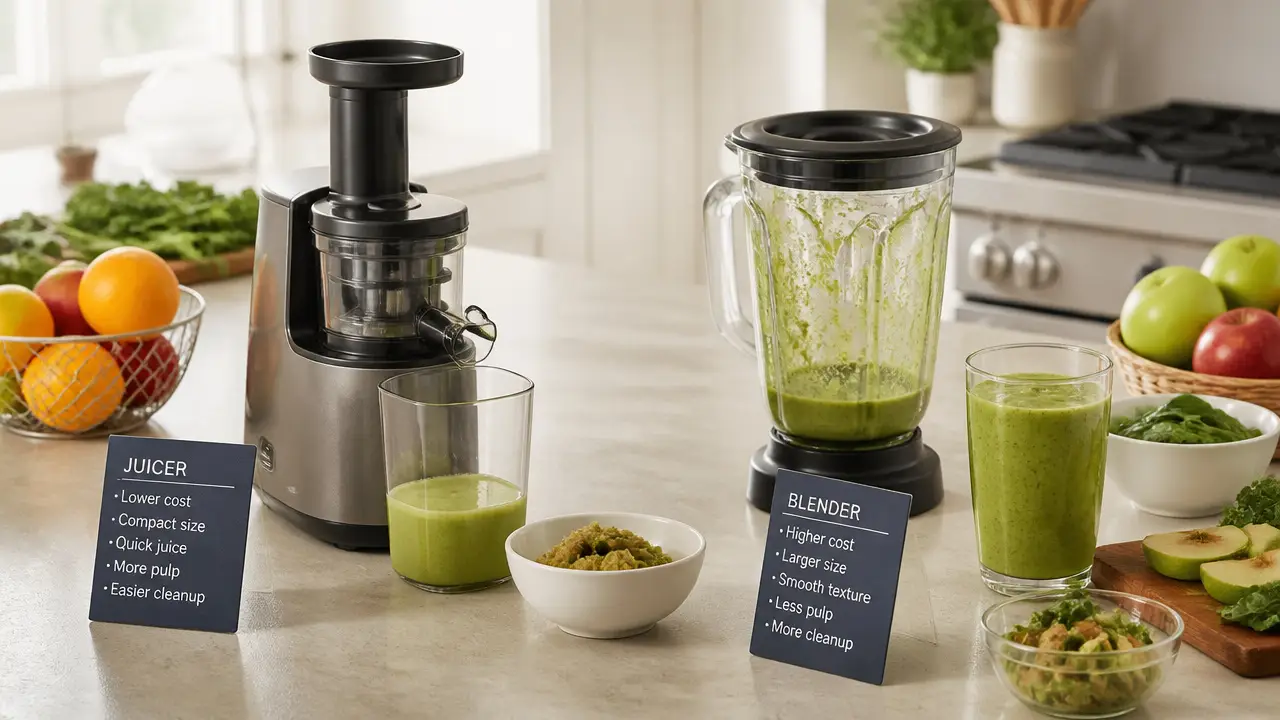
This is the biggest difference. A blender breaks fruits and vegetables down into a thicker drink that keeps the pulp and fiber in the glass. A juicer removes much of that fiber and gives you a thinner, clearer drink.
That matters for fullness and drinking style. A blended drink usually feels more substantial. A juiced drink goes down faster and feels lighter. Neither is automatically better. It depends on whether you want a smoothie-like meal or a cleaner juice experience.
Prep and yield
A blender is simpler because you can cut produce, add liquid if needed, blend, and stop there. If you want a juice-like texture, you can strain it through a nut milk bag, cheesecloth, or fine mesh strainer. A juicer skips that extra straining step because separating juice from pulp is its whole job.
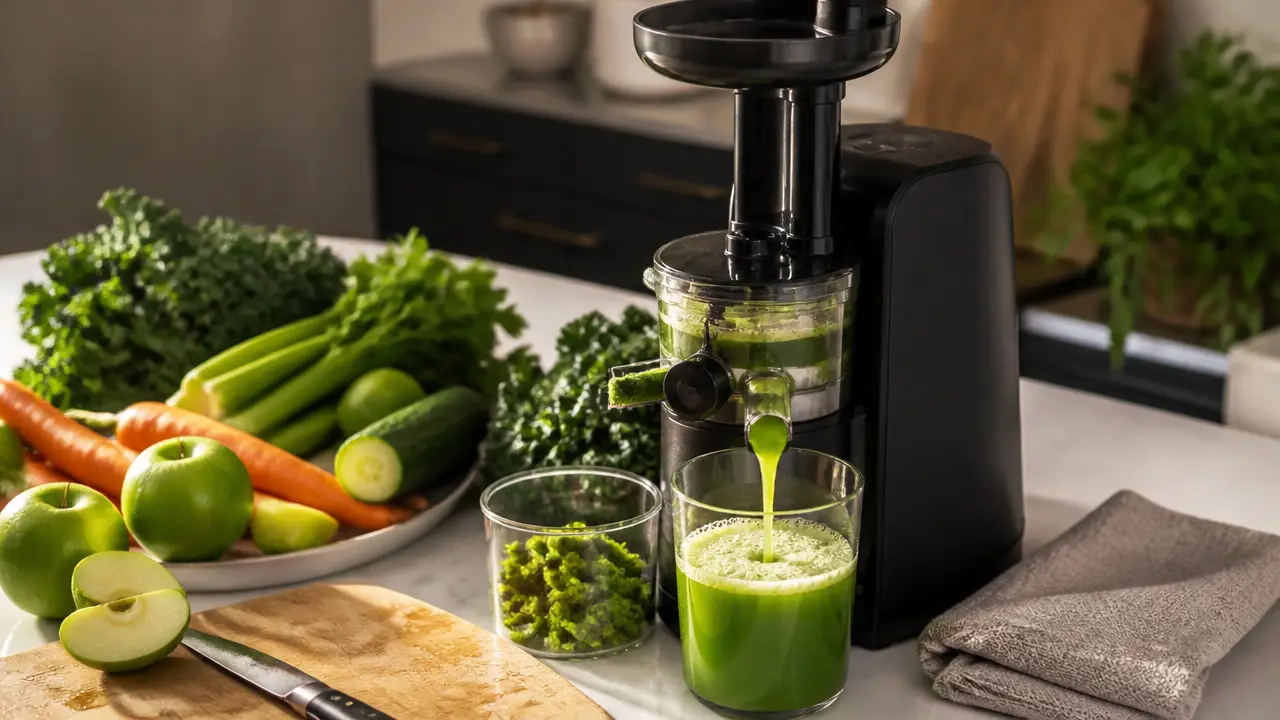
Dedicated juicers also handle extraction differently. Masticating juicers work slowly and typically squeeze more juice from produce with less waste, while centrifugal models prioritize speed. That is why cold press juicer buying guidance and juicer vs cold-press juicer are separate decisions after this one.
Nutrition profile in the glass
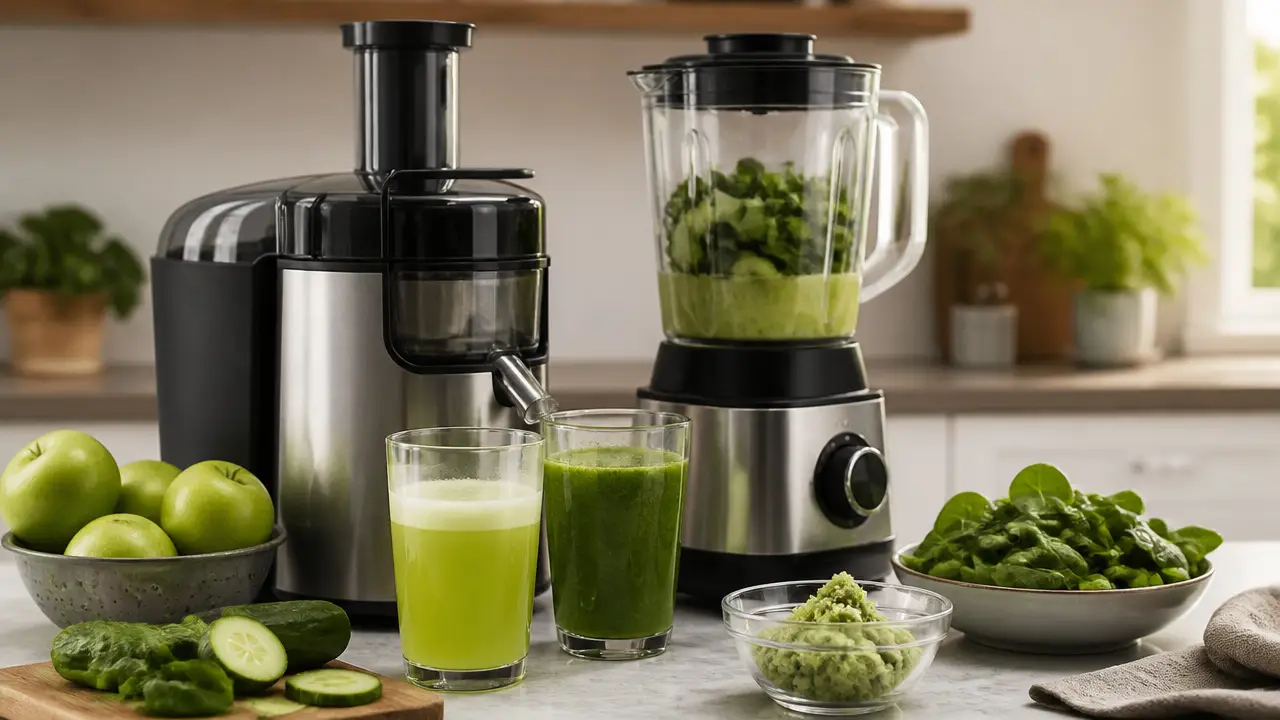
A blender keeps the full plant matter unless you strain it, which means the drink retains more fiber. That alone changes how filling it feels. In one green-juice comparison using the same produce mix, the high-speed blender version produced a thicker drink with lower soluble oxalate in the drink itself than the clear juice made with a masticating juicer.
That does not mean every blender drink is automatically healthier. It means the form of the drink changes what ends up in the glass. If your goal is more fiber and a more meal-like result, the blender usually has the edge.
Versatility
A blender can make smoothies, soups, sauces, frozen drinks, and blended juices. A juicer is more specialized. That is why a blender is usually the easier appliance to justify if you are building a kitchen from scratch.
If your main interest is smoothies, the comparison is not close. The best blenders for smoothies and the best smoothie makers are much more relevant than a juicer.
Best For
A Juicer Is Better For:
- People who specifically want thin, pulp-free juice.
- Readers who juice often enough to justify a dedicated machine.
- People who like green juice or clear fruit-and-vegetable juice as a separate routine.
- Buyers willing to trade versatility for a more specialized result.
A Blender Is Better For:
- Most home cooks buying one appliance first.
- People who want smoothies, blended juices, and more than one use case.
- Anyone who values fiber and fuller drinks.
- Shoppers who want the option to blend now and strain later if needed.
For most kitchens, the blender side is bigger. A juicer makes more sense only when juice itself is the goal, not just produce in drink form.
When to Choose a Juicer
Choose a juicer when you know you want real juice and not a blended drink. If you care about thin texture, cleaner separation, and the experience of sipping actual juice instead of a smoothie, a juicer solves that better than a blender ever will.
It also makes sense when juicing is the routine, not an occasional experiment. If you plan to juice leafy greens regularly, compare the best cold press juicers and the juicer vs cold-press juicer decision before buying.
The tradeoff is that you are buying a specialist. If the habit fades, the machine can end up taking space without doing much else.
When to Choose a Blender
Choose a blender when flexibility matters more than pure juice texture. A blender can still get you close to juice if you strain the final drink, but it can also do smoothies, sauces, frozen drinks, and meal-style blends that keep you fuller.
A blender is also the better fit if you like using ingredients like yogurt, oats, protein powder, frozen fruit, or nut butter. Once those enter the conversation, a juicer is no longer the right tool. That is why the best oats for smoothies, the best yogurts for smoothies, and the best protein powders for smoothies all point back to blenders, not juicers.
If you want one appliance that opens more doors, the blender is the safer buy.
What Matters Most in the Decision
If you want the fuller drink, more fiber, and more kitchen uses, buy the blender. If you want the thinner drink and do not mind a single-purpose tool, buy the juicer.
The other question is whether you want the machine to do the separation or whether you are fine doing that yourself sometimes. A blender with a strainer setup can make a juice-style drink in a pinch. A juicer cannot turn around and make a smoothie bowl.
That is why blenders usually win for mixed households. If one person wants smoothies and another wants juice, the blender covers more territory first.
Frequently Asked Questions
Which is better: a juicer or a blender?
A blender is usually better for most people because it is more versatile, keeps the fiber, and can still make juice-style drinks with straining.
Does a blender keep more fiber than a juicer?
Yes. A blender keeps the pulp and fiber unless you strain it out, while a juicer removes much of that material.
Can you make juice in a blender?
Yes. You can blend produce with a little liquid if needed, then strain it through a fine mesh strainer, cheesecloth, or nut milk bag.
When is a juicer worth buying?
A juicer is worth buying when clear, pulp-free juice is a regular part of your routine and you want a machine built specifically for that job.
Is a blender healthier than a juicer?
Not automatically, but blender drinks usually keep more fiber and often feel more filling than juiced drinks.
Should you buy a blender before a juicer?
Usually yes. A blender covers more kitchen tasks and is the better first purchase for most homes.
If you are leaning juicer-first, read the cold press juicer buying guide before choosing a machine. If you are leaning blender-first, the best blenders for smoothies will give you the more useful appliance comparison.