
As an affiliate, we may earn a commission from qualifying purchases. We get commissions for purchases made through links on this website from Amazon and other third parties.
Smoothies for sore throat should be smooth, cool or gently chilled, easy to swallow, and not too acidic. The goal is comfort, hydration, and a little nutrition when eating feels hard, not a cure for the infection or condition causing the sore throat.
Get medical advice if your sore throat is severe, lasts more than a few days, comes with high fever, trouble breathing, trouble swallowing, dehydration, rash, swollen glands, or symptoms after surgery. If your throat symptoms happen with reflux, start with smoothies for acid reflux because citrus, pineapple, and strong ginger may bother you.
Quick Answer
The best smoothies for sore throat use banana, berries, yogurt or almond milk, honey, mild ginger, oats, and enough liquid to make the texture soft and drinkable. Keep the smoothie cold or slightly chilled, avoid sharp acidic juices if they sting, and skip crunchy toppings.
Milk does not make the body produce more phlegm, but dairy can briefly feel coating for some people. If that sensation bothers you, use a dairy-free base instead.
At a Glance
- Best texture: fully smooth, thin enough to sip, with no chunks, seeds, or crunchy toppings.
- Best temperature: cold, cool, or lukewarm depending on what feels better.
- Best base: milk, yogurt, kefir, almond milk, oat milk, soy milk, coconut water, or water.
- Best fruit: banana, berries, melon, mango, pear, or peach.
- Best add-ins: honey, mild ginger, oats, chia gel, protein powder, or nut butter in small amounts.
- Best avoid: citrus if it stings, pineapple if it burns, carbonated drinks, dry toppings, and very spicy blends.
- Best caution: swallowing trouble needs professional guidance, especially after surgery, radiation, stroke, or choking episodes.
If you are sick overall and not just dealing with throat discomfort, smoothies when sick gives a broader recovery-style framework.
When your throat feels normal again and you want smoothies as a regular meal habit, compare homemade flexibility with The Smoothie Diet vs homemade smoothies. A sore-throat smoothie is temporary comfort food; a daily smoothie routine needs a different standard.
Why This Recipe Works
A sore throat smoothie works because it reduces friction. Soft, cold foods can feel soothing, and a blender can turn fruit, protein, and liquid into something easier to swallow than dry toast, chips, crackers, or crunchy cereal.
Banana adds creaminess and mild sweetness. Berries add flavor and vitamin C, but they need to be blended well so seeds do not scratch. Yogurt, kefir, milk, tofu, or protein powder can add calories and protein when appetite is low. Honey can make the smoothie more soothing for many adults and older children, but it should not be given to babies under 1 year old.
The texture matters as much as the ingredients. If swallowing is difficult, thin liquids may not always be appropriate for every person. People with dysphagia or aspiration risk may need thickened liquids or specific textures from a speech-language pathologist or care team.
For dairy-free versions, see smoothies no milk and smoothies no yogurt.
Ingredients
Use this as a base for one soothing smoothie:
- 1 ripe banana, fresh or frozen
- 1/2 cup strawberries, blueberries, melon, peach, or mango
- 1/2 cup plain yogurt, kefir, silken tofu, or a dairy-free yogurt
- 1/2 to 3/4 cup milk, almond milk, oat milk, soy milk, coconut water, or water
- 1 tablespoon honey, only for adults and children over 1 year old
- 1 tablespoon oats, optional, for a softer fuller texture
- 1/4 teaspoon grated ginger, optional and mild
- Ice as needed, optional
If acid stings your throat, skip lemon, lime, orange juice, pineapple juice, and cranberry juice. If cold drinks hurt, use room-temperature banana and milk instead of frozen fruit and ice.
Equipment You Need
You need a blender, measuring cups, measuring spoons, and a glass or straw cup. A fine mesh strainer is optional if berry seeds bother your throat, but straining removes some fiber and makes cleanup harder.
For children or anyone recovering from a procedure, use the cup, straw, or spoon method recommended by their care team. Do not use a straw if a clinician has told you to avoid it.
Step-by-Step Method
- Add the liquid first. Use enough milk, almond milk, water, or yogurt to keep the blades moving.
- Add soft fruit. Banana, peach, mango, melon, and berries are good starting points.
- Add protein. Use yogurt, kefir, tofu, or a simple protein powder if tolerated.
- Add soothing extras. Use honey for eligible ages, mild ginger if it does not burn, and oats for softness.
- Blend longer than usual. Run the blender until no chunks or seed-heavy pockets remain.
- Check the temperature. Let it warm slightly if it is painfully cold.
- Sip slowly. Stop if it burns, triggers coughing, or feels hard to swallow.
For a gentler morning version, are smoothies in the morning healthy can help you decide whether to make it a snack or a small meal.
Time and Temperature Guide
This smoothie takes 5 to 10 minutes. Cold is often soothing, but it is not mandatory. Some people prefer cool smoothies, while others prefer room-temperature or lukewarm drinks.
Avoid very hot smoothies. Heat can change the texture, make dairy separate, and irritate an already sore throat.
If you are recovering from tonsil surgery or another throat procedure, follow your discharge instructions first. Many plans emphasize hydration and soft foods, but some limit acidic, carbonated, hot, or scratchy items for a period of time.
Best Variations
Banana honey yogurt smoothie: Use banana, plain yogurt, milk or almond milk, honey, and ice. This is the mildest starting point.
Berry banana smoothie: Use banana, strawberries or blueberries, yogurt, and extra liquid. Blend very smooth and strain if seeds bother you.
Dairy-free sore throat smoothie: Use banana, mango, almond milk, silken tofu or dairy-free yogurt, and honey if age-appropriate. For more base ideas, see smoothies with almond milk.
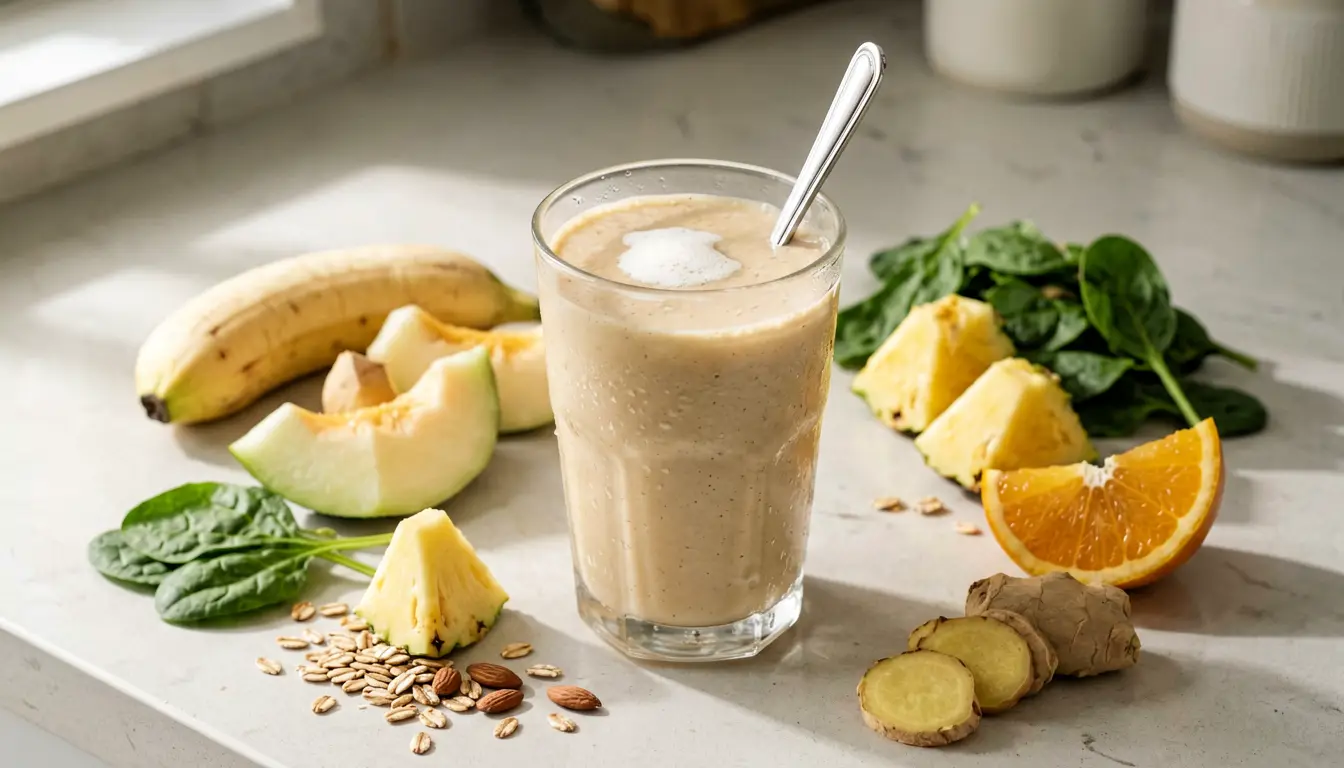
Low-acid melon smoothie: Use honeydew or cantaloupe, banana, yogurt or tofu, and water. This is a good option when citrus burns.
Ginger pear smoothie: Use ripe pear, banana, yogurt, a tiny amount of ginger, and water. Keep the ginger mild because too much can sting.
Blood-sugar-aware sore throat smoothie: Use Greek yogurt, berries, almond milk, a small amount of banana, and no honey. Smoothies for diabetics can help with the balance.
Common Mistakes
The biggest mistake is adding acidic ingredients because they sound healthy. Lemon, lime, orange juice, pineapple, and cranberry can sting some sore throats, especially after irritation or surgery.
Another mistake is making the smoothie too thick. A thick smoothie can be tiring to swallow and may leave a coating sensation. Add liquid until it is comfortable.
Do not add granola, cacao nibs, coconut flakes, raw seeds, or crunchy toppings. They may scrape or catch in the throat.
Do not assume dairy is forbidden. Milk does not cause extra phlegm production, but it can feel coating for some people. Use dairy if it feels good; switch to dairy-free if it bothers you.
What to Serve With It
Serve this smoothie with water, warm tea, broth, oatmeal, applesauce, mashed potatoes, scrambled eggs, soft noodles, or soup that is not too hot. Keep foods moist and easy to swallow.
If you also want immune-supportive produce, smoothies for skin has vitamin C and colorful fruit ideas, but keep acidic ingredients gentle while your throat hurts.
If your appetite is low and you need more calories, add yogurt, tofu, nut butter, oats, or protein powder instead of simply making the fruit portion larger. For lighter options, compare smoothies under 200 calories recipes and adjust upward if you need more nourishment.
Storage and Reheating
This smoothie is best fresh because the texture is easiest to control. If you need to prep ahead, freeze banana and fruit in small bags and blend with liquid when needed.
Store leftovers in a sealed jar in the refrigerator for up to 24 hours. Shake or re-blend before drinking. If it thickens, add more liquid.
Do not reheat a smoothie. If cold hurts, let it sit at room temperature for 10 to 15 minutes and stir.
Frequently Asked Questions
What matters most before making smoothies for sore throat?
Texture and comfort matter most. Make the smoothie fully smooth, not too acidic, not too hot, and thin enough to sip without effort.
Does milk make phlegm worse?
Milk does not make the body produce more phlegm, but it can briefly feel coating in the mouth and throat. If that bothers you, use a dairy-free base.
Are cold smoothies good for a sore throat?
Cold smoothies can feel soothing for many people. If cold hurts, use room-temperature ingredients and skip the ice.
Can I add honey?
Adults and children over 1 year old can use honey if it fits their diet. Do not give honey to babies under 1 year old.
What should I avoid in a sore throat smoothie?
Avoid acidic juices if they sting, carbonated liquids, very hot temperatures, crunchy toppings, and strong spices that burn.
When should I choose medical care instead?
Get medical advice if the sore throat is severe, lasts more than a few days, comes with high fever, trouble breathing, trouble swallowing, dehydration, rash, swollen glands, or post-surgery concerns.