
As an affiliate, we may earn a commission from qualifying purchases. We get commissions for purchases made through links on this website from Amazon and other third parties.
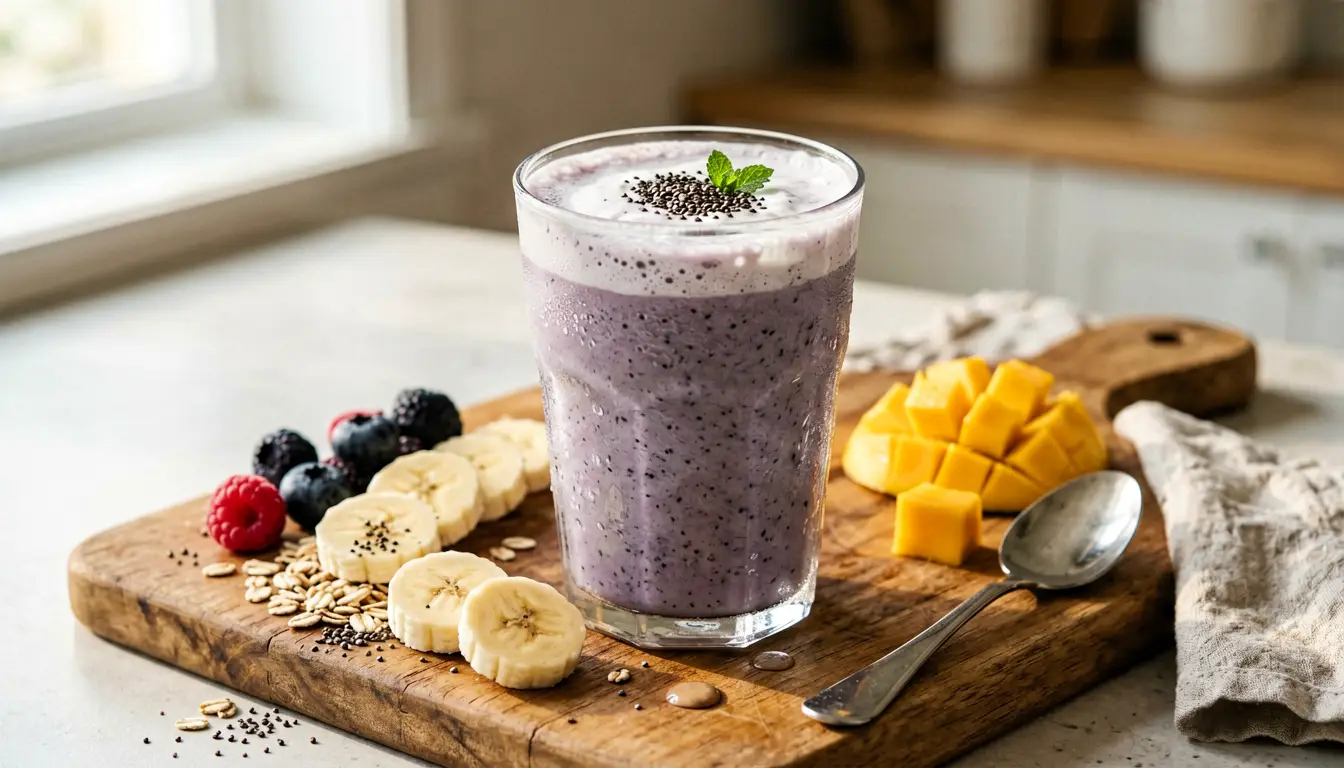
Mango smoothies are popular because mango makes smoothies taste full, sweet, and tropical without needing much help. It also adds body, which means the smoothie often feels smoother and thicker than blends built only around watery fruits.
The main benefits are practical. Mango gives strong flavor, a soft texture, and easy pairing with ingredients like pineapple, banana, yogurt, and coconut. If texture is the main draw, the guide to what makes smoothies creamy explains why mango works so well.
Quick Answer
Mango smoothies are useful because mango adds natural sweetness, a smooth texture, and a fuller body that helps many smoothies blend well. They are a strong choice when you want a tropical smoothie that still feels substantial.
Mango can also make a smoothie feel more finished without a long ingredient list.
What It Is / When to Use It
Mango smoothies work well when you want a sweeter, creamier fruit smoothie or a tropical direction. They are especially useful in breakfast smoothies and summer-style blends. For more fruit choices, good smoothie combos can help you pair mango with brighter or softer ingredients.
They may be less ideal if you want a very tart or very light smoothie, since mango naturally softens and sweetens the flavor.
Substitutes / Swaps
If you do not have mango, banana or peach can mimic some of its softness, though not the same tropical flavor. If the smoothie feels too sweet, pair mango with berries, kiwi, citrus, or plain yogurt. The sweetness guide can help you adjust mango-heavy blends that taste too sweet.
If you want the smoothie richer, add yogurt or coconut milk. If you want it lighter, use water or coconut water instead.
Prep Tips
Frozen mango is especially useful because it helps both thickness and temperature. Mango also works well as the body-building fruit in smoothies that would otherwise turn watery. If you buy it frozen, frozen fruit for smoothies can help you choose pieces that blend smoothly instead of icy.
Use it as the lead fruit or as a helper fruit depending on how tropical you want the smoothie to feel.
Storage / Reheat / Freeze
Mango is excellent for freezer prep packs because it blends easily and stores well. Mango smoothies can separate after storage, but a shake or reblend usually helps.
A mango-based smoothie often keeps a fuller texture than one built mostly around juicy fruit. For a make-ahead routine, smoothie prep packs keep mango ready without letting ripe fruit soften too far.
Frequently Asked Questions
Why do mango smoothies feel creamy?
Mango naturally adds body and a soft texture that helps smoothies feel fuller.
Are mango smoothies very sweet?
They can be, especially when paired with other sweet fruits or sweetened liquids.
What goes well with mango in a smoothie?
Pineapple, banana, coconut, orange, yogurt, and berries can all pair well with mango.
Is frozen mango good for smoothies?
Yes. Frozen mango is one of the easiest smoothie ingredients to keep on hand.
Can mango help thicken a smoothie?
Yes. Mango is one of the better fruits for adding body without needing a lot of extra ingredients.
For mango-forward blends, compare mango smoothies with mango pineapple smoothies and strawberry mango smoothies. If you are choosing fruit more broadly, good smoothie fruit will help you balance sweetness and brightness.