
As an affiliate, we may earn a commission from qualifying purchases. We get commissions for purchases made through links on this website from Amazon and other third parties.
Smoothies are made by blending fruit, liquid, and texture-building ingredients until everything turns into one cold drink. The method is simple, but the order and balance matter more than people expect. A good smoothie is not just mixed fruit. It is a blend that pours well, tastes clear, and does not need rescuing halfway through.
If you are learning the process from scratch, think in parts. You need a fruit or vegetable base, a liquid, and something that helps the smoothie feel thicker or creamier when the fruit alone is not enough. If you want an even more basic walkthrough, smoothies for beginners and a step-by-step smoothie method are the next pages to read.
Quick Answer
Smoothies are made by adding liquid to a blender first, then softer ingredients, then fruit, and blending until smooth. Frozen fruit, yogurt, banana, oats, avocado, and nut butter are common tools for making the drink colder, thicker, or more filling.
The best smoothies are usually made with restraint. Too much liquid makes them thin, too many ingredients make them muddy, and poor blending order forces you to keep adjusting.
What You Need
Most smoothies start with fruit and a liquid base. Banana, berries, mango, pineapple, peach, papaya, kiwi, melon, and dragon fruit all work because they blend easily and pair well with other flavors. Some smoothies use fresh fruit, while others rely on frozen fruit for a colder, thicker texture.
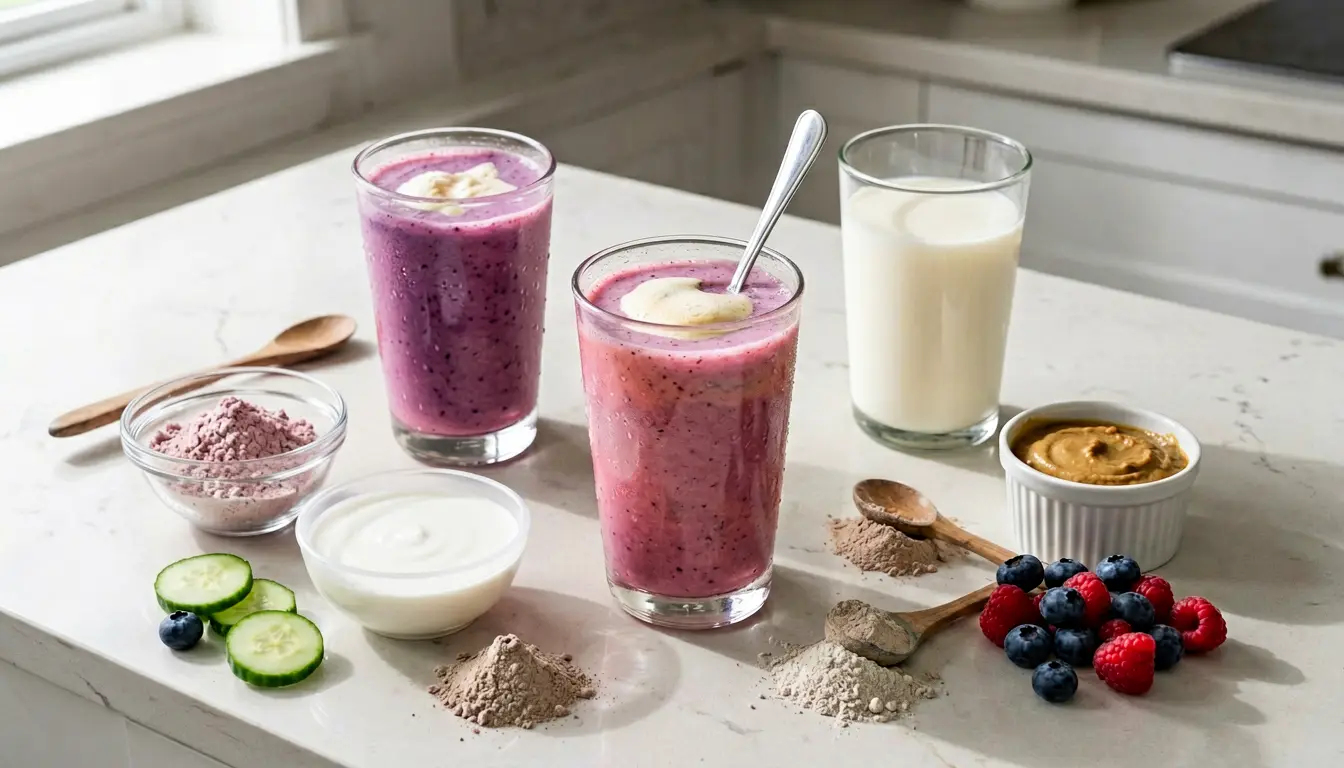
The liquid can be milk, plant milk, water, coconut water, or juice. After that, many smoothies include one helper ingredient such as yogurt, oats, avocado, chia, nut butter, or protein powder. You do not need all of them. One or two is usually enough.
You also need a blender and a container for serving or storing. A stronger blender helps with fibrous greens, seeds, and frozen fruit, but basic smoothies can still work in a standard home blender if the ingredients are cut small enough.
If your smoothies keep turning chunky even with the right order, compare blenders built for smoothies before thinning every blend with extra liquid.
If you want a set smoothie routine instead of learning the process one recipe at a time, compare The Smoothie Diet with homemade smoothies before choosing a paid plan.
Step-by-Step
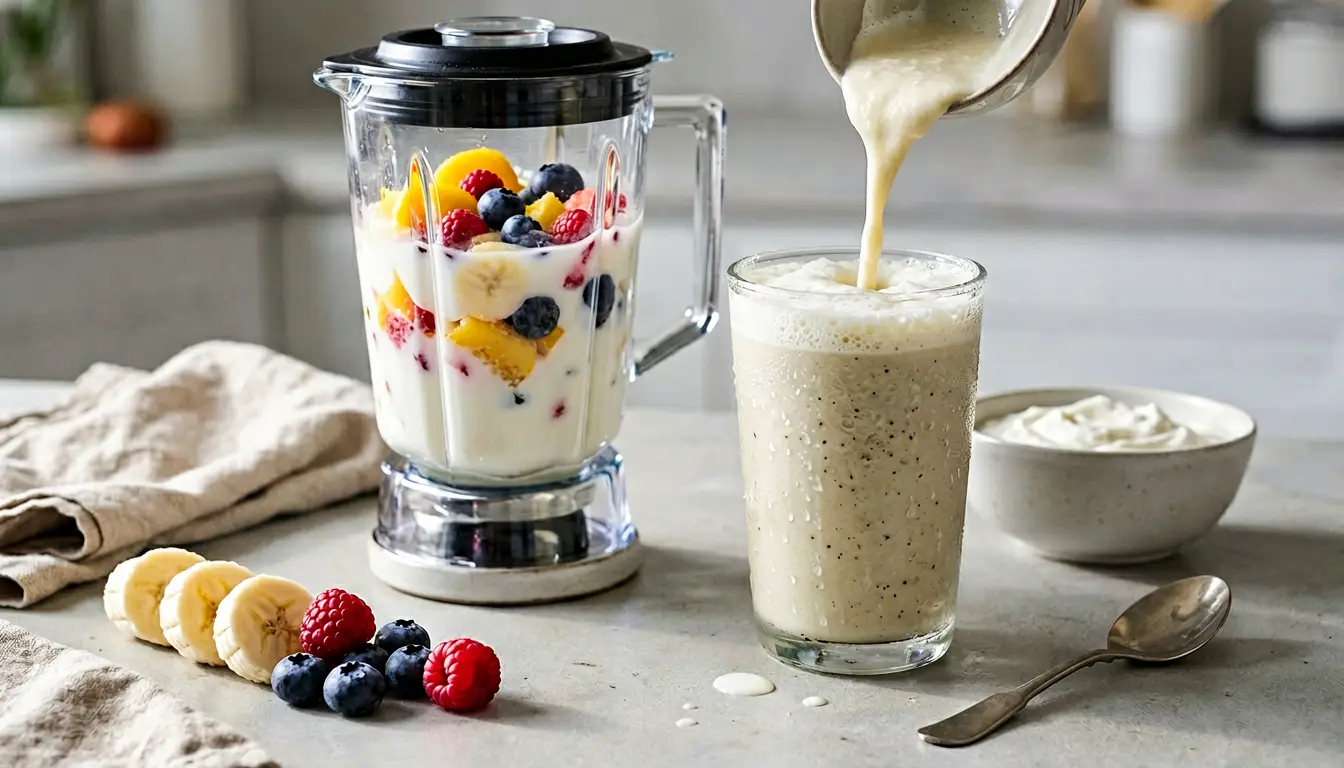
Start with the liquid in the blender. Add soft ingredients next, such as yogurt, banana, avocado, or nut butter. Add fruit after that, and put frozen fruit or ice on top so the blades can pull everything down gradually.
Blend until smooth, then stop and check. If the smoothie looks too thick to move, add a small splash of liquid. If it is already loose, do not keep blending and hope it thickens. Add frozen fruit, oats, chia, or another texture helper and blend again.
This order matters most when your blender struggles. If frozen fruit goes in first without enough liquid near the blades, the smoothie can stall and tempt you to overpour liquid. How to layer a smoothie properly goes deeper into that problem.
Timing, Temperature, And Texture Cues
Most smoothies take only a few minutes once the ingredients are ready. They are best right after blending, when the temperature is cold and the texture still feels unified.
If you want a colder smoothie without relying on lots of ice, freeze some or all of the fruit first. Frozen fruit usually works better than ice because it chills the drink while adding flavor and body. Ice can help, but too much can dilute the blend as it melts.
Texture tells you what to fix. A watery smoothie usually needs less liquid or more frozen fruit, banana, yogurt, oats, avocado, or nut butter. A smoothie that will not move needs a small splash of liquid. A gritty smoothie may need longer blending, softer greens, or smaller ingredient pieces.
Common Smoothie Styles
A fresh fruit smoothie uses mostly fresh fruit, a little chilled liquid, and only enough frozen fruit to keep the drink cold. This keeps the flavor bright and lighter.
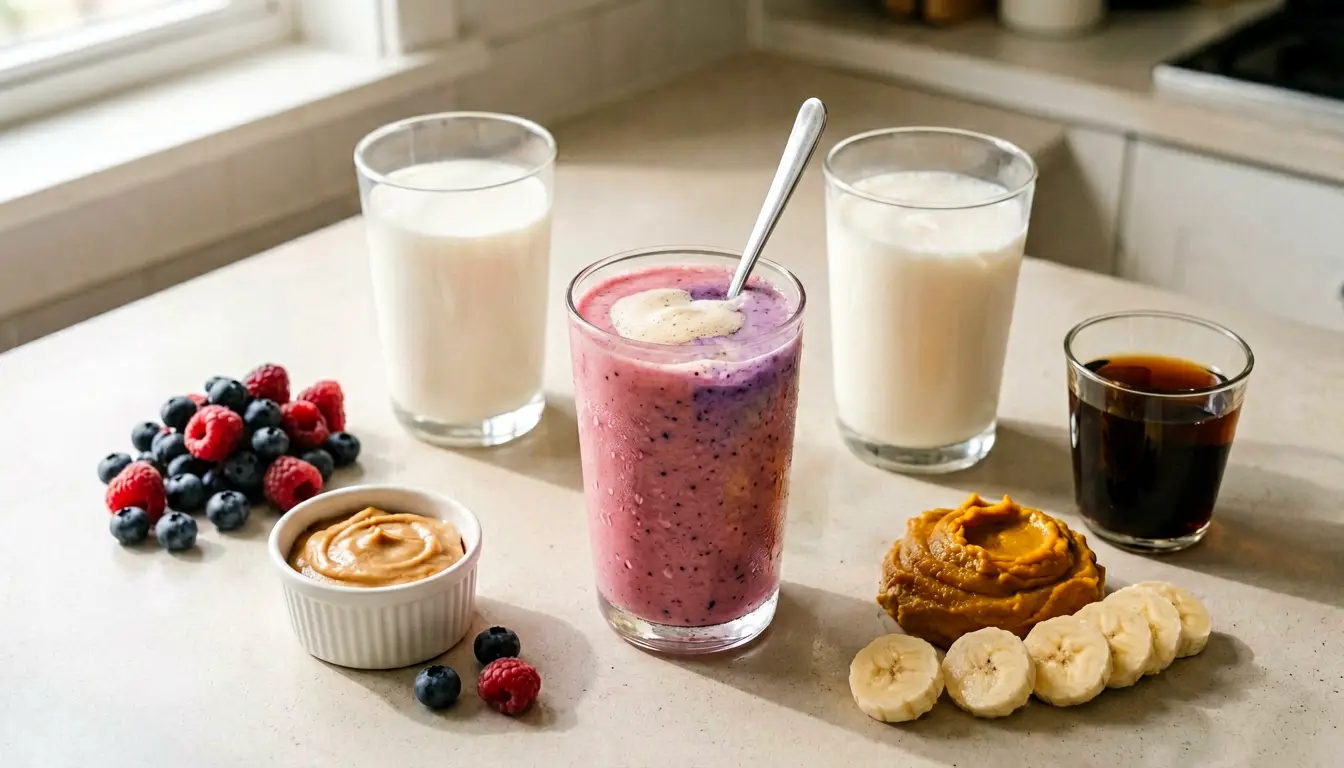
A thick breakfast smoothie uses banana, yogurt, oats, avocado, or nut butter for more body. This works well when you want something more filling.
A tropical smoothie often combines mango, pineapple, banana, coconut milk, coconut water, or orange juice for a sweeter, sunnier blend.
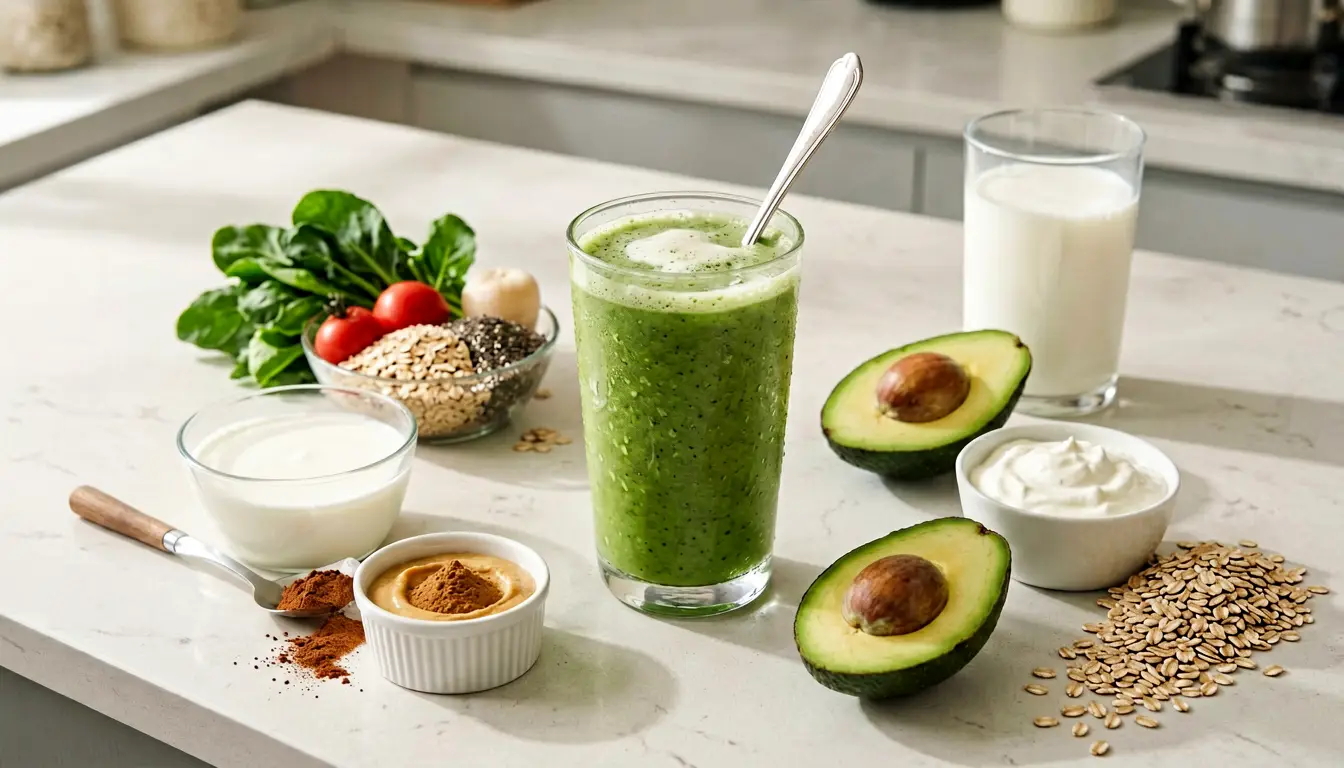
A green smoothie blends spinach or kale with fruit such as banana, mango, apple, berries, or pineapple so the greens stay smooth and easy to drink.
Mistakes to Avoid
The most common mistake is too much liquid at the start. That turns even good ingredients into a thin smoothie that needs rescuing. Another mistake is using too many fruits or too many add-ins, which can make the flavor feel dull and crowded.
Poor blender order is another one. If the blender stalls, add liquid in small splashes instead of one big pour. If the smoothie turns watery, use what makes smoothies thicker and what to do if a smoothie is too watery as troubleshooting guides.
Frequently Asked Questions
What are the basic ingredients in a smoothie?
Most smoothies use fruit, liquid, and one or two ingredients that improve texture or flavor, such as yogurt, banana, oats, avocado, or nut butter.
Do smoothies need frozen fruit?
No, but frozen fruit helps make them colder and thicker without needing much ice.
What liquid is best for smoothies?
That depends on the result you want. Milk makes a creamier smoothie, while water and coconut water keep it lighter.
Why do smoothies turn out watery?
Usually because there is too much liquid, not enough frozen fruit, or not enough texture-building ingredients.
Do you put ice in every smoothie?
No. Many smoothies work better with frozen fruit instead of lots of ice because ice can dilute the flavor.
Are smoothies made fresh every time?
They usually taste best fresh, but you can prep ingredients in advance or store a blended smoothie for a short time if needed.
For the basic process in more detail, use a step-by-step smoothie method. If the blend still tastes flat, fruits that work well in smoothies will help. If the problem is texture, why smoothies turn out chunky is the better fix.