
As an affiliate, we may earn a commission from qualifying purchases. We get commissions for purchases made through links on this website from Amazon and other third parties.
Pitaya smoothies usually win on color first. The bright pink look is what gets attention. The real trick is making the smoothie taste as good as it looks. Pitaya, or dragon fruit, is fairly gentle on its own, so the best smoothies use it with ingredients that add either more body, more brightness, or both.
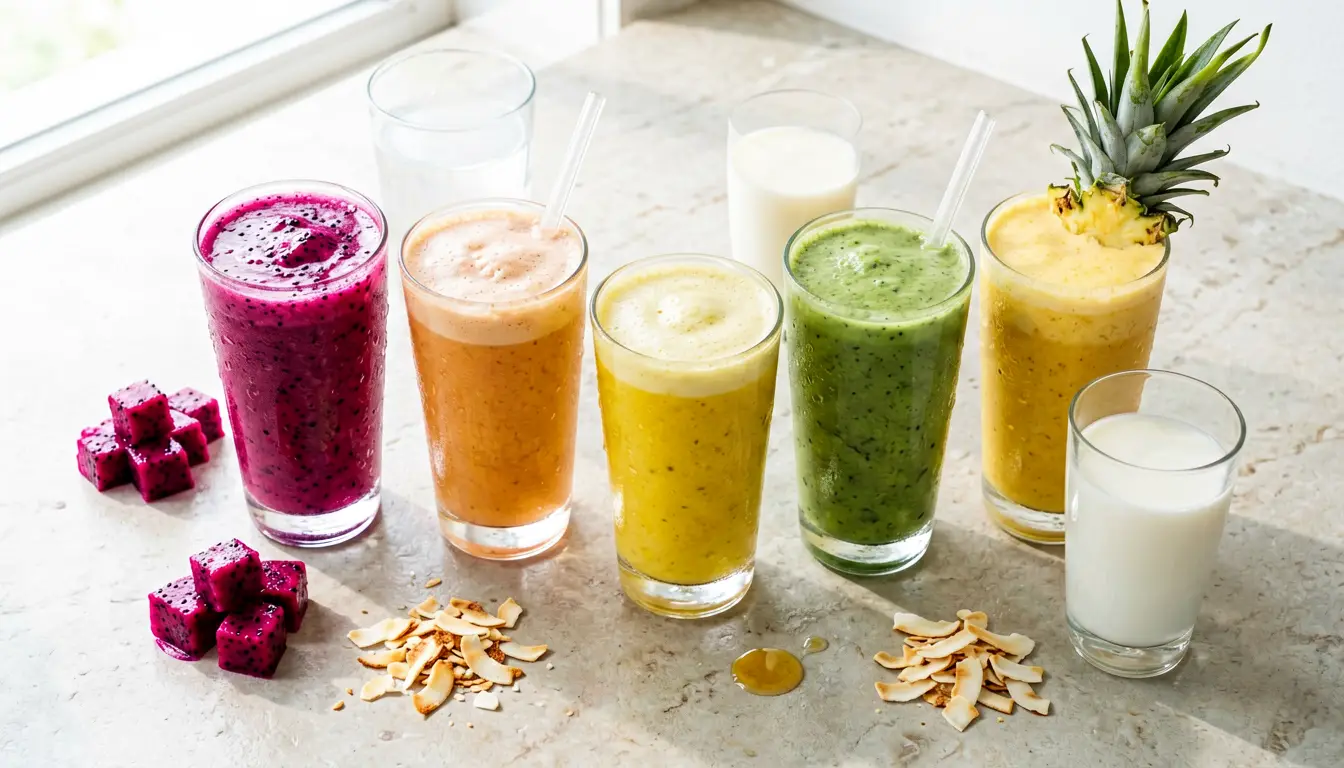
This list focuses on pitaya smoothies that actually give the fruit enough support to feel complete. Some use banana or yogurt for creaminess. Some use pineapple, mango, citrus, or ginger to sharpen the flavor. Some turn pitaya into a thicker bowl, while others keep it lighter and more drinkable. For the same fruit under its other name, dragon fruit smoothie ideas keep the color and tropical feel. If you are still choosing between bright fruit styles, fruit smoothie flavor paths help you compare them.
Quick Picks / Best Fits
| If you want… | Start here | Why it works |
|---|---|---|
| the easiest all-around version | easy pitaya smoothie | Frozen pitaya plus one or two stronger fruit partners keeps it simple and bright. |
| the thickest breakfast option | pitaya smoothie bowl | Pitaya holds up especially well in bowl form. |
| the brightest flavor | ginger citrus pitaya smoothie | Citrus and ginger sharpen a fruit that can otherwise taste too mild. |
| the most tropical version | tropical pitaya smoothie | Mango and pineapple give pitaya more depth and sweetness. |
| a lower-carb option | low-carb tropical pink smoothie | Coconut milk, chia, and protein give structure without relying on lots of fruit. |
| the best protein-friendly version | protein pitaya smoothie | Seeds, yogurt, or protein powder make pitaya more breakfast-ready. |
How This List Is Organized
These pitaya smoothies are grouped by what gives pitaya more presence. Some use frozen fruit and bowls to improve the texture. Others use pineapple, mango, citrus, or ginger to give the flavor more direction. A few lean into higher-protein or lower-carb builds, where pitaya brings color and freshness while other ingredients do more of the lifting.
That is the key with pitaya. It is not a strong fruit by itself, but it is a very useful smoothie fruit when paired well. Mango smoothies make the glass softer and sweeter. Pineapple smoothies sharpen it. Acai smoothies go darker and thicker, while strawberry mango smoothies keep the tropical flavor sunny.
If you make pitaya smoothies often, frozen fruit quality and blender strength make a real difference. Frozen fruit for smoothies helps the color stay vivid, and smoothie blenders are worth comparing if frozen pitaya stays gritty or icy.
If you are deciding whether to keep experimenting at home or follow a paid smoothie schedule, start with The Smoothie Diet versus homemade smoothies before choosing the structured path.
Dragon Fruit Smoothie
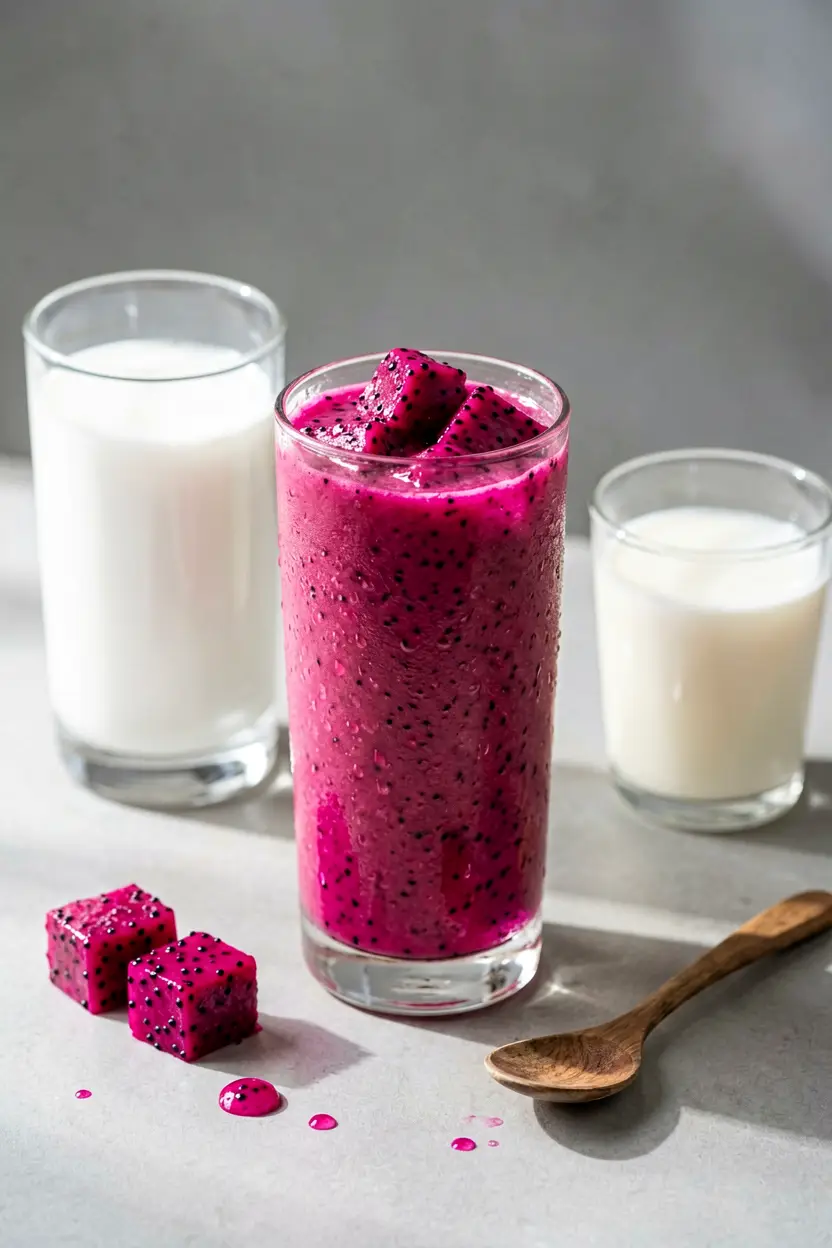
Choose this version when you want a bright pink smoothie with a clean tropical flavor.
Ingredients:
- 1 cup frozen dragon fruit or pitaya cubes
- 3/4 cup milk, almond milk, oat milk, or coconut water
- 1 teaspoon honey or maple syrup, optional
How to Make It: Add the liquid to the blender first, then add the fruit and any creamy or flavor add-ins. Blend until smooth, stopping once to scrape down the sides if needed. Taste, then adjust with a splash more liquid for a thinner smoothie or a few ice cubes for a colder one.
Recipe Tips: Use frozen dragon fruit or pitaya cubes for stronger color and a colder texture.
Dragon Fruit Smoothie Bowl
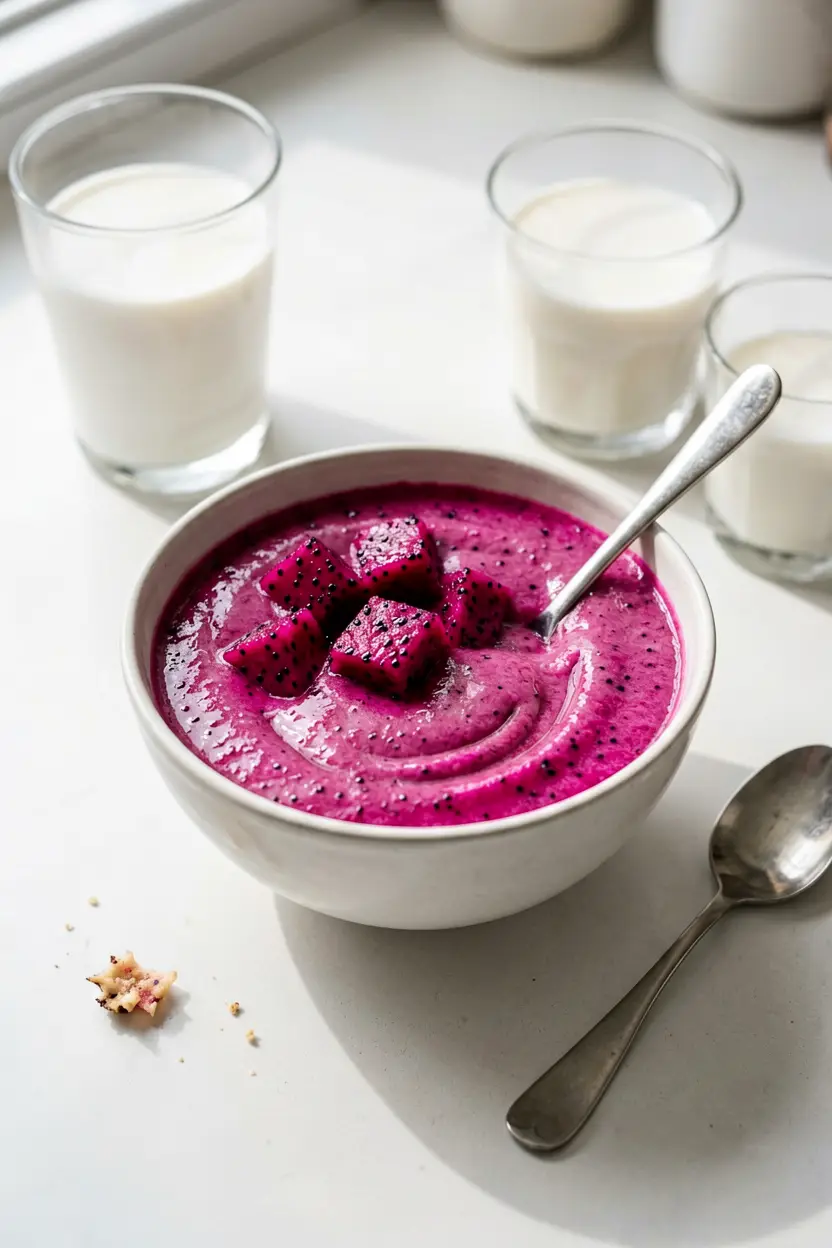
Use this smoothie when pitaya should turn thick, cold, and spoonable.
Ingredients:
- 1 cup frozen dragon fruit or pitaya cubes
- 3/4 cup milk, almond milk, oat milk, or coconut water
- 1/4 cup granola or sliced fruit for topping
- 1 teaspoon honey or maple syrup, optional
How to Make It: Add the liquid to the blender first, then add the fruit and any creamy or flavor add-ins. Blend until smooth, stopping once to scrape down the sides if needed. Taste, then adjust with a splash more liquid for a thinner smoothie or a few ice cubes for a colder one.
Recipe Tips: Keep the liquid low so the bowl stays thick enough to hold toppings.
Easy Pitaya Smoothie
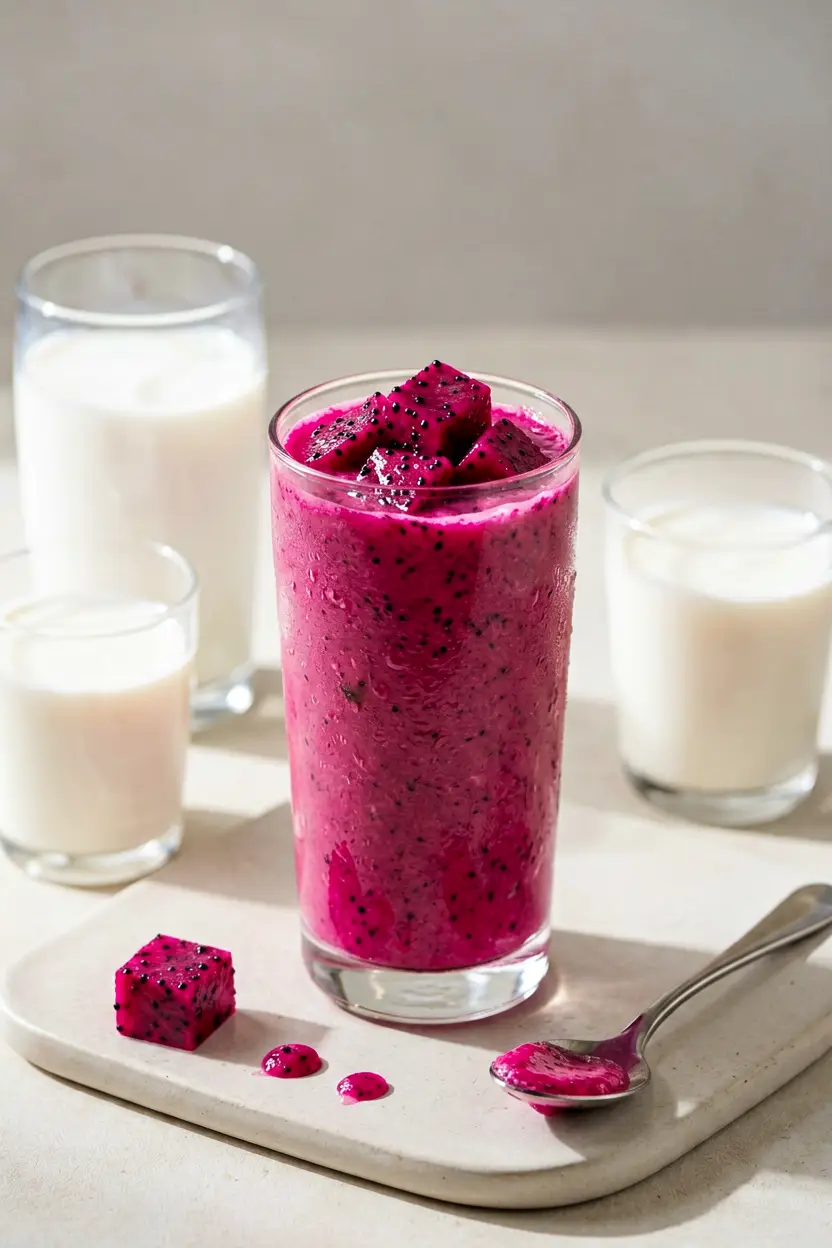
Start here when you want a bright pink smoothie with a clean tropical flavor.
Ingredients:
- 1 cup frozen pitaya cubes
- 3/4 cup milk, almond milk, oat milk, or coconut water
- 1 teaspoon honey or maple syrup, optional
How to Make It: Add the liquid to the blender first, then add the fruit and any creamy or flavor add-ins. Blend until smooth, stopping once to scrape down the sides if needed. Taste, then adjust with a splash more liquid for a thinner smoothie or a few ice cubes for a colder one.
Recipe Tips: Keep the base simple, then add citrus only if the pitaya tastes too mild.
Ginger Citrus Dragon Fruit Smoothie
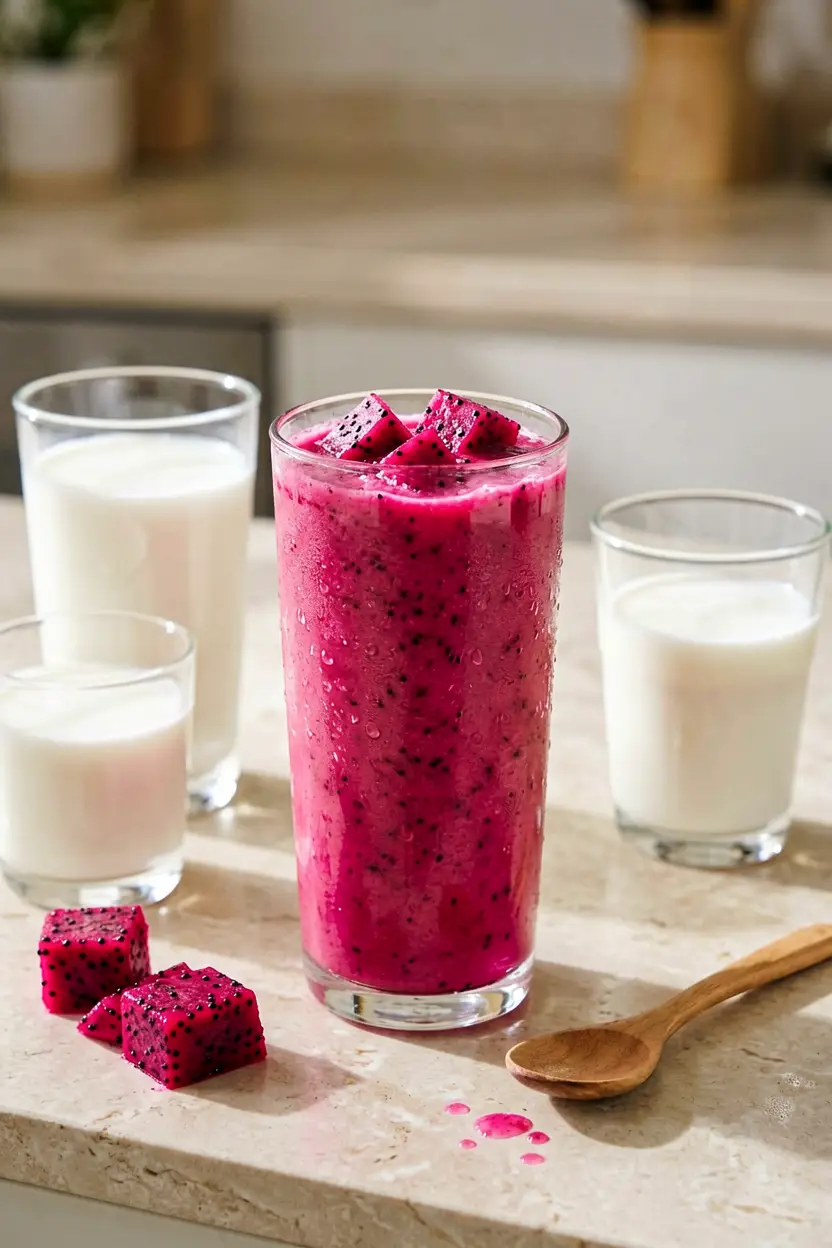
Pick this version for a bright pink smoothie with a clean tropical flavor.
Ingredients:
- 1 cup frozen dragon fruit or pitaya cubes
- 3/4 cup milk, almond milk, oat milk, or coconut water
- 1/2 teaspoon grated fresh ginger
- 1 tablespoon lemon or lime juice
- 1 teaspoon honey or maple syrup, optional
How to Make It: Add the liquid to the blender first, then add the fruit and any creamy or flavor add-ins. Blend until smooth, stopping once to scrape down the sides if needed. Taste, then adjust with a splash more liquid for a thinner smoothie or a few ice cubes for a colder one.
Recipe Tips: Add the citrus or ginger gradually, then taste before adding more so it stays refreshing.
Low-Carb Tropical Pink Smoothie
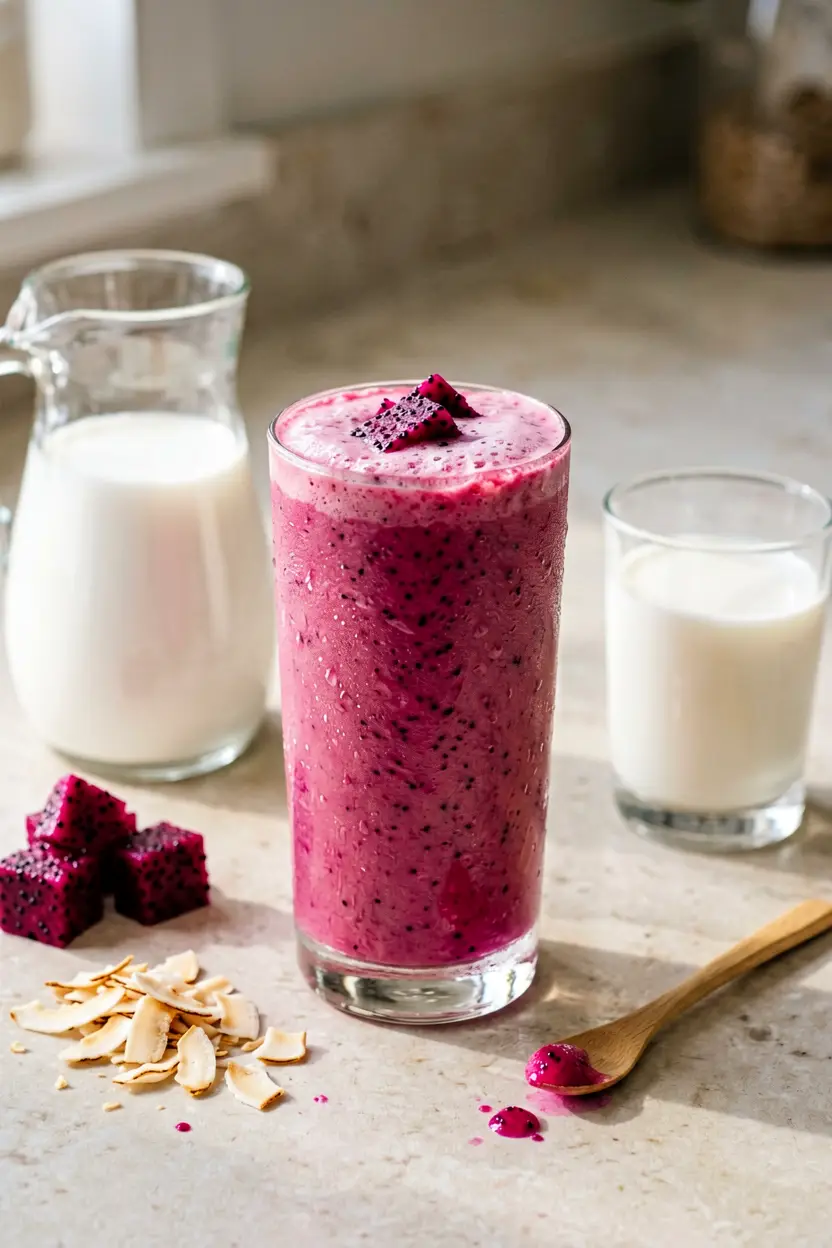
Blend this one when you want pitaya color without building the whole drink around extra-sweet fruit. Coconut milk, chia, and avocado give it body while lime keeps the flavor bright.
Ingredients:
- 1 cup frozen pitaya cubes
- 3/4 cup unsweetened almond milk or light coconut milk
- 1/4 avocado
- 1 tablespoon chia seeds
- 1 tablespoon lime juice
How to Make It: Add the liquid to the blender first, then add the fruit and any creamy or flavor add-ins. Blend until smooth, stopping once to scrape down the sides if needed. Taste, then adjust with a splash more liquid for a thinner smoothie or a few ice cubes for a colder one.
Recipe Tips: Skip juice and sweetened yogurt here; ripe fruit and a creamy add-in give better balance.
Tropical Dragon Fruit Smoothie
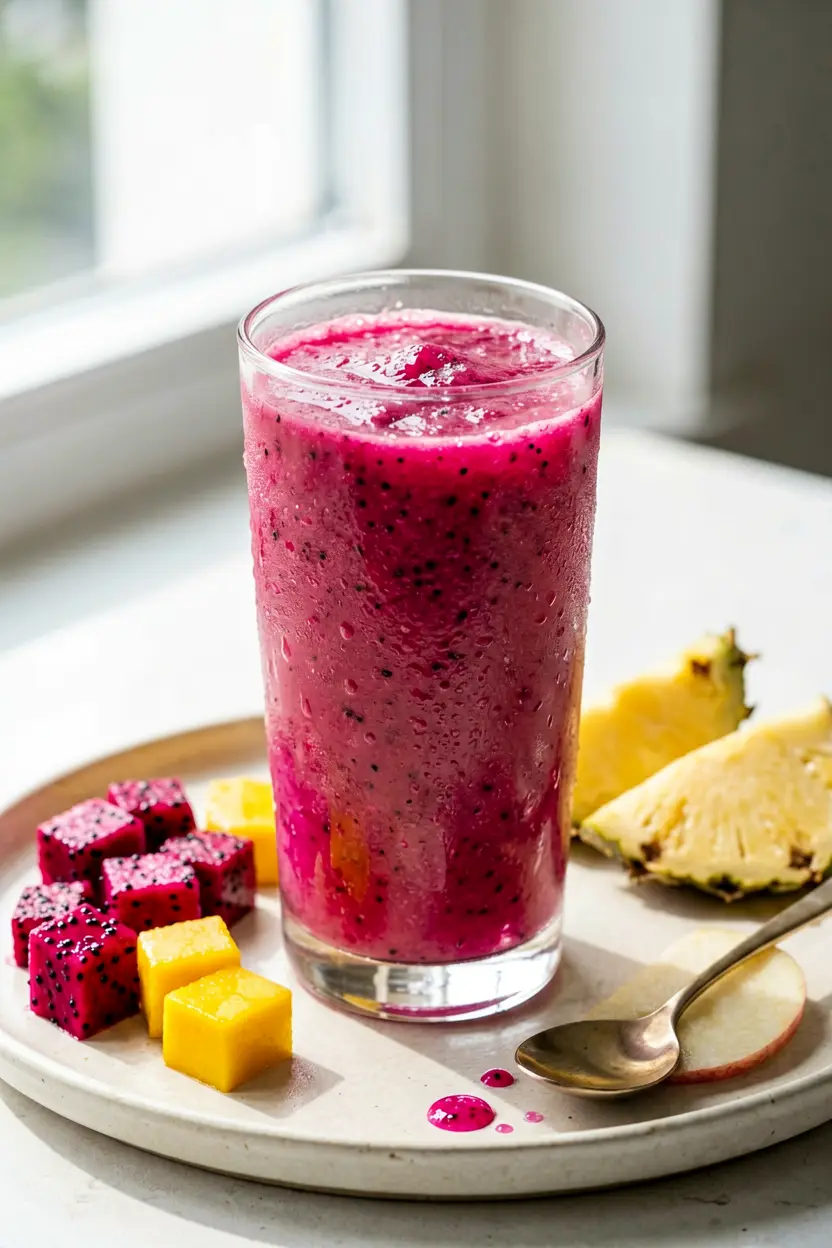
Choose this version when mango and pineapple should make pitaya taste more tropical.
Ingredients:
- 1 cup frozen dragon fruit or pitaya cubes
- 1/2 cup mango chunks, fresh or frozen
- 1/2 cup pineapple chunks
- 3/4 cup milk, almond milk, oat milk, or coconut water
- 1 teaspoon honey or maple syrup, optional
How to Make It: Add the liquid to the blender first, then add the fruit and any creamy or flavor add-ins. Blend until smooth, stopping once to scrape down the sides if needed. Taste, then adjust with a splash more liquid for a thinner smoothie or a few ice cubes for a colder one.
Recipe Tips: Pair dragon fruit with mango or pineapple if the fruit tastes mild on its own.
Protein Pitaya Smoothie
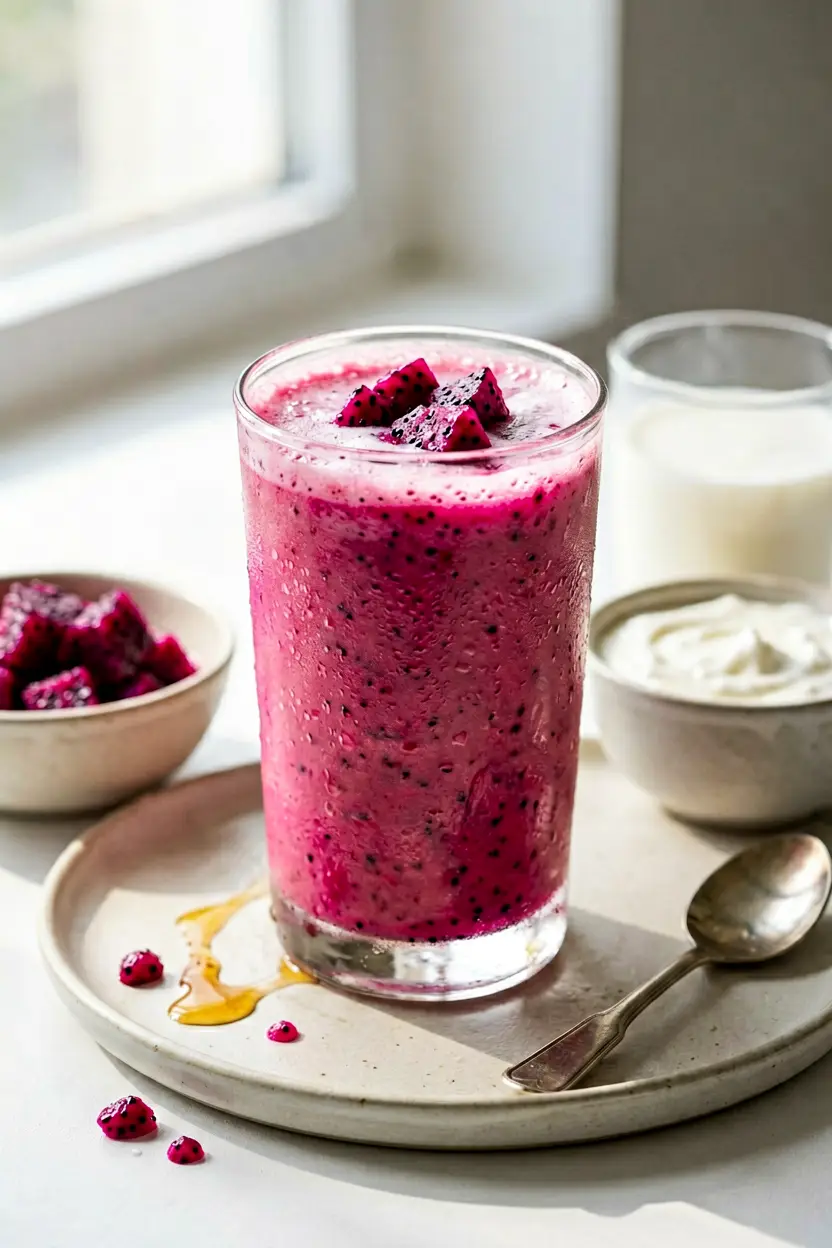
Use this smoothie when pitaya needs enough yogurt or protein support for breakfast.
Ingredients:
- 1 cup frozen pitaya cubes
- 3/4 cup milk, soy milk, or almond milk
- 1/2 cup Greek yogurt or 1 scoop protein powder
- 1 teaspoon honey or maple syrup, optional
How to Make It: Add the liquid to the blender first, then add the fruit and any creamy or flavor add-ins. Blend until smooth, stopping once to scrape down the sides if needed. Taste, then adjust with a splash more liquid for a thinner smoothie or a few ice cubes for a colder one.
Recipe Tips: If using protein powder, add it after the fruit so it blends evenly instead of sticking to the sides.
Banana-Free Pitaya Smoothie
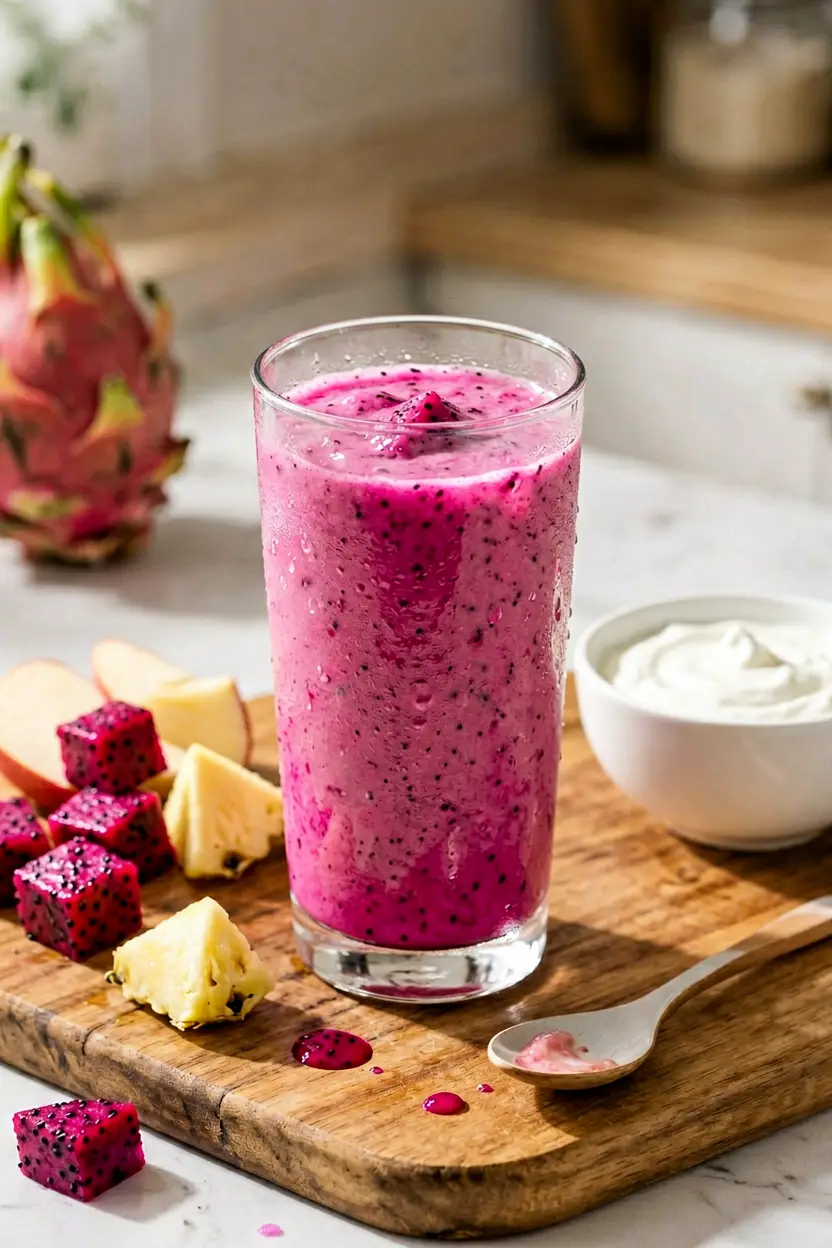
Start here when you want a bright pink pitaya smoothie without banana taking over the texture. Pineapple and yogurt keep it smooth while the pitaya still controls the color.
Ingredients:
- 1 cup frozen pitaya cubes
- 1/2 cup pineapple chunks
- 1/2 cup plain yogurt or coconut yogurt
- 1/2 cup almond milk, oat milk, or coconut water
- 1 teaspoon honey or maple syrup, optional
How to Make It: Add the liquid to the blender first, then add the fruit and any creamy or flavor add-ins. Blend until smooth, stopping once to scrape down the sides if needed. Taste, then adjust with a splash more liquid for a thinner smoothie or a few ice cubes for a colder one.
Recipe Tips: Use frozen fruit, yogurt, or avocado for body so the smoothie does not need banana.
Frozen Pitaya Smoothie
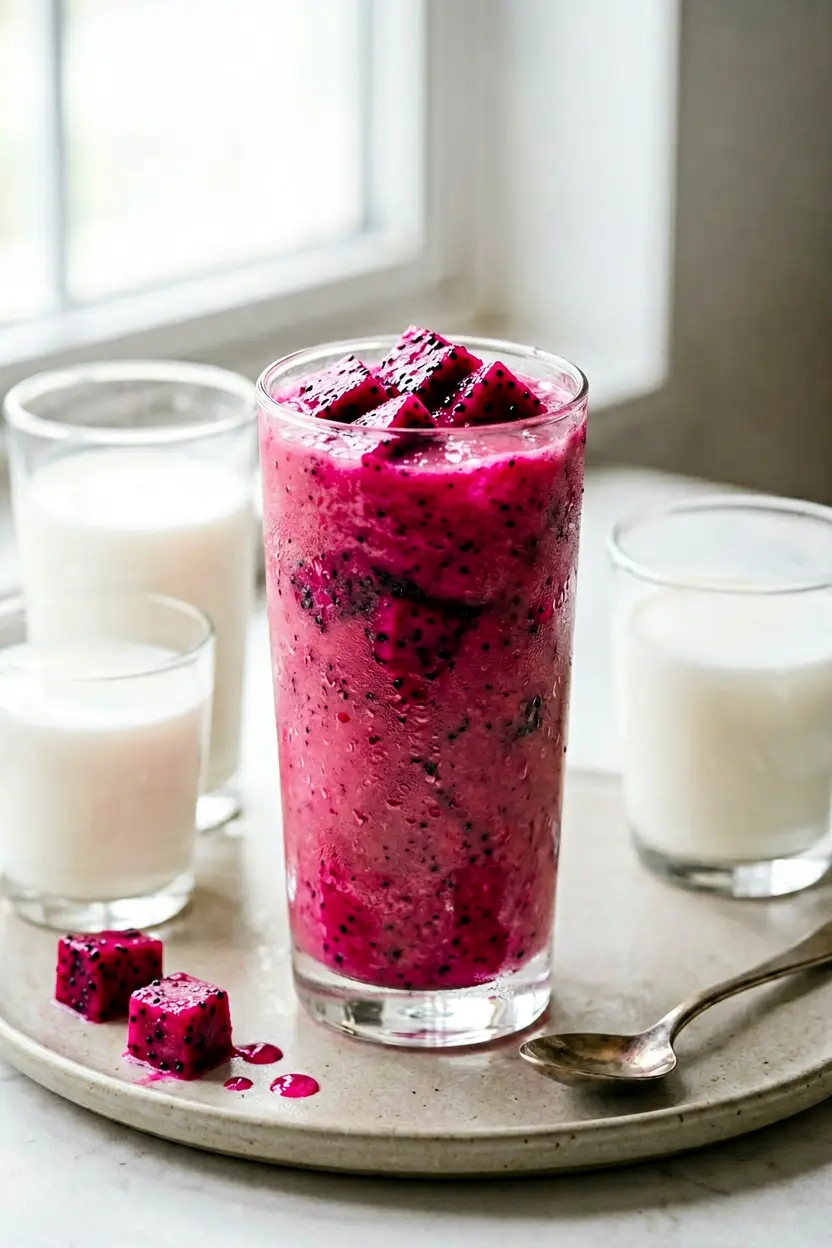
Pick this version when frozen fruit should do most of the chilling and thickening.
Ingredients:
- 1 cup frozen pitaya cubes
- 3/4 cup milk, almond milk, oat milk, or coconut water
- 1/2 cup ice, only if needed
- 1 teaspoon honey or maple syrup, optional
How to Make It: Add the liquid to the blender first, then add the fruit and any creamy or flavor add-ins. Blend until smooth, stopping once to scrape down the sides if needed. Taste, then adjust with a splash more liquid for a thinner smoothie or a few ice cubes for a colder one.
Recipe Tips: Blend frozen pitaya with the liquid first, then add ice only if it still needs more thickness.
Creamy Coconut Pitaya Smoothie
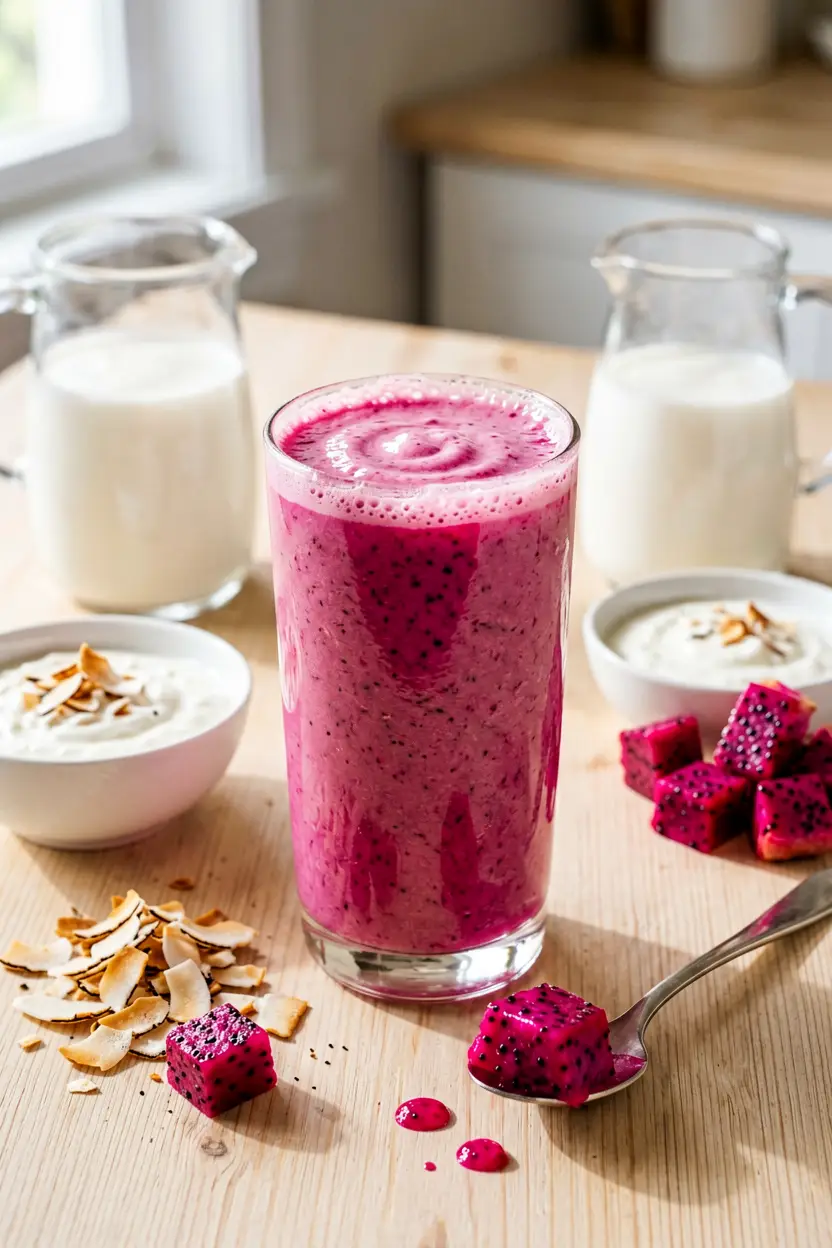
Blend this one when coconut should make pitaya smoother and more mellow.
Ingredients:
- 1/2 cup coconut milk or coconut yogurt
- 1 cup frozen pitaya cubes
- 3/4 cup coconut water or light coconut milk
- 1 teaspoon honey or maple syrup, optional
How to Make It: Add the liquid to the blender first, then add the fruit and any creamy or flavor add-ins. Blend until smooth, stopping once to scrape down the sides if needed. Taste, then adjust with a splash more liquid for a thinner smoothie or a few ice cubes for a colder one.
Recipe Tips: Use light coconut milk for a softer finish or coconut water for a brighter, thinner smoothie.
How to Choose the Right Option
Choose first by whether you want pitaya to feel bright or creamy. For brightness, go with citrus, ginger, or banana-free tropical versions. For creaminess, choose bowls, coconut, or protein-supported versions. If texture is your biggest issue, start with frozen pitaya before changing anything else.
Then think about the role of the smoothie. For quick sipping, easy and tropical versions make the most sense. For breakfast, bowls and protein blends are stronger. For a lighter tropical sip, fresh fruit blends keep the flavor clean. If pitaya tastes flat, fruit smoothie balance and smoothie fruit pairings help you choose the fruit that should carry the flavor.
Frequently Asked Questions
Is pitaya the same as dragon fruit in smoothies?
Yes. Pitaya and dragon fruit are commonly used for the same fruit, especially in smoothie recipes, though the color can vary depending on the variety you buy.
What does pitaya taste like in a smoothie?
Pitaya usually tastes mild, lightly sweet, and fresh. It often needs stronger ingredients like mango, pineapple, citrus, or ginger to make the smoothie feel more complete.
Is frozen pitaya better than fresh for smoothies?
Often, yes. Frozen pitaya usually gives a thicker, colder smoothie and stronger color without needing as much ice.
What goes well with pitaya in a smoothie?
Mango, pineapple, banana, citrus, ginger, coconut, yogurt, and strawberries all pair well with pitaya depending on whether you want more creaminess, brightness, or tropical flavor.
Can I make a pitaya smoothie without banana?
Yes. Mango, pineapple, yogurt, kiwi, or even avocado can help with texture if you want to skip banana.
Why does my pitaya smoothie look great but taste bland?
Usually because pitaya is too gentle to carry the whole smoothie by itself. A stronger fruit or a brighter ingredient like lime or ginger often fixes that quickly.
For another bright pink glass, dragon fruit smoothie ideas stay closest to pitaya. Mango smoothies make the blend softer. Pineapple smoothies make it sharper. Acai smoothies take the color into a deeper bowl-style direction.