
As an affiliate, we may earn a commission from qualifying purchases. We get commissions for purchases made through links on this website from Amazon and other third parties.
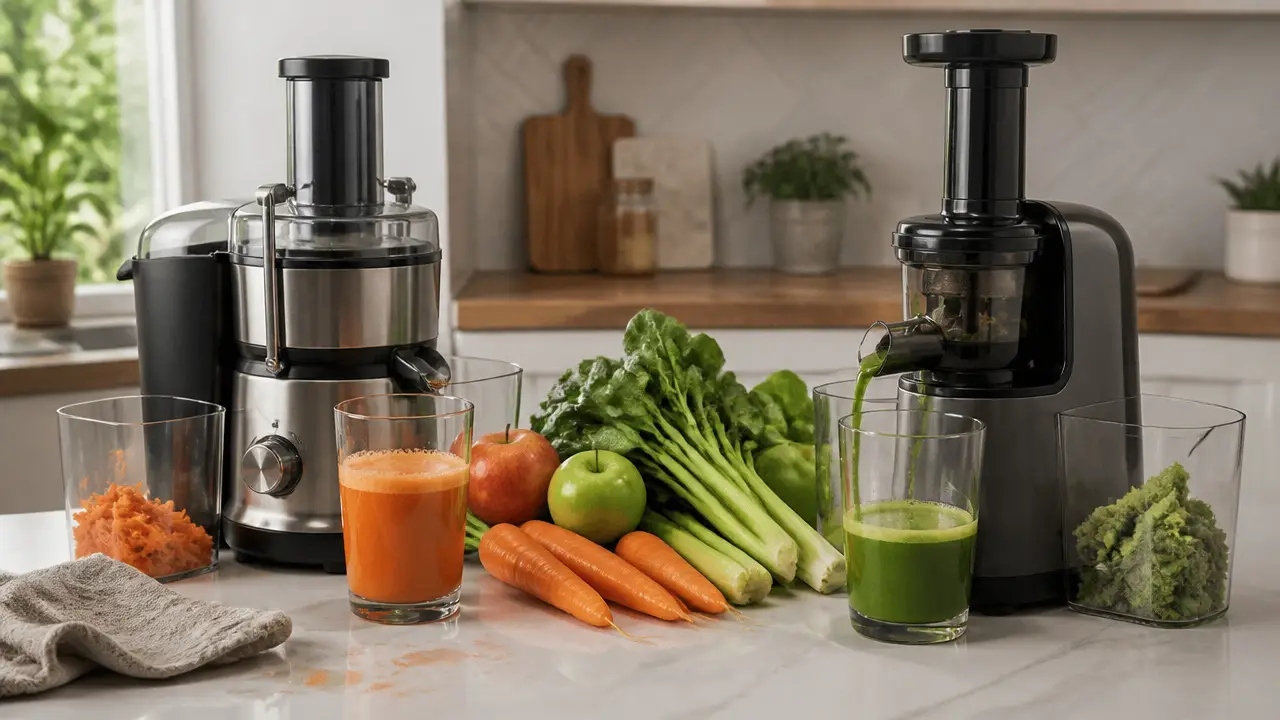
Juicer vs cold-press juicer usually means one practical comparison: a standard centrifugal juicer versus a slower masticating machine. Both make juice, but they do not make the same kind of routine. One is faster and easier to jump into. The other is slower, quieter, and usually built for people who care more about juice texture and yield.
That is why the right choice depends less on brand and more on your habits. If you want quick juice with minimal waiting, a standard juicer usually makes more sense. If you want smoother, lower-foam juice and plan to juice often, a cold-press juicer is usually the better fit.
Quick Answer
A standard juicer is usually better for speed, lower entry cost, and simpler everyday use. A cold-press juicer is usually better for smoother juice, quieter operation, leafy greens, and getting more juice from the same produce.
If you want the easiest first step into juicing, start with the standard juicer. If juicing is becoming a real habit and you care about juice quality more than speed, move to cold press.
Key Differences
How they work
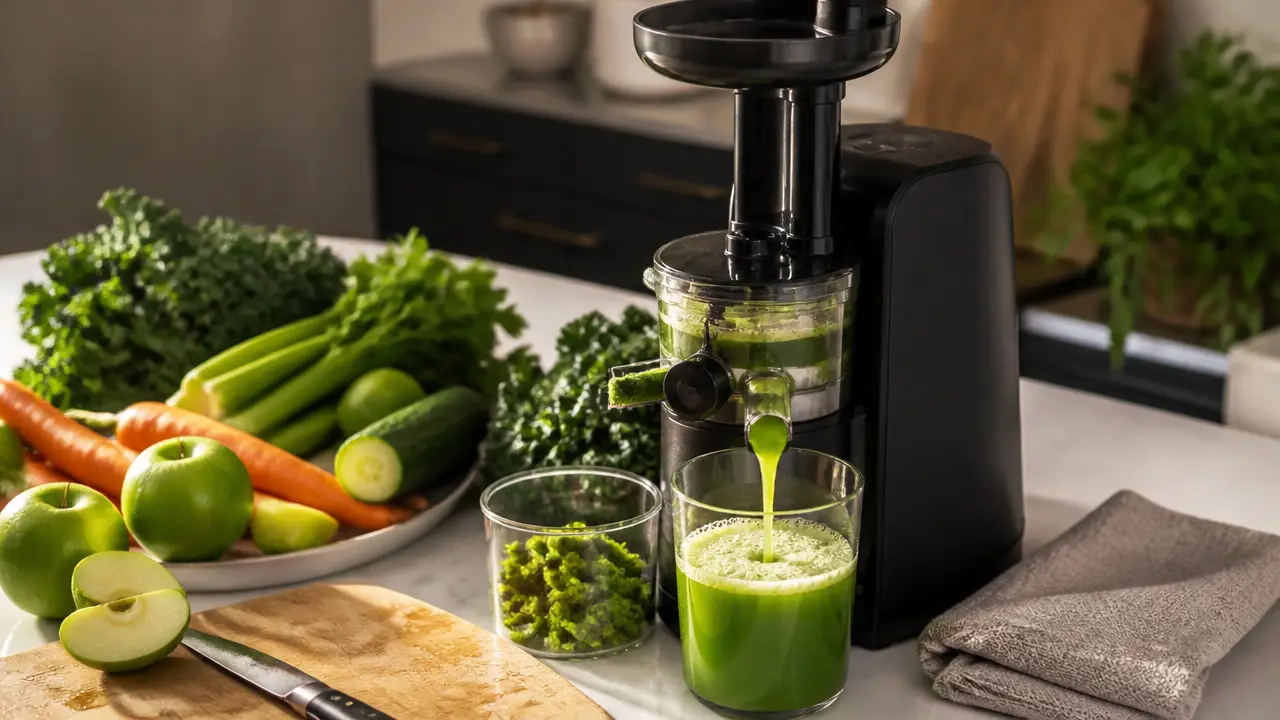
A standard centrifugal juicer uses fast-spinning blades and force to separate juice from pulp quickly. A cold-press juicer uses a slower auger-style system that crushes and presses produce more gradually.
That slower extraction is the reason cold-press juice often comes out smoother and with less foam. The centrifugal approach is faster, but it is also louder and more likely to create a more aerated drink.
Speed
This is the clearest standard-juicer advantage. Centrifugal models can make juice in seconds and often accept larger produce pieces through wider feed chutes. That matters if you want a fast morning drink and do not want to spend extra time chopping.
Cold-press models are slower by design. They ask more patience from the routine, and that can be enough to make or break long-term use for some buyers.
Yield and produce fit
Cold-press juicers usually make a stronger case on yield, especially with leafy greens and fibrous produce. The slower pressing style tends to squeeze more from the same ingredients and leave drier pulp.
Standard juicers can still work very well for harder produce like carrots and apples, but they are usually less convincing when greens are a big part of the plan. If that matters to you, Cold Press Juicer Buying Guide and the best cold press juicers are the better next reads.
Noise and feel
Standard juicers are usually louder. Cold-press juicers are usually quieter and more deliberate. That may sound like a small detail, but it matters if you juice early, share a kitchen, or already know noise makes you avoid appliances.
Cleanup
This is less absolute. Standard juicers often feel simpler and faster to clean because the systems are less involved. Cold-press juicers can have more parts and screens, though some models are improving here. In real life, the better pick is the one you will still wash without resentment on a normal weekday.
Best For
A Standard Juicer Is Better For:
- People who want speed first.
- Buyers new to juicing who do not want a big commitment.
- Shoppers who value lower cost and simpler operation.
- People juicing mostly apples, carrots, or other straightforward ingredients.
A Cold-Press Juicer Is Better For:
- People who juice often enough to care about yield and texture.
- Readers who use leafy greens, celery, or fibrous vegetables regularly.
- Buyers who want quieter operation.
- People willing to trade speed for smoother, lower-foam juice.
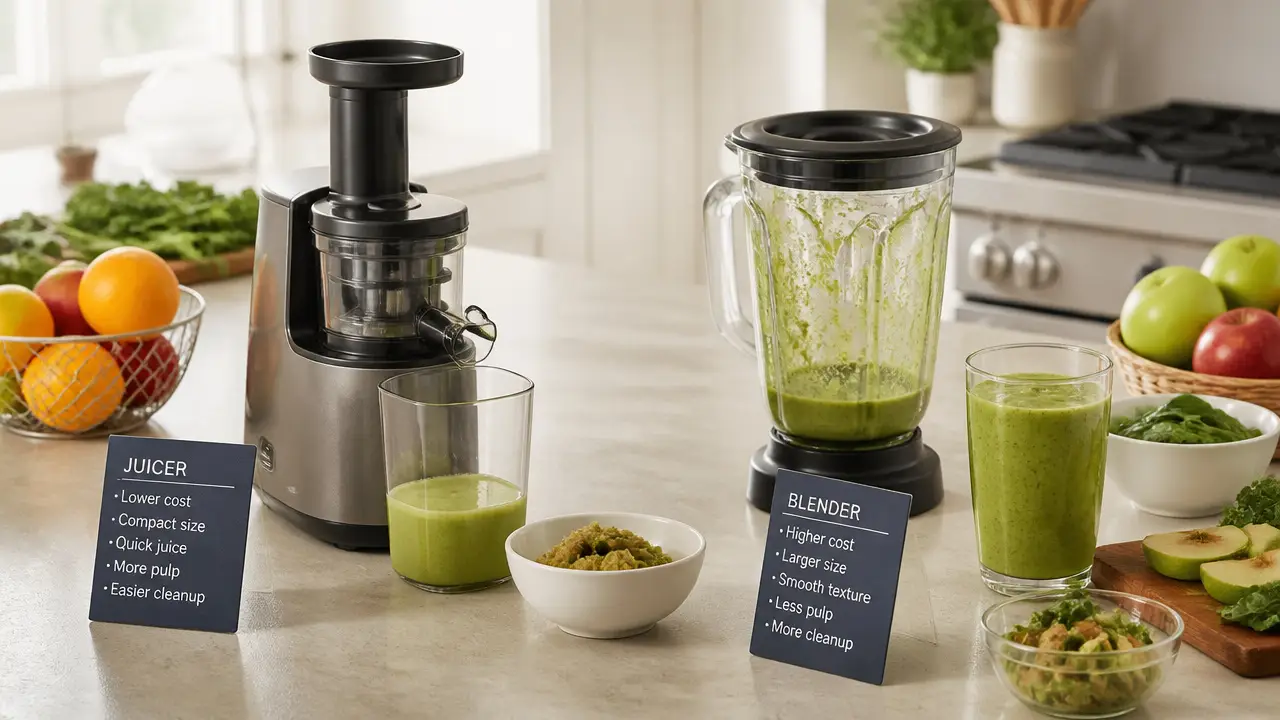
If you still are not sure whether you need any juicer at all, Juicer vs Blender and Are Juicers Worth It? are more useful starting points.
When to Choose a Standard Juicer
Choose a standard juicer when convenience is the point. If you want a machine that can get you juice quickly before work, handle harder produce without much fuss, and ask less of your budget, a centrifugal-style juicer is the safer buy.
It also makes more sense when you are just testing whether juicing will stick. A cheaper, faster machine is easier to justify than a premium slow juicer you may stop using in a month.
This category works best when you value speed and simplicity more than getting every last drop of juice out of greens. For some people, that is exactly the right trade.
When to Choose a Cold-Press Juicer
Choose a cold-press juicer when you already know juice quality matters to you. If you care about smoother texture, lower foam, quieter use, and better performance with leafy greens, cold press earns the extra time and money more easily.
It is also the better fit for people who plan to batch juice or make juice often enough that produce yield becomes a real concern. Over time, getting more from the same ingredients can matter more than shaving a minute or two off prep.
That does not make it the universal winner. It just means cold press is better for a narrower, more committed kind of juicer owner.
What Matters Most in the Decision
If you want speed, buy the standard juicer. If you want the better juice routine, buy the cold-press juicer. That is the simplest honest version.
The second question is how often you will juice greens. If the answer is "a lot," cold press pulls ahead. If the answer is "not much," a standard juicer stays easier to defend.
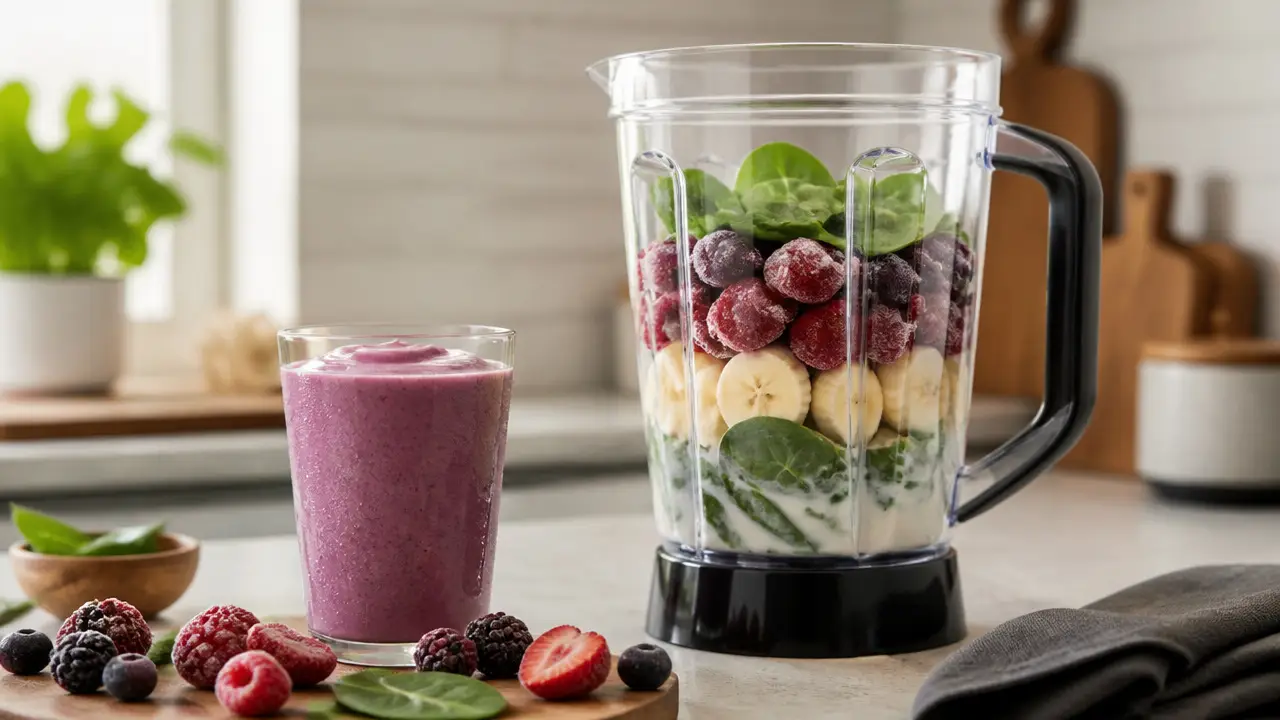
The third question is whether juicing is really the right category. If your drinks often include yogurt, oats, protein powder, or frozen fruit, you may be solving the wrong problem with a juicer. In that case the best blenders for smoothies or the best smoothie makers will fit better.
Frequently Asked Questions
What is the difference between a juicer and a cold-press juicer?
A standard juicer usually means a fast centrifugal machine, while a cold-press juicer uses a slower masticating system that presses produce more gradually.
Is a cold-press juicer better than a regular juicer?
It is usually better for smoother juice, leafy greens, and produce yield. It is not better for speed or lower-cost convenience.
Which one is easier to use?
A standard juicer is usually easier for beginners because it works faster and often needs less chopping.
Which one is better for greens?
Cold-press juicers are usually the better fit for leafy greens and fibrous vegetables.
Which one is easier to clean?
A standard juicer often feels easier to clean, though this depends on the exact machine and how much effort you tolerate after each use.
Should you buy a standard juicer or go straight to cold press?
Start with a standard juicer if you want the easier, lower-risk first step. Go straight to cold press if you already know juice quality and greens performance matter enough to justify the slower routine.
If you want the cold-press side explained in more detail, read the cold press juicer buying guide before comparing products. If you are still deciding whether juicing is the right category at all, juicer vs blender is the better first decision.