
As an affiliate, we may earn a commission from qualifying purchases. We get commissions for purchases made through links on this website from Amazon and other third parties.
Do smoothies make you gain weight? They can, but only when they help push your total calories above what your body uses.
That can happen by accident with juice, sweetened yogurt, nut butter, large bananas, honey, granola, and oversized portions. It can also happen on purpose if you are trying to gain weight and use smoothies as an easy way to add calories. For intentional gain, see smoothies for weight gaining.
Quick Answer
Smoothies can make you gain weight if they add extra calories instead of replacing a meal or snack. A large smoothie with juice, sweeteners, nut butter, protein powder, oats, and fruit can be calorie-dense.
Smoothies do not automatically cause weight gain. A light, balanced smoothie can fit weight loss. A high-calorie smoothie can support weight gain. The ingredients and how you use it decide.
If your real goal is weight loss and you keep using smoothies inconsistently, compare your homemade approach with The Smoothie Diet vs homemade smoothies. The comparison is useful because the same smoothie habit can either replace a weaker meal or quietly add extra calories.
What It Is / When to Use It
A smoothie is flexible. It can be a 150-calorie snack, a 400-calorie breakfast, or a 900-calorie weight-gain drink. The name does not tell you the impact.
Smoothies are more likely to cause weight gain when:
- You drink them in addition to normal meals
- You use juice as the base
- You add several calorie-dense extras
- The smoothie is large
- It is low in protein and leaves you hungry
- You buy cafe smoothies without checking what is inside
They are useful for gaining weight when appetite is low, chewing is hard, or you need a post-workout calorie boost. They are useful for weight loss only when they are planned and portioned. For that side, read do smoothies help you lose weight.
Substitutes / Swaps
If You Do Not Want Weight Gain
Swap juice for unsweetened almond milk, soy milk, water, or plain milk. Swap sweetened yogurt for plain Greek yogurt. Swap a whole banana plus mango for berries or half a banana.
Use one calorie-dense add-in, not five. Pick chia, flax, avocado, oats, or nut butter based on what the smoothie needs.
For lighter choices, use low-calorie smoothies or smoothies under 200 calories.
If You Do Want Healthy Weight Gain
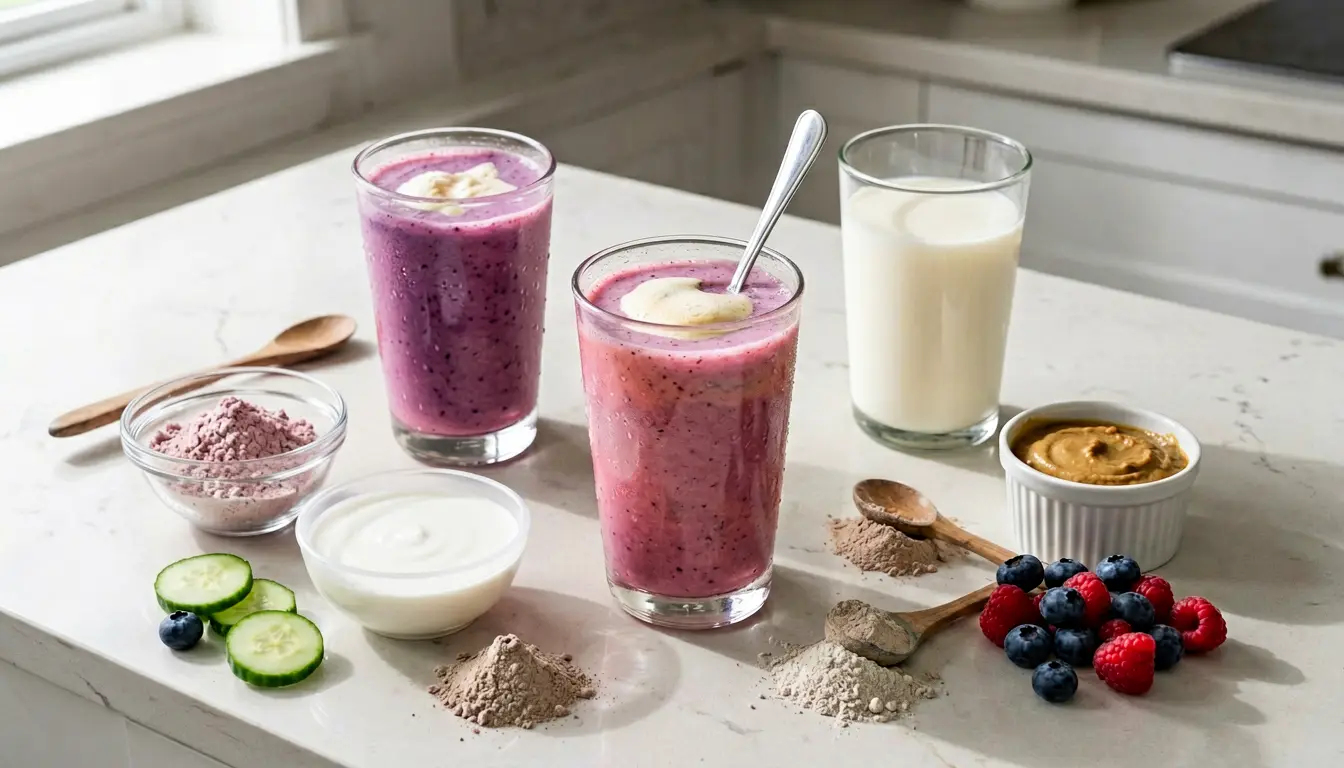
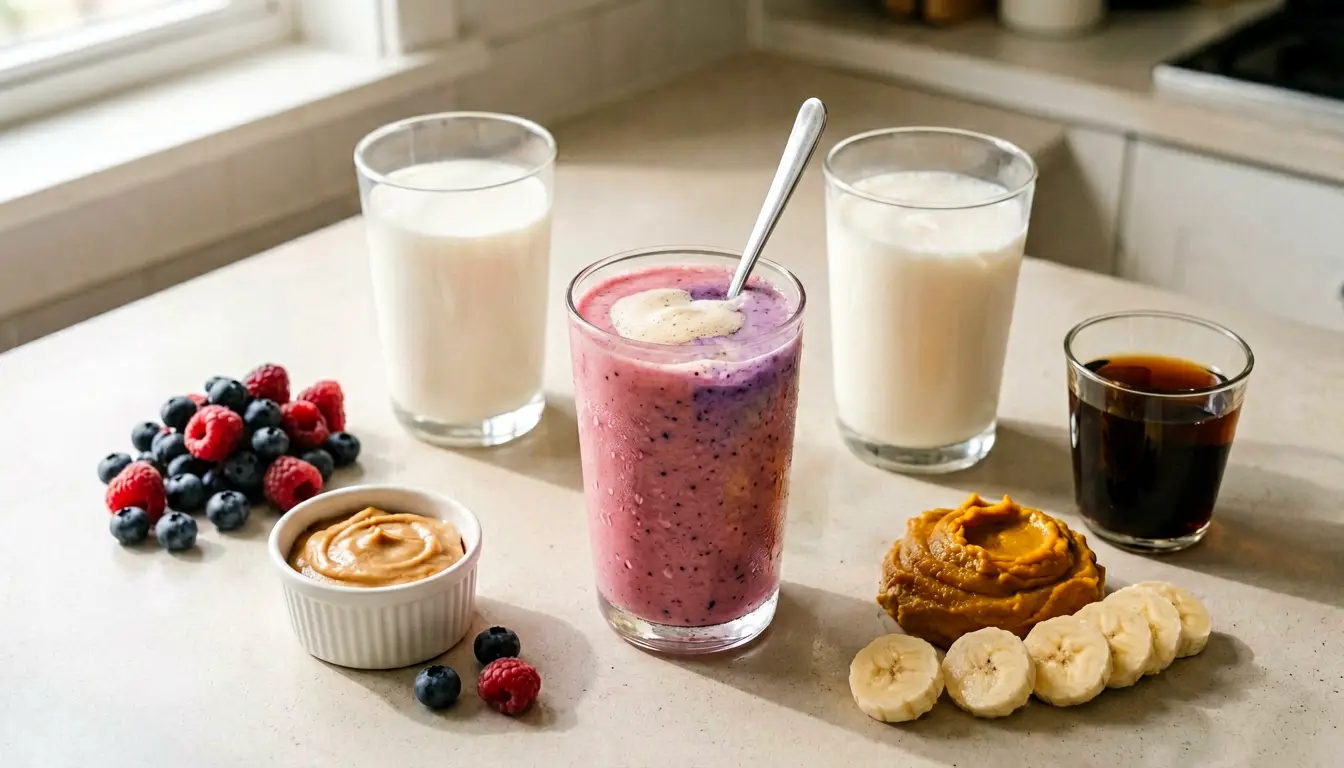
Use smoothies as an extra meal or a bigger snack. Add Greek yogurt, whole milk, oats, nut butter, avocado, protein powder, chia, flax, or coconut milk.
The goal is not sugar for the sake of calories. The goal is a smoothie with energy, protein, and nutrients. High-calorie protein smoothies are better for this than juice-heavy fruit drinks.
If Blood Sugar Is A Concern
Keep fruit measured and add protein, fat, and fiber. Avoid fruit juice as the main liquid. Choose berries, Greek yogurt, chia, flax, tofu, avocado, or unsweetened milk.
For a clearer formula, use smoothies for blood sugar control.
Prep Tips
Decide The Goal First
Before blending, ask: am I trying to lose, maintain, or gain?
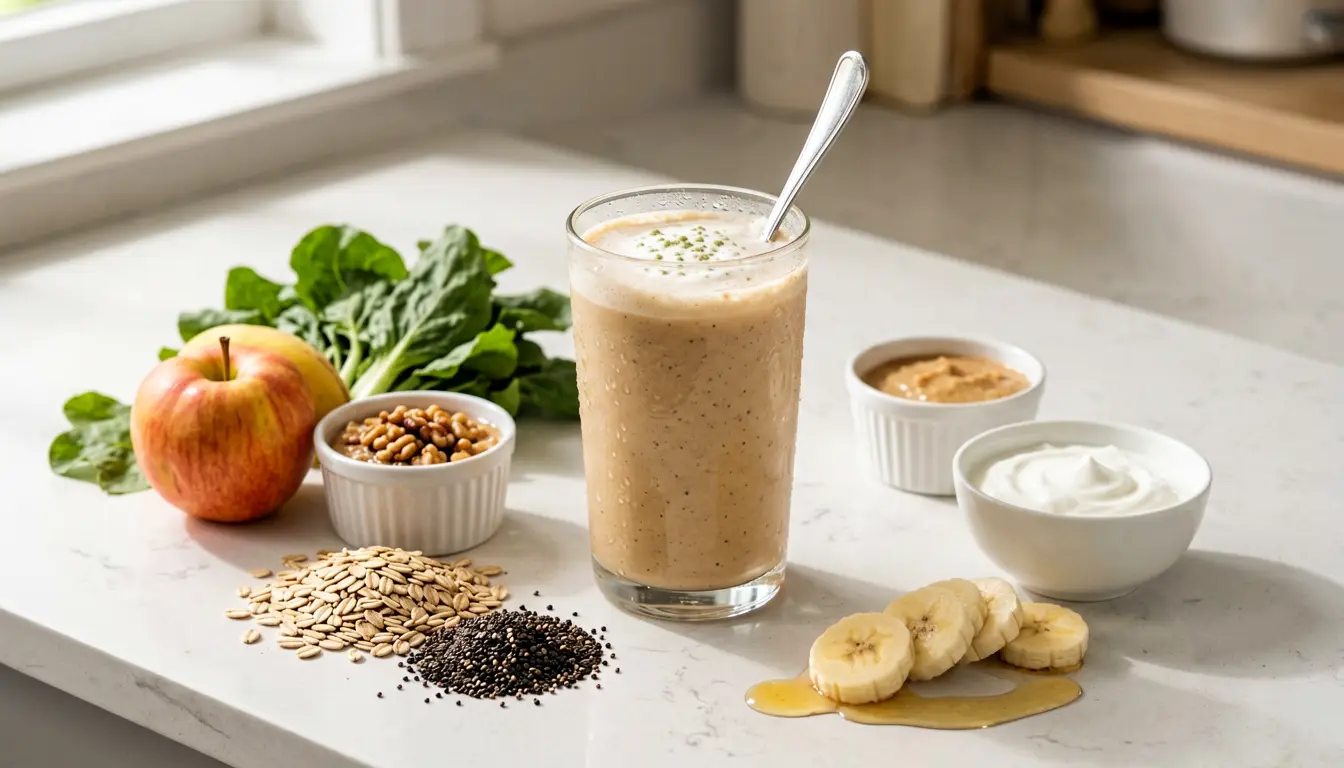
For weight loss, use measured fruit, unsweetened liquid, protein, and a little fiber. For maintenance, make it satisfying enough to replace the meal. For gain, add calories on purpose with oats, milk, nut butter, avocado, seeds, and protein.
Measure The Dense Ingredients
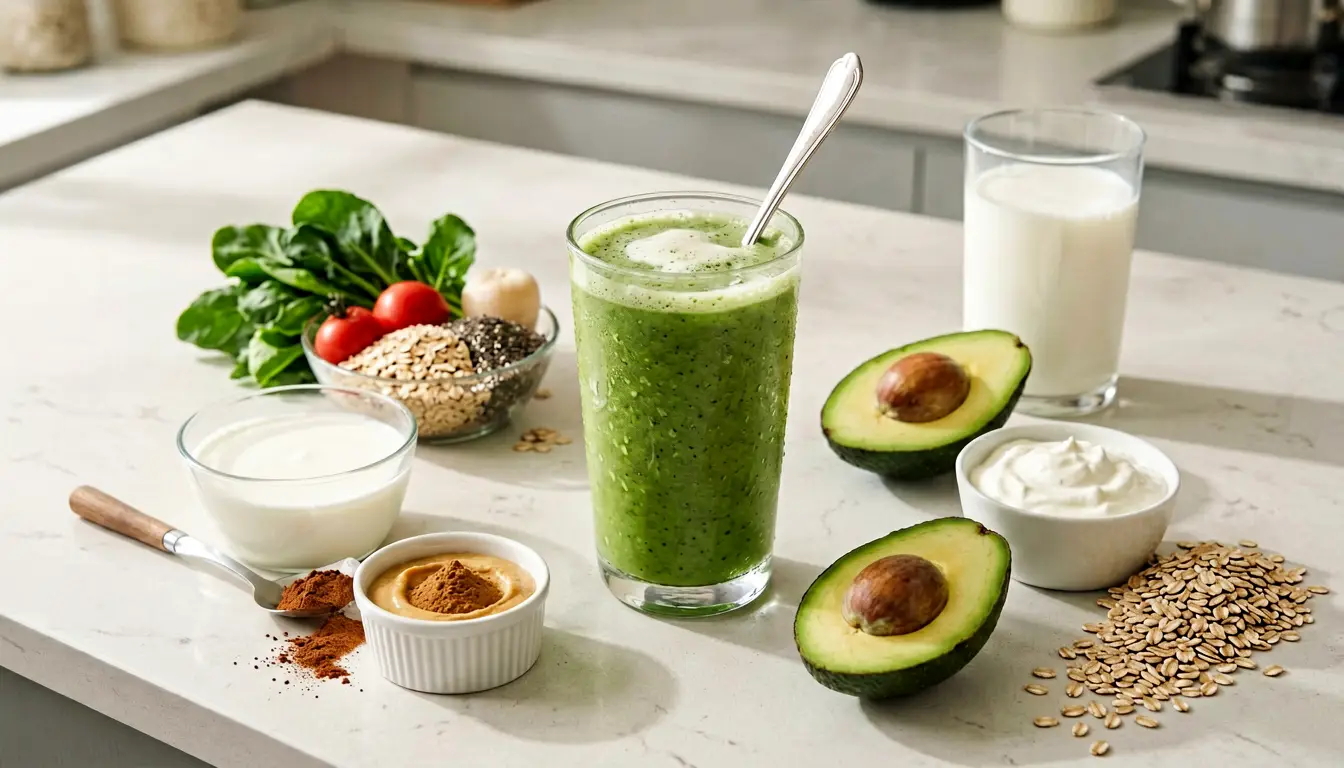
Nut butter, seeds, oats, avocado, coconut milk, and protein powder are easy to over-pour. They are not bad. They just need a job.
Start with:
- 1 tablespoon nut butter
- 1 tablespoon chia or flax
- 1/4 avocado
- 1/4 cup oats
- 1 scoop protein powder
Then adjust based on your goal.
Watch Liquid Calories
Fruit juice, sweetened plant milk, and sweetened coffee drinks can add calories quickly. They also make smoothies thinner, so you may drink them faster.
Use less liquid at first. A thick smoothie is usually more filling than a thin one.
Do Not Confuse Healthy With Low Calorie
Avocado, peanut butter, oats, seeds, whole milk, and coconut milk can be healthy ingredients. They can also make a smoothie high calorie.
That is helpful if you need weight gain. It is less helpful if you are trying to lose weight and already eating full meals.
Storage / Reheat / Freeze
For weight-loss smoothies, freezer packs help with portions. Pack measured fruit, greens, and vegetables in bags. Add liquid, protein, and seeds when blending.
For weight-gain smoothies, prep calorie boosters separately so you can adjust day by day. Keep oats, protein powder, chia, flax, and nut butter measured and ready.
Store blended smoothies in a sealed jar in the fridge and drink the same day. Shake well before drinking. Do not reheat smoothies.
If the smoothie separates, that is normal. Re-blend with ice or shake hard.
Frequently Asked Questions
Do smoothies make you gain weight?
They can if they add extra calories to your day. They do not cause weight gain automatically.
Why do smoothies make some people gain weight?
They can be easy to drink fast, low in fullness, and high in calories from juice, sweeteners, nut butter, oats, and large fruit portions.
Can smoothies help with healthy weight gain?
Yes. Smoothies can help when they include protein, carbs, healthy fats, and enough calories. They are useful when appetite is low.
What smoothie ingredients cause weight gain?
No single ingredient causes weight gain by itself, but high-calorie add-ins include nut butter, oats, avocado, coconut milk, whole milk, protein powder, honey, and large banana portions.
Can I drink smoothies and still lose weight?
Yes, if they are portioned and fit your daily food intake. For a practical approach, read will smoothies make you lose weight.
Are fruit smoothies fattening?
They can be if they are large, juice-based, or low in protein. A measured fruit smoothie with protein and fiber can fit many goals.
Should I avoid smoothies if I gain weight easily?
No, but make them smaller, thicker, higher in protein, and lower in added sweeteners. Treat them as food, not a side drink.
For related planning, use do smoothies work for weight loss if fat loss is the goal, smoothies under 400 calories for meal-size portions, smoothies under 100 calories for very light drinks, and smoothies diet for a structured smoothie routine.