
As an affiliate, we may earn a commission from qualifying purchases. We get commissions for purchases made through links on this website from Amazon and other third parties.
Do smoothies spike blood sugar? Some do, especially when they are made with fruit juice, large fruit portions, sweetened yogurt, and little protein or fiber.
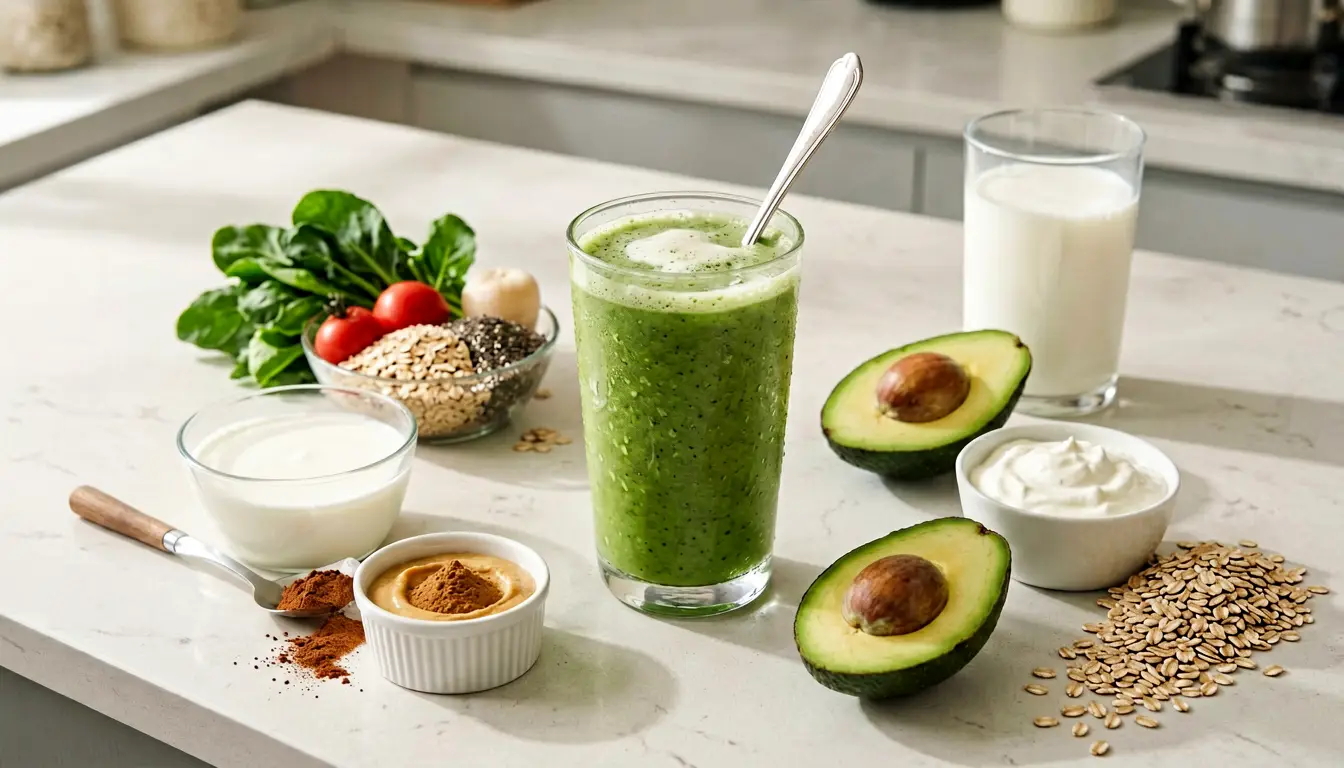
Smoothies can also be made in a steadier way. Use whole fruit, vegetables, protein, healthy fat, fiber, and an unsweetened base. If this is your main goal, start with smoothies for blood sugar control and use this page as the quick troubleshooting guide.
Quick Answer
Smoothies are most likely to spike blood sugar when they are thin, sweet, juice-based, and mostly fruit. They are less likely to spike when they include measured fruit, greens, protein, fiber, and fat.
If you have diabetes, prediabetes, insulin resistance, or take glucose-affecting medication, your personal response matters. Use your clinician's guidance and monitor how specific smoothies affect you.
If you are comparing smoothie changes with supplement-style support, read the Gluco6 review only after you have the food basics in place. For blood sugar, the smoothie formula, portion size, medication context, and glucose feedback matter first.
What It Is / When to Use It
A blood sugar spike is a fast rise in glucose after eating or drinking. With smoothies, the issue is usually not fruit alone. It is the combination of liquid form, portion size, juice, low fiber, and low protein.
Use a steadier smoothie when:
- Breakfast smoothies leave you tired or hungry
- Fruit-only smoothies trigger cravings
- You are trying to lower added sugar
- You want a better cafe-style order
- You need a snack that lasts longer
- You are managing blood sugar with a food plan
If cravings are part of the problem, use low-sugar smoothies for cravings.
Substitutes / Swaps
Swap Juice For Unsweetened Liquid
Fruit juice is the first thing to change. Use unsweetened almond milk, soy milk, flax milk, water, or plain kefir instead.
If you want orange flavor, use a few orange segments. If you want tartness, use lemon or lime.
Swap Big Fruit Portions For Berries
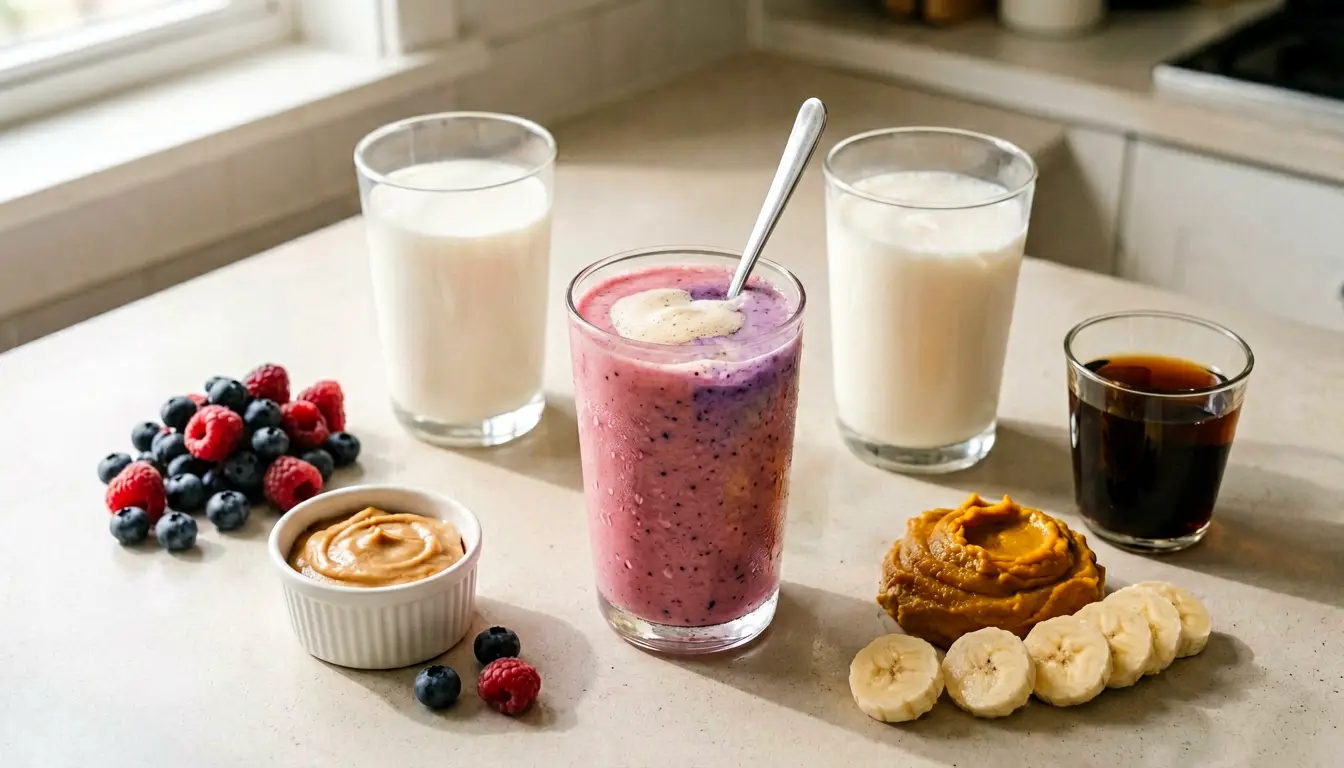
Berries are usually easier to fit into blood-sugar-friendly smoothies than big portions of banana, mango, pineapple, or dried fruit.
Use strawberries, raspberries, blackberries, or blueberries. Add spinach, cucumber, zucchini, or cauliflower for more volume.
Swap Sweetened Yogurt For Plain Protein
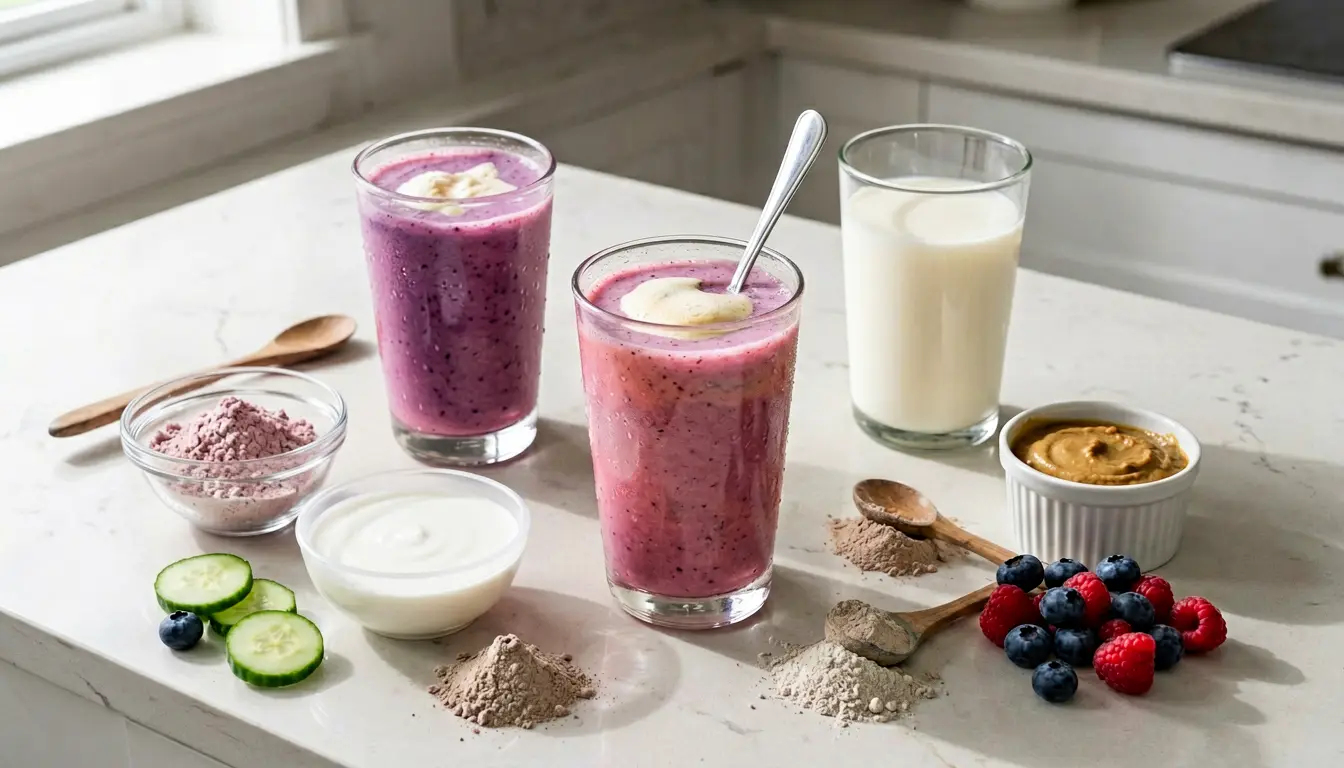
Use plain Greek yogurt, cottage cheese, tofu, soy milk, whey protein, or pea protein. Protein slows the smoothie down and makes it feel more complete.
For dairy-free bases, smoothies with almond milk can help.
Swap Syrup For Flavor
Use cinnamon, vanilla, cocoa, ginger, mint, lemon, lime, or almond extract. These make the smoothie taste more complete without adding a sugary base.
If you need more flavor ideas, use low-sugar smoothie ingredients.
Prep Tips
Use The Steady Smoothie Formula
Try this structure:
| Part | Amount To Start |
|---|---|
| Unsweetened liquid | 3/4 to 1 cup |
| Low-sugar fruit | 1/2 to 1 cup |
| Greens or vegetables | 1 to 2 handfuls |
| Protein | 1 serving |
| Fat or fiber | 1 tablespoon seeds or 1/4 avocado |
| Flavor | Cinnamon, vanilla, cocoa, citrus, or ginger |
Blend greens with liquid first, then add the rest. This gives a smoother texture.
Keep The Smoothie Smaller
An 8- to 12-ounce smoothie can be easier to manage than a large cafe cup. If the smoothie is meal-size, treat it like a meal.
Large smoothies often contain several fruit servings. Even if every ingredient is natural, the total carb load can climb.
Make It Thick
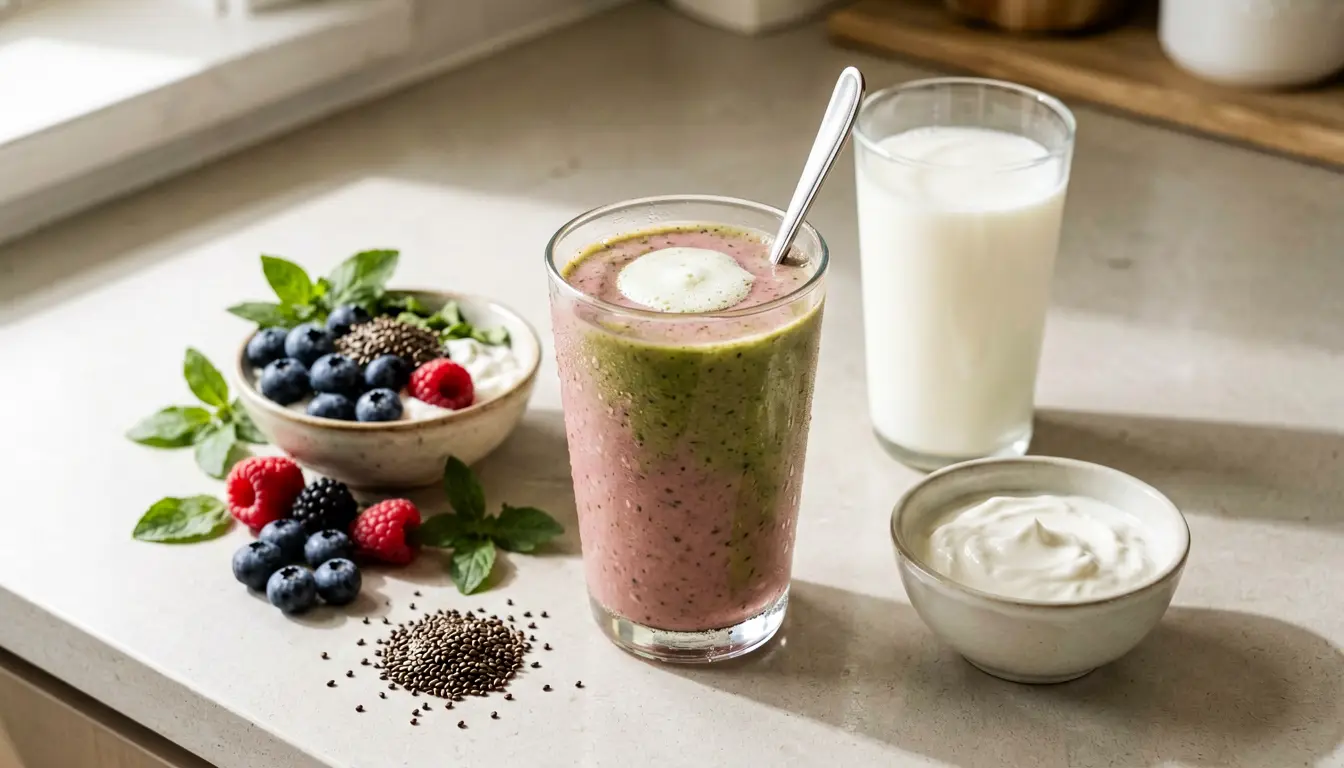
Thicker smoothies take longer to drink and may feel more filling. Use frozen berries, ice, chia, flax, avocado, frozen cauliflower, or Greek yogurt.
Thin smoothies are easy to drink quickly, which can make the sugar load hit faster.
Test Your Own Response If Needed
People respond differently. If you monitor glucose, test the smoothie you actually drink, not the smoothie you meant to make.
Track the fruit amount, liquid, protein, and add-ins so you know what to change next time.
Storage / Reheat / Freeze
Blood-sugar-friendly smoothies are best fresh, but freezer packs are useful. Pack berries, greens, zucchini, cucumber, cauliflower, and citrus zest.
Add liquid, yogurt, tofu, protein powder, chia, or flax at blending time. This keeps texture better and lets you adjust the protein and fiber.
If you store a blended smoothie, refrigerate it in a sealed jar and drink it the same day. Shake well before drinking. Do not reheat it.
Frequently Asked Questions
Do smoothies spike blood sugar?
Some smoothies do. Juice-based, fruit-heavy smoothies with little protein or fiber are the most likely to cause a fast rise.
What smoothie is best for blood sugar?
A smoothie with berries, greens, Greek yogurt or tofu, chia or flax, and unsweetened almond milk is a strong starting point.
Is blending fruit worse than eating fruit whole?
Whole fruit is usually more filling because you chew it and eat it more slowly. Blending can make it easier to consume a larger amount quickly.
Are bananas bad for blood sugar smoothies?
Bananas are not bad, but portion matters. Use half a small banana and pair it with protein and fiber, or use avocado, yogurt, or cauliflower for creaminess.
Is fruit juice okay in smoothies?
Use it sparingly, if at all, when blood sugar is the goal. Whole fruit plus unsweetened liquid is usually a better choice.
Can protein help reduce blood sugar spikes?
Protein can slow digestion and make the smoothie more filling. It works best with fiber and measured fruit.
Should people with diabetes drink smoothies?
They can, but they should count the carbohydrates and choose ingredients that fit their care plan. Personal glucose response matters.
For related questions, compare do smoothies help you lose weight, do smoothies make you gain weight, smoothies for diabetics, and smoothies low carb if you need a stricter carb target.