
As an affiliate, we may earn a commission from qualifying purchases. We get commissions for purchases made through links on this website from Amazon and other third parties.
Smoothies for constipation work best when they combine fiber, fluid, and a gentle serving size. A good blend uses fruit like kiwi or berries, a small amount of chia or ground flax, enough liquid to keep the texture drinkable, and optional yogurt or kefir for live cultures.
This is food guidance, not medical treatment for constipation. If constipation is severe, painful, ongoing, paired with vomiting, belly swelling, blood, unexplained weight loss, or several days without stool, contact a qualified clinician. If you are managing blood sugar at the same time, start with smoothies for blood sugar control before making a fruit-heavy version.
Quick Answer
The best smoothies for constipation are high in fiber but still well hydrated. Blend kiwi, berries, ripe banana or papaya, ground flax or a small spoon of chia, and water, lactose-free milk, yogurt, or kefir until smooth.
Start smaller than you think, especially for kids, IBS, pregnancy, or anyone new to added fiber. Fiber without enough fluid can make constipation feel worse, so the drink should be easy to sip, not a thick paste.
At a Glance
- Best base: kiwi, berries, papaya, ripe banana, oats, spinach, chia, ground flax, yogurt, kefir, water, or a tolerated milk.
- Best texture: pourable and smooth, with seeds fully hydrated or finely blended.
- Best timing: morning, after breakfast, or as a snack with extra water nearby.
- Best for adults: one 10 to 16 ounce smoothie, adjusted to appetite and tolerance.
- Best for toddlers: a few ounces first, using age-appropriate ingredients and no choking hazards.
- Best caution: go slowly with chia, flax, and very high-fiber blends if your gut is sensitive.
- Not enough by itself: movement, water, regular meals, and responding to the urge to go still matter.
If you are comparing timing, are smoothies in the morning healthy is a useful companion because constipation smoothies often fit best earlier in the day.
If constipation smoothies are part of a broader plan to replace meals or snacks, read The Smoothie Diet vs homemade smoothies before making the routine too narrow. A fiber-focused smoothie can help, but solid meals, fluids, and regular eating still matter.
Why This Recipe Works
Constipation-friendly smoothies need three things: fiber to add bulk, fluid to keep stool softer, and ingredients that your body tolerates. Kiwi is a strong choice because it brings fiber, water, and a natural enzyme called actinidin. Berries add soluble and insoluble fiber, and some berries also contain sorbitol, a natural sugar alcohol that can pull water into the bowel.
Ground flax and chia can help, but they behave differently. Ground flax blends easily and adds fiber without turning the drink too gelatinous. Chia absorbs a lot of water and can become very thick, so it should be used in small amounts at first and soaked or blended with enough liquid.
Yogurt or kefir can add protein and live cultures. If dairy bothers you, use lactose-free kefir, lactose-free yogurt, almond milk, oat milk, or water. For dairy-free structure, see smoothies no yogurt and smoothies no milk for other creamy options.
The final recipe below is intentionally moderate. It is fiber-rich without being extreme, and it avoids the mistake of turning every constipation smoothie into a seed-heavy challenge drink.
Ingredients
Use this as a flexible base for one adult serving:
- 2 ripe kiwis, peeled
- 1/2 cup blackberries, raspberries, or mixed berries
- 1/2 ripe banana or 1/2 cup papaya
- 1 tablespoon ground flaxseed
- 1 teaspoon chia seeds, optional
- 1/2 cup plain yogurt, lactose-free yogurt, or kefir
- 1/2 to 3/4 cup cold water, almond milk, lactose-free milk, or another tolerated liquid
- 1/4 cup ice, optional
- 1 teaspoon honey or maple syrup, optional, only if needed
For a toddler portion, do not hand over the full adult serving. Start with a few ounces and keep the texture thin enough to drink easily. Use fruit and liquids your child already tolerates, and ask a pediatrician if constipation is frequent, painful, or linked with poor appetite or illness.
For a lower-sugar version, use mostly kiwi, berries, yogurt, and water, then skip added sweetener. You can also borrow ideas from low-sugar smoothie ingredients if you need a gentler fruit load.
Equipment You Need
You need a blender, measuring cups, a spoon, and a glass or bottle. A high-speed blender helps break down berry seeds and kiwi fibers more smoothly, but a standard blender can work if you add liquid first and blend long enough.
If you use chia seeds, a small jar is helpful for soaking them in liquid for 5 to 10 minutes before blending. This keeps the final smoothie smoother and reduces the chance of drinking dry clumps.
Step-by-Step Method
- Add the liquid first. Pour water, milk, yogurt, or kefir into the blender so the blades can move freely.
- Add the soft fruit. Put in kiwi, banana or papaya, and berries.
- Add fiber boosters. Sprinkle in ground flax and, if using, a small amount of chia.
- Blend until fully smooth. Run the blender for 30 to 60 seconds, then scrape the sides if needed.
- Check the texture. Add more liquid if the smoothie is thick, spoonable, or gel-like.
- Taste and adjust. Add a small amount of sweetener only if the fruit tastes too sharp.
- Serve with water. Sip the smoothie slowly and drink water during the same part of the day.
If you also need the smoothie to fit diabetes-friendly eating, compare smoothies for diabetics and keep the serving smaller, with plain yogurt or kefir for protein.
Time and Temperature Guide
This smoothie takes about 10 minutes from start to finish. The fruit can be fresh or frozen, but the finished drink should not be so icy that it is hard to sip slowly.
Drink it soon after blending for the best texture. Chia and flax continue to thicken the smoothie as it sits, so a perfect pourable texture can become too thick after 20 to 30 minutes.
Morning works well for many people because the gut often becomes more active after eating. A constipation smoothie can also work as an afternoon snack, especially if breakfast was low in fiber. Do not use a very large smoothie to replace every meal unless you have planned the rest of the day carefully.
Best Variations
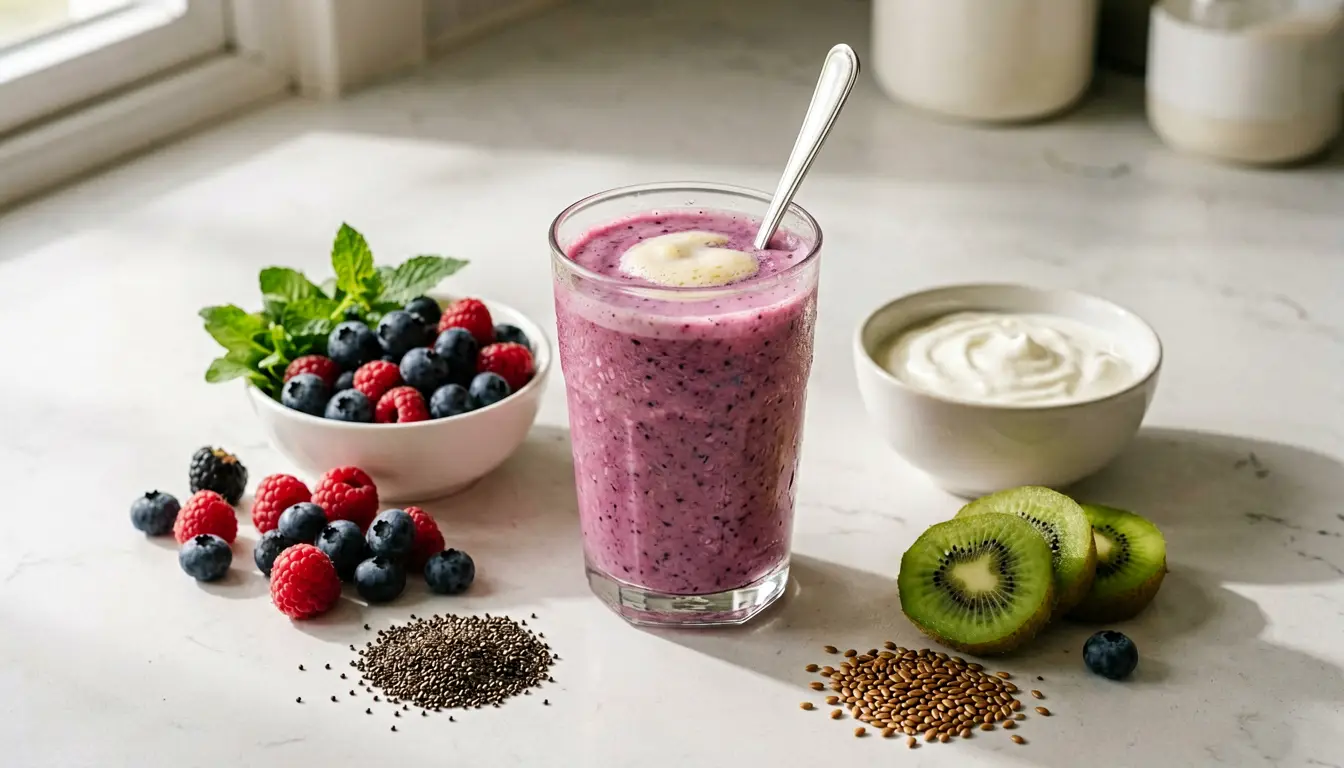
Kiwi berry flax smoothie: Use 2 kiwis, 1/2 cup raspberries, 1 tablespoon ground flax, yogurt, and water. This is the best starting version for most adults.
Papaya ginger smoothie: Use papaya, banana, a small piece of fresh ginger, yogurt or kefir, and water. This is a softer tropical option when berries feel too seedy.
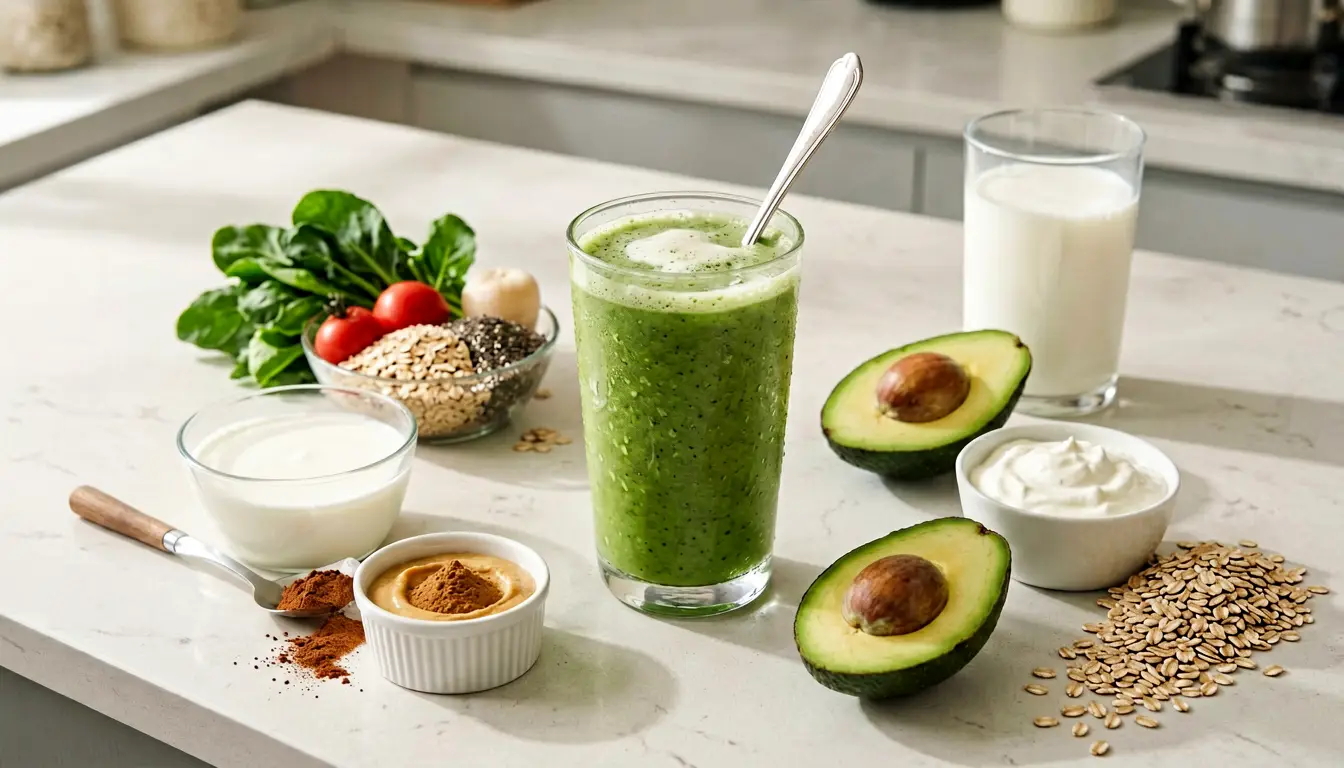
Low FODMAP-style smoothie: Use kiwi, a small amount of firm banana, lactose-free kefir, chia or flax in a moderate amount, and enough water to keep the texture thin. If IBS is part of the picture, do not assume a high-FODMAP berry and avocado smoothie will feel good.
Toddler constipation smoothie: Blend ripe pear, berries, water, and a small spoon of ground flax, then serve a small portion. Avoid making milk the main liquid if the goal is more fiber, since plain milk adds no fiber.
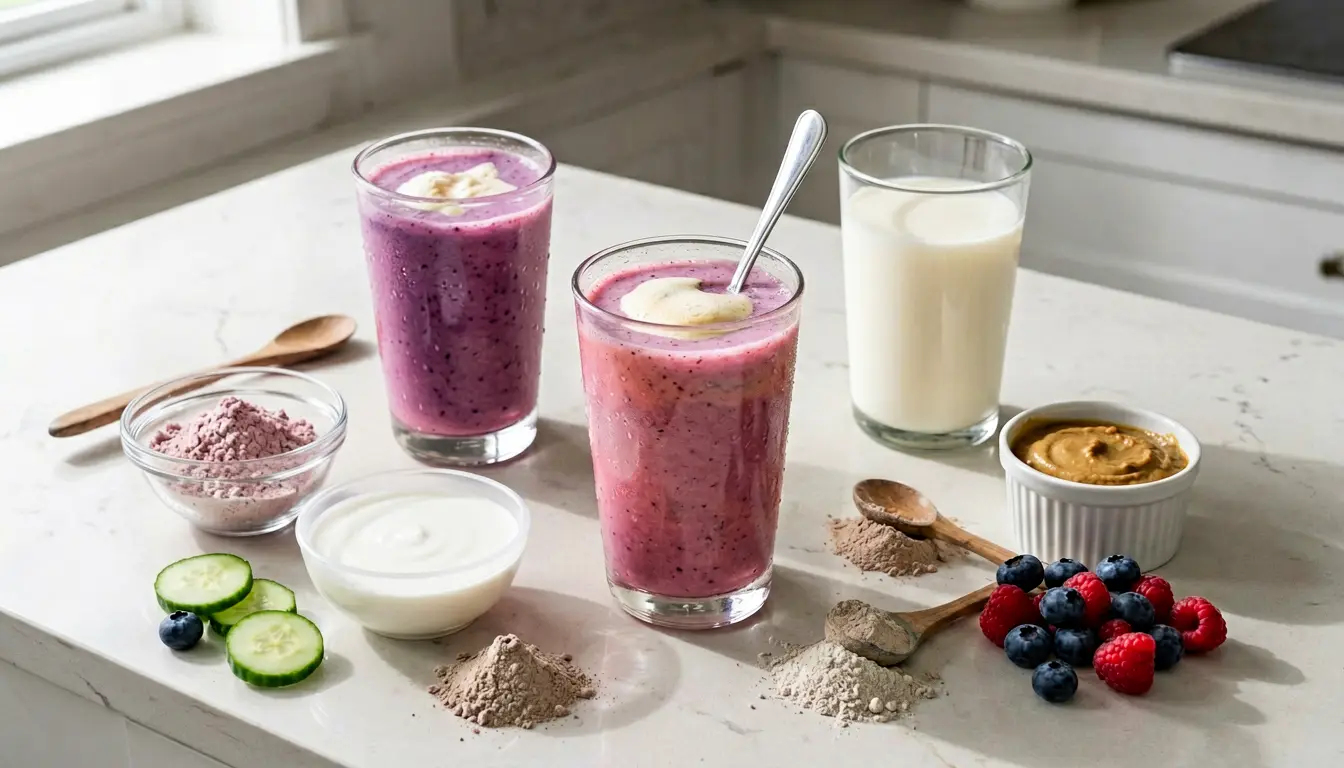
Higher-protein smoothie: Add plain Greek yogurt, kefir, or a mild protein powder you already tolerate. For a larger meal-style blend, compare smoothies high calorie protein so the smoothie does not become all fruit.
Common Mistakes
The biggest mistake is adding too much fiber too fast. Two tablespoons of chia in a small glass can become very thick, and that can be uncomfortable if you are new to it. Start with 1 teaspoon, drink enough fluid, and build gradually.
Another mistake is using smoothies as the only fix. Constipation is often affected by fluid intake, movement, meal timing, medications, illness, travel, stress, and the habit of ignoring the urge to go.
Do not make a toddler drink an adult-sized constipation smoothie. Children need smaller servings and medical attention if symptoms are severe, repeated, or linked with pain, vomiting, belly swelling, or several days without stool.
Do not assume "natural" means risk-free. Very high-fiber drinks may be a poor fit during certain gastrointestinal flares, swallowing problems, diverticulitis, or other medical conditions. If your gut history is complicated, ask your clinician before using strong fiber drinks.
What to Serve With It
Serve the smoothie with water and a simple meal that includes whole grains, vegetables, beans, fruit, or another fiber source you tolerate. Oatmeal, whole-grain toast, eggs with fruit, or a small bowl of yogurt with berries can all fit.
For blood pressure goals, pair it with lower-sodium foods and compare smoothies for high blood pressure before adding salty packaged extras. For weight-loss goals, do not make the smoothie tiny; compare best fruit smoothies for weight loss for better portion balance.
If you are ordering away from home, are Juice Stop smoothies healthy can help you think through sweetness, serving size, and add-ins.
Storage and Reheating
Constipation smoothies are best fresh because flax and chia keep thickening after blending. If you need to prep ahead, freeze kiwi, berries, banana, or papaya in individual bags and keep the dry add-ins separate.
You can store a blended smoothie in a sealed jar in the refrigerator for up to 24 hours, but add extra liquid before drinking if it becomes thick. Shake hard or re-blend.
Do not reheat this smoothie. If it is too cold, let it stand at room temperature for 5 to 10 minutes and stir before sipping.
Frequently Asked Questions
What matters most before making smoothies for constipation?
The smoothie needs fiber and fluid together. A thick, seed-heavy drink without enough water can backfire, so keep the texture pourable and drink water around the same time.
Are kiwi and berries good smoothie ingredients for constipation?
Yes, they are useful choices for many people because they bring fiber, water, and a bright flavor that does not need much added sugar. Kiwi is especially popular in constipation-focused blends.
Should I use chia seeds for constipation smoothies?
Chia can help add fiber, but start small. Use 1 teaspoon at first, blend it well, and add enough liquid because chia absorbs a lot of water.
Can toddlers drink smoothies for constipation?
Some toddlers can, but the serving should be small and age-appropriate. Use familiar ingredients, avoid choking hazards, and contact a pediatrician if constipation is painful, frequent, or severe.
What if a constipation smoothie does not work?
Look at water intake, daily movement, meal timing, fiber across the whole day, and whether you are ignoring the urge to go. If constipation continues despite changes, get medical guidance.
When should I choose a different option?
Choose medical care instead of relying on a smoothie if there is severe pain, vomiting, belly swelling, blood, unexplained weight loss, or several days without stool.