
As an affiliate, we may earn a commission from qualifying purchases. We get commissions for purchases made through links on this website from Amazon and other third parties.
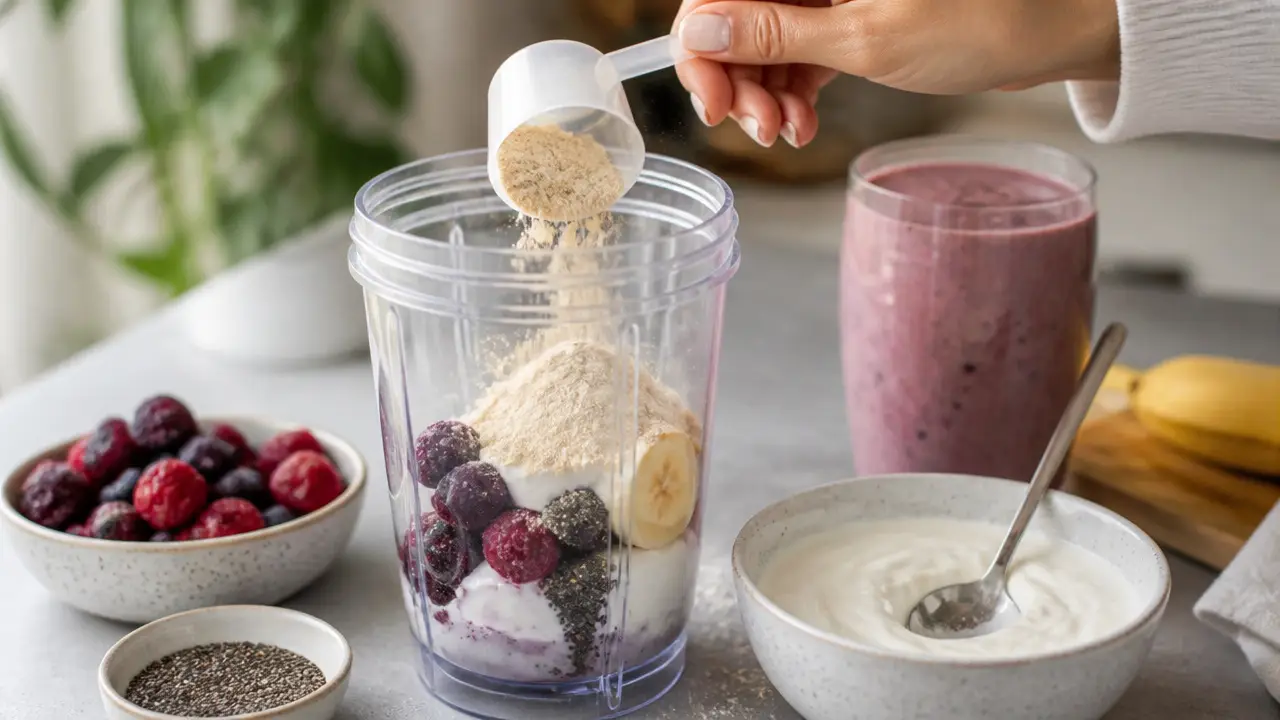
The purpose of protein powder in smoothies is simple: it adds concentrated protein without making you build the whole drink around several separate protein ingredients. That can help a smoothie feel more filling, support workout recovery, or turn a light fruit blend into something closer to a meal.
That does not mean every smoothie needs it. Protein powder is a tool, not a requirement. Its real job is convenience plus protein density. Whether that is useful depends on what you want the smoothie to do.
Quick Answer
Protein powder is used in smoothies to raise protein quickly, improve staying power, and make the drink better suited for goals like meal replacement, workout recovery, or appetite support. It is most helpful when food-first ingredients alone do not get you where you need to go.
If a smoothie is already built with enough protein from yogurt, milk, tofu, cottage cheese, seeds, or nut butter, protein powder may not add much beyond extra thickness and cost.
What It Is and When to Use It
Protein powder is a concentrated supplement made from sources like whey, casein, soy, pea, hemp, rice, or egg. In smoothies, its main role is to lift the protein content without asking you to add a much larger volume of food.
That matters when the smoothie has a serious job. Maybe it is breakfast and needs to keep you full until lunch. Maybe it is a post-workout drink and you want a more convenient recovery routine. Maybe you are trying to meet higher protein needs but do not want every smoothie to rely on dairy.
The other practical role is texture and structure. Some protein powders make smoothies feel thicker and more substantial, which can be useful when the drink otherwise feels too light. That can also go wrong if the powder is chalky or the smoothie already has enough body.
If you are trying to decide whether you need it at all, Is It Necessary to Add Protein Powder to Smoothies? is the better first read. If you already know you want one, the best protein powders for smoothies and the best blenders for smoothies are the next practical decisions.
What It Actually Helps With
More protein without much extra prep
This is the clearest benefit. A scoop of protein powder is fast. It can help bridge the gap when whole-food ingredients alone do not give you enough protein for the smoothie's purpose.
Better staying power
Protein can help a smoothie feel more satisfying. That does not mean the powder itself is magic. It means a smoothie with enough protein is less likely to feel like sweet liquid that disappears from your system too fast.
Easier workout recovery
This is one of the most common reasons people use it. A smoothie is already easy to drink after training, and protein powder makes it easier to push the drink toward recovery rather than just refreshment.
More flexibility with dairy-free routines
Plant-based powders can help when dairy is not an option or when yogurt and milk are not the right fit. That gives smoothies another protein path without forcing the drink to rely on one category of ingredients.
Better Alternatives and Swaps
If your only reason for using protein powder is "I thought smoothies were supposed to have it," start here instead:
- Greek yogurt for creaminess plus protein.
- Cottage cheese for high protein and smoother texture once blended.
- Silken tofu for neutral dairy-free protein.
- Nut butter for some protein plus richness.
- Chia, hemp, or flax for smaller protein boosts and more body.
- Milk or fortified plant milk when the base itself can do more work.
These options matter because they can do part or all of the same job while keeping the smoothie closer to whole food. They also change flavor and texture in ways a scoop of powder does not always improve.
That is why the best yogurts for smoothies, the best milk for smoothies, and the best oats for smoothies can be just as important as the powder itself.
Prep Tips
Match the powder to the smoothie goal
Use powder when the smoothie needs more protein than the base ingredients are realistically giving you. Do not add it just because it is there.
Keep the ingredient list balanced
Protein powder works best when the rest of the smoothie is not fighting it. Too many heavy add-ins can make the drink pasty, chalky, or harder to finish.
Start lighter than you think
More powder is not always better. It can overpower flavor and texture quickly. Start with the amount that matches the smoothie's purpose, then adjust only if the drink still falls short.
Use the right blender setup
Some powders blend cleanly. Some do not. A stronger machine can help smooth out texture issues, which is one reason the best smoothie makers and the best blenders for smoothies still matter even when the powder is good.
Storage, Fridge, and Freezer Notes
Protein powder itself stores easily, which is part of its appeal. Once blended into a smoothie, though, it becomes part of the same storage problems as any other smoothie. Some powders settle, some separate, and some get thicker as the drink sits.
For make-ahead use, it is often better to prep ingredients in portions and blend fresh rather than leaving the finished smoothie sitting too long. If you do prep full smoothies ahead, good containers help more than chasing a new powder every week. The best smoothie containers for meal prep and the best travel cups for smoothies are both part of that system.
Watchouts
Protein powder is still a supplement. Some products include added sugars, sweeteners, flavoring systems, or long ingredient lists that do not help every goal. Some people also get digestive issues from certain formulas, especially milk-based ones or powders with more additives.
It also is not automatically better than food. Powder gives concentrated protein, but not always the broader nutritional value of whole-food ingredients. That is why it is best used as a targeted tool, not a default smoothie rule.
Frequently Asked Questions
What does protein powder do in a smoothie?
It raises the protein content quickly and can make the smoothie more filling or better suited for recovery or meal replacement.
Does protein powder make smoothies thicker?
Usually yes. Many powders add body and can make the drink feel more substantial, especially when blended with frozen fruit or yogurt.
Is protein powder necessary for smoothies?
No. Many smoothies can get enough protein from whole-food ingredients instead.
When is protein powder most useful in smoothies?
It is most useful when the smoothie needs to act more like a meal or recovery drink and the base ingredients alone are not enough.
What can replace protein powder in smoothies?
Greek yogurt, cottage cheese, silken tofu, nut butter, seeds, and milk can all help depending on the goal.
Is protein powder better than whole-food smoothie ingredients?
Not automatically. It is usually more convenient, but whole-food ingredients can offer broader nutrition and a more natural texture.
If you want the necessity question answered directly, read whether protein powder is necessary in smoothies. If you want a food-first path instead, yogurts for smoothies can add protein and body without a scoop.