
As an affiliate, we may earn a commission from qualifying purchases. We get commissions for purchases made through links on this website from Amazon and other third parties.
Is making smoothies for blood sugar control a real thing, or just another healthy-sounding drink trend? It can be real when the smoothie is built with whole fruit, vegetables, protein, fiber, and healthy fat instead of juice, syrups, and giant fruit portions.
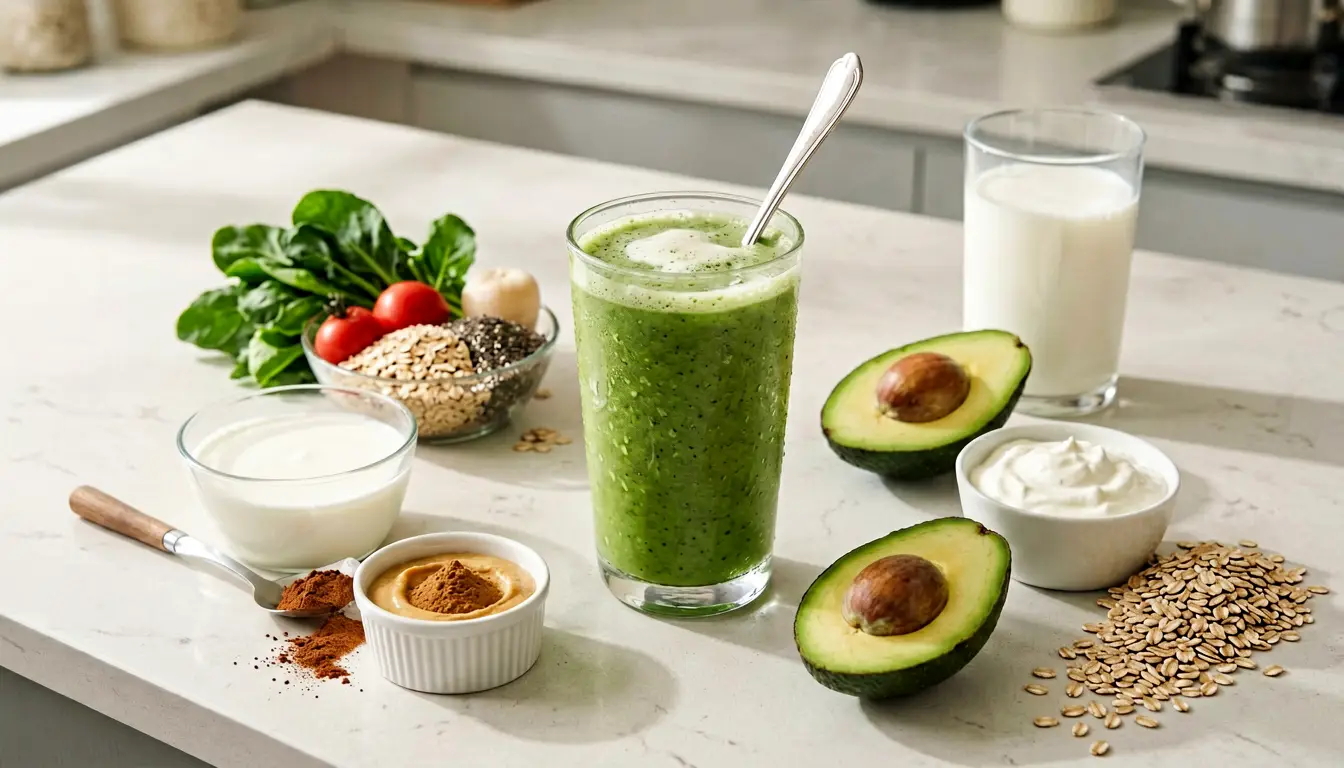
The goal is not to make a joyless green drink. The goal is to make a smoothie that tastes good and behaves more like food. That means berries instead of a juice base, spinach instead of extra mango, Greek yogurt or tofu instead of sweetened frozen yogurt, and chia or avocado instead of a pile of honey.
If you have diabetes, prediabetes, insulin resistance, or frequent blood sugar swings, use this as food guidance, not medical treatment. Your own carb target, medication plan, and glucose response matter. For the bigger question behind this topic, read do smoothies spike blood sugar alongside this guide.
If you are also comparing food changes with supplement-style blood sugar support, read Gluco6 vs a low-carb diet after this guide. The useful question is not whether a smoothie sounds healthy, but whether your whole routine gives you enough control and feedback.
Quick Answer
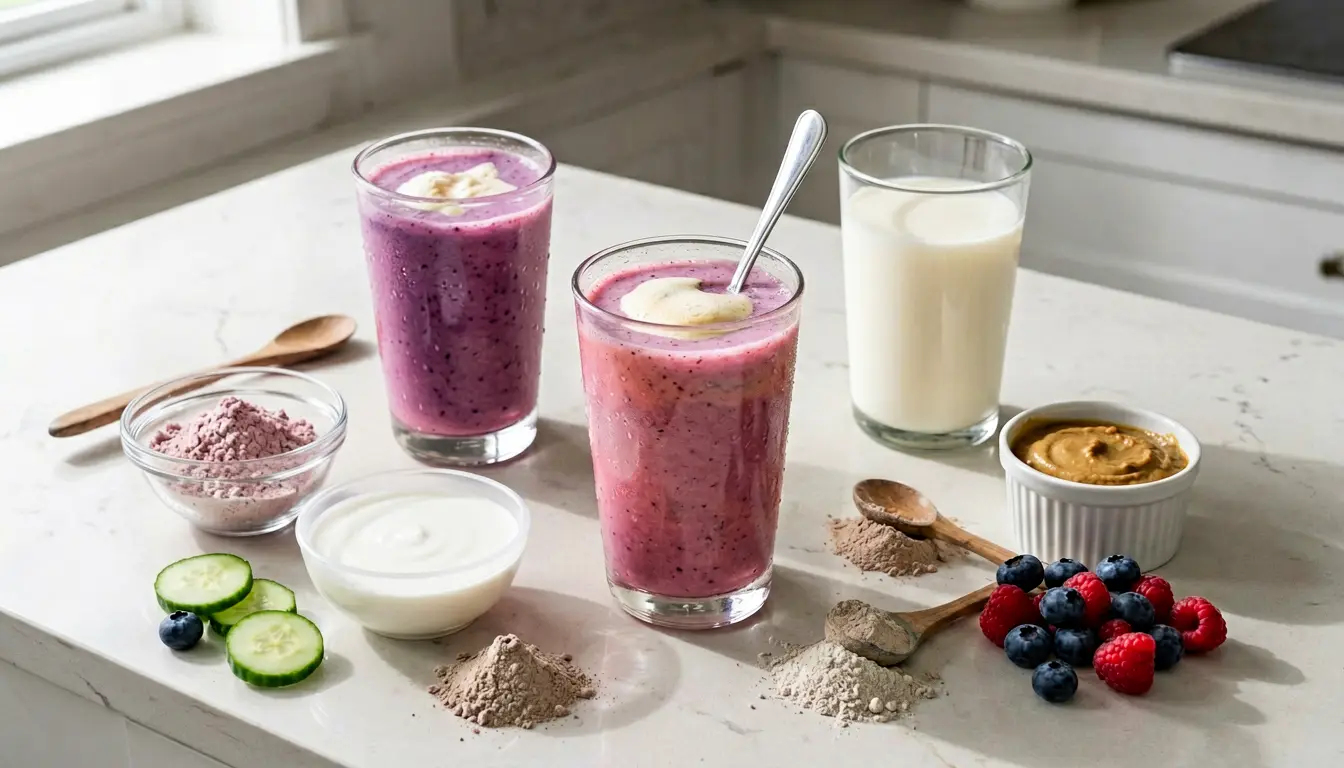
The best smoothies for blood sugar control use unsweetened liquid, low-sugar fruit, vegetables, protein, and fiber. A strong base is spinach, berries, Greek yogurt or tofu, chia or flax, and unsweetened almond milk.
Avoid smoothies built on fruit juice, sweetened yogurt, syrups, dried fruit, and large portions of banana, mango, or pineapple. Those can taste healthy but still deliver a fast sugar load, especially when the smoothie is large.
What It Is / When to Use It
A blood-sugar-friendly smoothie is a blended meal or snack designed to slow the sugar hit. It uses the same idea you would use on a plate: pair carbohydrates with protein, fiber, and fat.
Use this kind of smoothie when you want:
- A breakfast that is not cereal, toast, or a pastry
- A lower-sugar snack that still tastes sweet
- A way to eat more greens without cooking
- A post-workout drink with protein and produce
- A creamy dessert-style smoothie without a sugar crash
- A safer homemade option than many cafe smoothies
This style is especially useful if regular smoothies make you hungry, sleepy, shaky, or snacky an hour later. It is also useful if you like fruit smoothies but need clearer limits. For cravings specifically, use low-sugar smoothies for cravings so the flavor still feels satisfying.
The Blood Sugar Smoothie Formula
Build the smoothie in this order:
| Part | Good Choices | What To Limit |
|---|---|---|
| Liquid | Water, unsweetened almond milk, unsweetened soy milk, flax milk, plain milk, plain kefir | Fruit juice, sweetened plant milk, sweetened coffee drinks |
| Fruit | Strawberries, raspberries, blackberries, blueberries, cherries, peach, apple, pear, citrus | Large banana, mango, pineapple, dried fruit, fruit juice |
| Vegetables | Spinach, kale, cucumber, zucchini, cauliflower, celery, carrot, cooked beet in small amounts | Large amounts of very starchy or strongly bitter vegetables |
| Protein | Greek yogurt, cottage cheese, silken tofu, soy milk, whey, pea protein, hemp hearts | Sweetened protein powder or powders with lots of added sugar |
| Fiber and fat | Chia, flax, avocado, nut butter, seeds, oats in measured amounts | Big scoops of nut butter, granola, sweet toppings |
| Flavor | Cinnamon, ginger, cocoa, vanilla, mint, lemon, lime, turmeric | Honey, maple syrup, syrups, sweetened cocoa mix |
The smoothie should be thick enough to sip slowly. If it drinks like juice, it is probably too thin for this purpose.
Low-GI Fruits That Work Well
Many whole fruits have low to moderate glycemic impact when eaten in sensible portions, especially because they bring fiber with their natural sugar. Smoothie-friendly choices include:
- Strawberries
- Raspberries
- Blackberries
- Blueberries
- Cherries
- Peaches
- Apple
- Pear
- Grapefruit
- Orange segments
- Plums
Use whole fruit, not juice. A whole orange is more filling than orange juice because it keeps the pulp and fiber. Dried fruit is more concentrated, so use it sparingly or skip it in blood-sugar-focused smoothies.
Grapefruit can interact with some medications, including certain statins. If that applies to you, choose berries, peach, apple, or pear instead.
Substitutes / Swaps
Most smoothie problems are easy to fix once you know which ingredient is causing trouble.
Swap Juice For Unsweetened Liquid
Fruit juice is the first thing to remove. Use unsweetened almond milk, soy milk, flax milk, plain milk, water, or plain kefir instead. If you want a bright flavor, add lemon, lime, mint, or a few orange segments.
If you still want to compare blended drinks and juice-style options, use smoothies and juices for weight loss, energy, and better digestion for the bigger picture.
Swap Banana For Avocado Or Cauliflower
Banana makes smoothies creamy, but it can also make every smoothie sweeter. For a lower-sugar texture, try 1/4 avocado, frozen cauliflower rice, frozen zucchini, or Greek yogurt.
If you like some banana flavor, use half a small banana and pair it with protein and chia. You do not have to ban it; you just need to stop making it the whole base.
Swap Sweetened Yogurt For Plain Protein
Use plain Greek yogurt, plain kefir, cottage cheese, silken tofu, soy milk, whey, or pea protein. These add body and protein without turning the smoothie into dessert.
Check protein powders for added sugars. Some are low in sugar and useful. Others are sweetened enough to change the whole smoothie. If dairy does not work for you, smoothies with almond milk can help you keep the base creamy without yogurt.
Swap Honey And Dates For Flavor
Use cinnamon, vanilla, cocoa, ginger, mint, lemon, lime, or a few berries. Cinnamon is fine as a flavor, but do not treat it like a diabetes fix. Large daily amounts of cassia cinnamon are not something to casually add without guidance.
If sweetness is still the sticking point, use low-sugar smoothie ingredients for more flavor ideas that do not depend on syrup.
Swap Fruit-Only Smoothies For Vegetable Smoothies
Spinach is the easiest vegetable because it has a mild taste. Frozen cauliflower makes smoothies creamy. Cucumber adds freshness. Zucchini is mild and soft. Celery works with apple, lemon, and ginger if your blender can get it smooth.
Vegetables help you increase volume without needing more fruit. That is the main trick: make the smoothie bigger with greens and fiber, not with juice.
Prep Tips
Use The Plate Method In A Blender
Think of the blender like a plate. Fruit is the carb. Protein is the anchor. Greens and vegetables add volume. Chia, flax, avocado, or nut butter adds staying power.
A smoothie with fruit alone is not balanced. A smoothie with fruit, protein, fiber, and fat is much closer to a meal.
Keep Portions Honest
A smoothie can look like a drink but count like a meal. Large cafe smoothies can be big enough for two servings, especially when they include juice, multiple fruits, sweetened yogurt, and extras.
At home, start with:
- 1/2 to 1 cup fruit
- 1 to 2 handfuls greens or vegetables
- 1 protein choice
- 1 tablespoon chia, flax, or nut butter, or 1/4 avocado
- 1 to 1 1/2 cups unsweetened liquid
If you need a smaller snack, cut the fruit and protein portions down. If you need a meal, add enough protein to keep it satisfying. For weight-loss planning, pair this with the smoothie diet guide so the drink fits the rest of the day.
Blend Vegetables First
Add liquid and vegetables first, then blend until smooth. After that, add fruit, protein, and seeds. This keeps spinach, kale, celery, and cauliflower from leaving stringy bits.
For standard blenders, use baby spinach, frozen cauliflower rice, peeled cucumber, cooked carrot, or cooked sweet potato in small amounts. Save tougher greens and raw carrots for stronger blenders.
Choose Better Fruits
Berries are the easiest everyday choice. Strawberries, raspberries, blackberries, and blueberries bring flavor, color, fiber, and a lower sugar load than many tropical fruit blends.
Apples, pears, peaches, cherries, plums, and citrus can also work. Keep the skin on apples and pears when your blender can handle it because the skin adds fiber. Use pineapple and mango more like accents than the whole base.
Add Protein Every Time
Protein helps the smoothie feel more complete. It can also change how a fruit-based smoothie affects you after drinking it.
Good choices include:
- Plain Greek yogurt
- Cottage cheese
- Silken tofu
- Unsweetened soy milk
- Whey protein
- Pea protein
- Hemp hearts
If you have kidney disease, diabetes medication changes, or a strict protein target, ask your clinician or dietitian before making high-protein smoothies a daily habit.
Add Fat, But Measure It
Avocado, chia, flax, nut butter, and seeds can make a smoothie more filling. They also add calories quickly.
Use measured amounts:
- 1 tablespoon chia
- 1 tablespoon ground flax
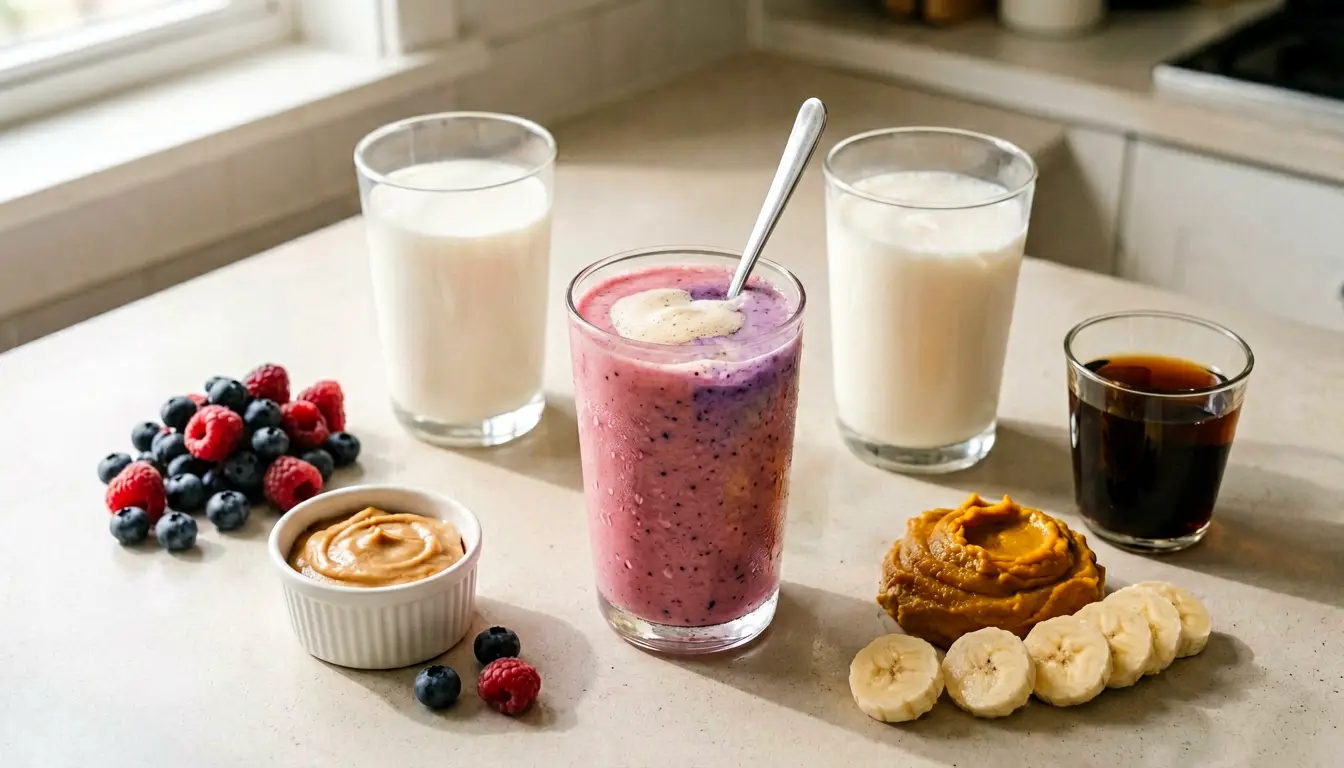
- 1 tablespoon peanut or almond butter
- 1/4 avocado
- 1 tablespoon hemp hearts
More is not always better. The goal is blood sugar balance and satiety, not the thickest smoothie possible.
Try These Low-Sugar Smoothie Ideas
Berry Spinach Yogurt Smoothie
Blend unsweetened almond milk, spinach, frozen strawberries, Greek yogurt, chia, and vanilla. This is the easiest starter smoothie because it tastes fruity but still has protein and fiber.
Chocolate Avocado Smoothie
Blend unsweetened milk, 1/4 avocado, cocoa powder, Greek yogurt or tofu, a few berries, and cinnamon. It tastes dessert-like without needing chocolate syrup.
Peach Zucchini Smoothie
Blend unsweetened soy milk, frozen peach slices, peeled zucchini, cottage cheese or tofu, and flax. Zucchini keeps the texture creamy without adding much sweetness.
Apple Cinnamon Spinach Smoothie
Blend unsweetened almond milk, half an apple with peel, spinach, Greek yogurt, cinnamon, and chia. Use only half the apple if you need a lower-carb smoothie.
Cucumber Lime Green Smoothie
Blend cucumber, spinach, lime, mint, avocado, protein powder or tofu, and water. This one is fresh and not very sweet.
Berry Cauliflower Protein Smoothie
Blend unsweetened milk, frozen berries, frozen cauliflower rice, whey or pea protein, and ground flax. Cauliflower gives body without making the smoothie taste like vegetables.
For stricter lower-carb eating, compare these with low-carb smoothies or keto smoothies before changing your daily carb intake.
Storage / Reheat / Freeze
Smoothies for blood sugar control are best fresh because texture affects how satisfying they feel. Still, prep can make them much easier.
Make freezer packs with:
- Berries or measured fruit
- Spinach, zucchini, cucumber, or cauliflower
- Ginger, mint, lemon zest, or lime zest
- Avocado cubes if using
Add these fresh at blending time:
- Milk or unsweetened plant milk
- Greek yogurt, cottage cheese, tofu, or protein powder
- Chia, flax, nut butter, or hemp hearts
If you store a blended smoothie, pour it into a sealed jar and refrigerate it. Shake well before drinking. Chia and flax will thicken as they sit, so add a splash of liquid if needed.
Do not reheat a smoothie. If it is too cold, let it sit for a few minutes. If it separates, shake or re-blend. If it tastes flat after storage, add lemon or lime instead of sweetener.
Avoid freezing a fully blended yogurt-heavy smoothie unless you plan to eat it like a smoothie pop or bowl. The texture can turn icy and grainy when thawed.
Frequently Asked Questions
What is the best smoothie for blood sugar control?
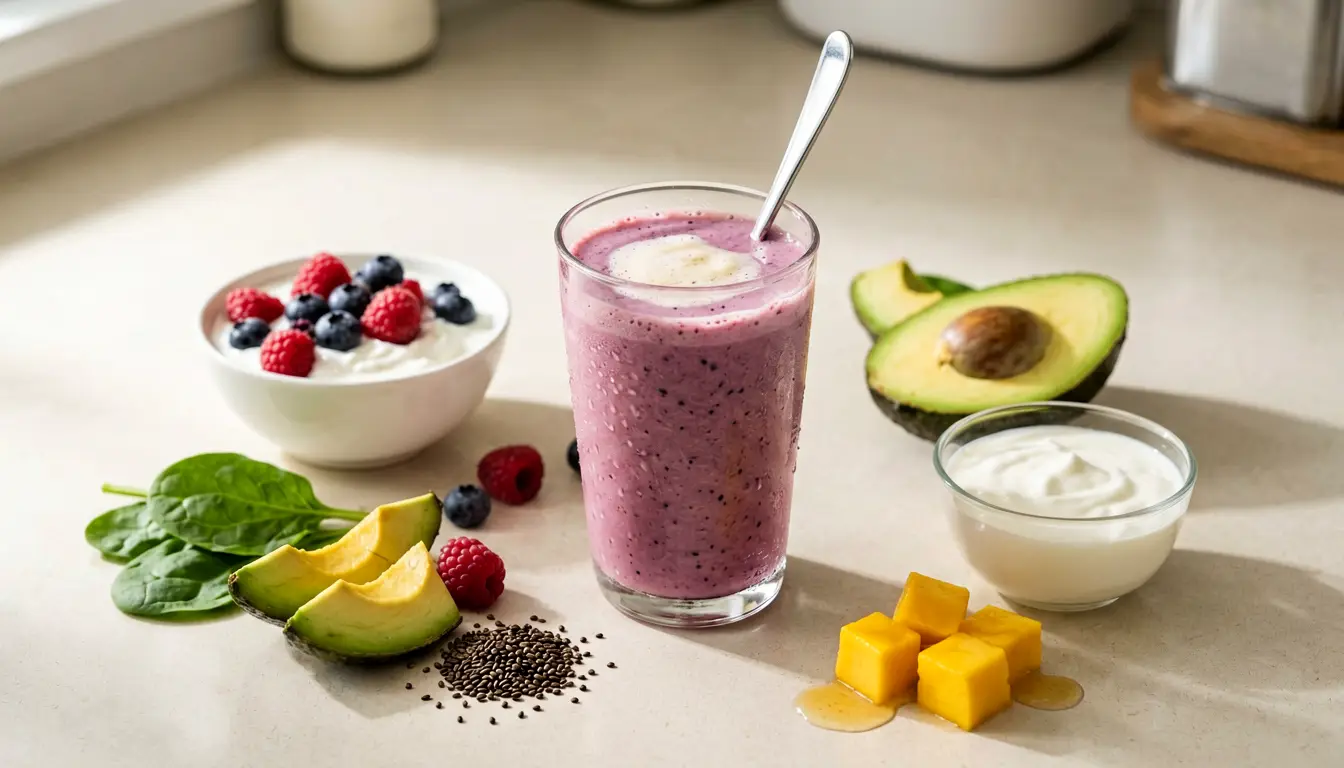
A good starter smoothie is spinach, frozen berries, plain Greek yogurt, chia, and unsweetened almond milk. It has fruit flavor, protein, fiber, and no juice base.
Can people with diabetes drink smoothies?
Many people with diabetes can drink smoothies, but the ingredients and portion size matter. Use whole fruit, vegetables, protein, fiber, and unsweetened liquid. Follow your personal carb target and medical guidance.
Are bananas bad in blood-sugar-friendly smoothies?
Bananas are not automatically bad, but large portions can make a smoothie much sweeter. Use half a banana, pair it with protein and fiber, or swap in avocado, berries, zucchini, or cauliflower for creaminess.
Is fruit juice okay in a smoothie?
Fruit juice is not the best base for blood sugar control. Use water, unsweetened almond milk, soy milk, milk, or plain kefir instead. Add citrus, berries, or mint for flavor.
What fruits are best for blood sugar smoothies?
Berries are the easiest choice. Cherries, peaches, apples, pears, grapefruit, oranges, plums, and grapes can also fit in moderate portions. Dried fruit and juice are more concentrated, so use them carefully or skip them.
Should I add protein powder?
You can, but you do not have to. Plain Greek yogurt, cottage cheese, tofu, soy milk, whey, pea protein, and hemp hearts can all add protein. Choose low- or no-added-sugar options.
Are vegetable smoothies good for blood sugar?
Yes, vegetable smoothies can be a good option because they add volume and fiber without relying only on fruit. Spinach, cucumber, zucchini, cauliflower, celery, and avocado are especially smoothie-friendly.
Can smoothies replace breakfast?
They can replace breakfast if they contain enough protein, fiber, and volume to keep you full. If you still need a full breakfast right after, treat the smoothie as a snack or make a smaller portion.
What should I avoid in a blood sugar smoothie?
Avoid fruit juice, sweetened yogurt, syrup, honey, large banana portions, dried fruit, sweetened protein powder, and oversized servings. These can make the smoothie act more like dessert.
For the most useful next reads, use smoothies for diabetics for diabetes-specific planning, smoothies for high blood pressure if sodium and heart health matter too, smoothies with no yogurt if you need a dairy-free base, and smoothies for weight loss if blood sugar control is part of a larger weight goal.