
As an affiliate, we may earn a commission from qualifying purchases. We get commissions for purchases made through links on this website from Amazon and other third parties.
The best smoothie ingredients are not the fanciest ones. They are the ones that solve a clear problem in the blender. Some give sweetness. Some make the drink creamy. Some help it stay filling instead of feeling like juice. Once you know which ingredient does what, building a good smoothie gets much easier.
This guide breaks smoothie ingredients into practical groups so you can stock the basics and stop guessing. If you want the full fruit method first, how to make smoothies with fruit is the better starting point. If you want a thicker result, how to make smoothies thick pairs well with this guide.
Quick Answer
The must-have smoothie ingredients are a main fruit, a liquid base, one creamy ingredient if needed, and one ingredient that improves staying power, such as yogurt, oats, seeds, nut butter, or avocado. You do not need every add-in at once. You only need enough pieces to cover flavor, texture, and balance.
For most home kitchens, that means keeping a few frozen fruits, one or two fresh fruits, milk or plant milk, yogurt, oats, chia or flax, and something rich like nut butter or avocado. That small list covers most smoothie problems before they start. If you are stocking the freezer first, the best frozen fruit for smoothies can help you choose bags that blend thick instead of watery.
What It Is / When to Use It
This ingredient system works because each category fixes a common problem. Fruit gives the smoothie identity. Liquid gets the blender moving. Creamy ingredients stop the drink from feeling watery. Oats, seeds, nut butter, yogurt, or avocado can make it hold longer.
It also works because it gives you options instead of one rigid formula. Banana is not the only thickener. Coconut milk is not the only creamy base. If one ingredient does not suit your taste, you can swap within the same job category and still get a balanced result.
Use this guide when your smoothies keep turning out too thin, too sweet, too icy, or not filling enough. If sweetness is the main issue, smoothies with less sugar is the next useful read.
Ingredients
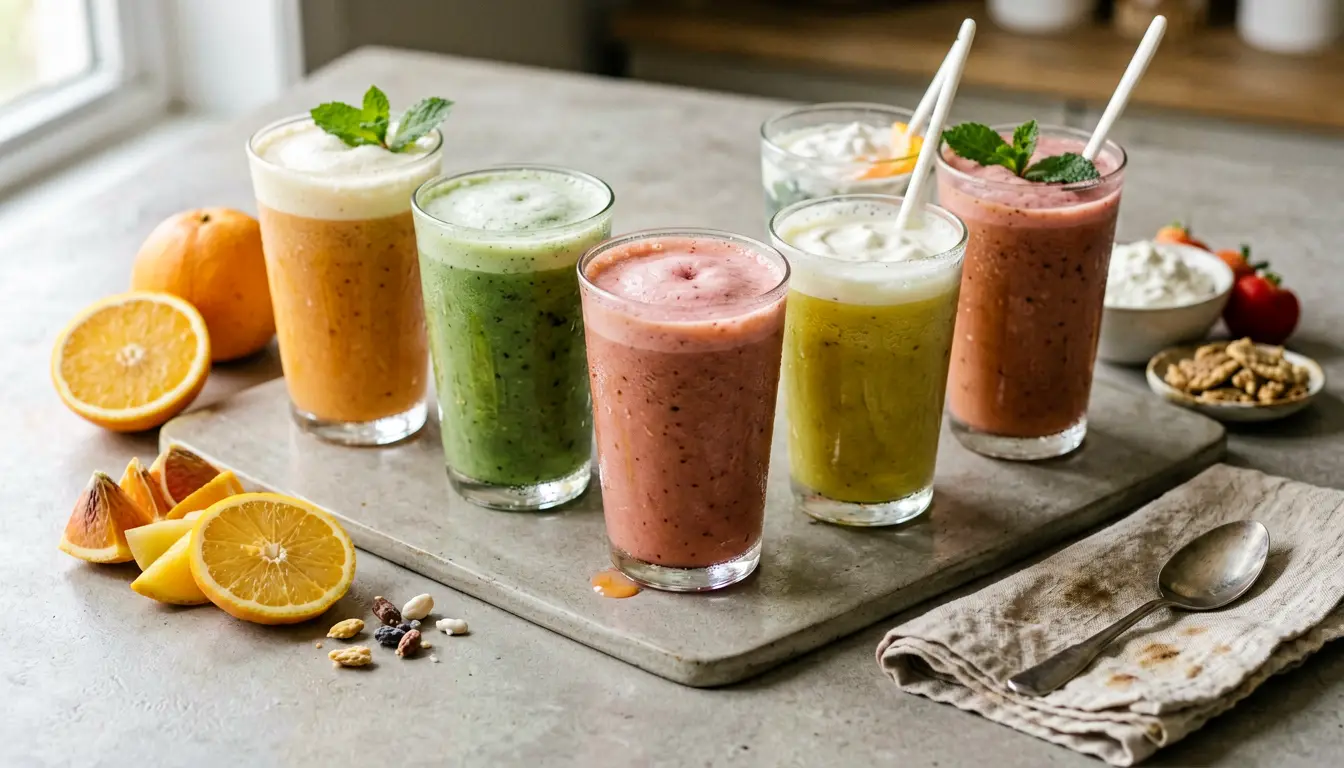
Start with fruit that actually blends well. Frozen berries, mango, pineapple, peaches, bananas, papaya, and cherries are some of the most useful because they bring strong flavor and reliable texture. Fresh oranges, kiwi, apples, melon, and watermelon are useful too, but they often need more help with thickness.
For liquid, keep at least one creamy option and one lighter option. Milk, soy milk, almond milk, oat milk, kefir, coconut milk, water, coconut water, and juice all behave differently. Lighter bases make fresher smoothies. Creamier bases make breakfast-style smoothies.
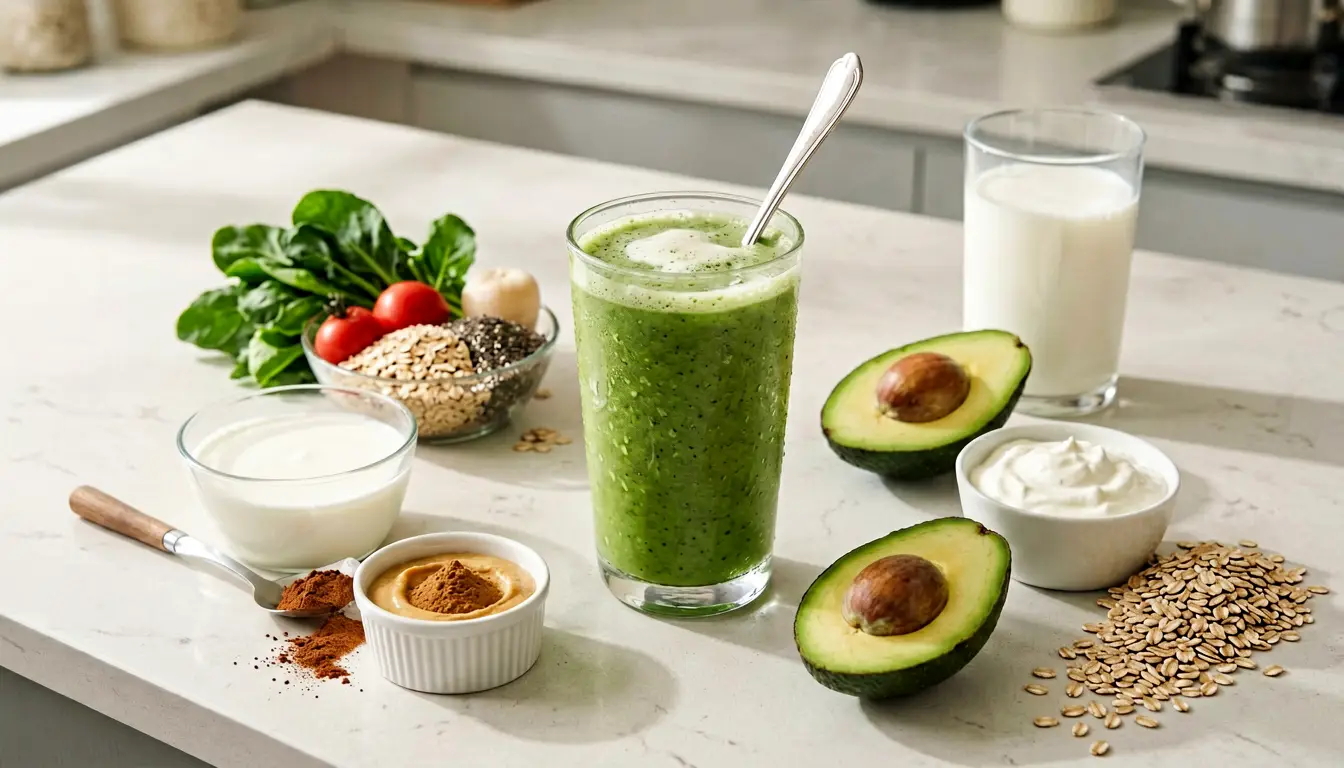
For body and texture, yogurt, avocado, cottage cheese, silken tofu, oats, frozen cauliflower, and banana all help. Banana is the easiest, but it is not the only answer. If you want more control over fullness, add chia, flax, hemp seeds, nut butter, or protein powder in small amounts.
Richer ingredients matter too. Avocado, chia, flax, hemp, coconut milk, almond butter, and peanut butter all give a smoothie more staying power. If you want more detail on those choices, avocado smoothies, cottage cheese smoothies, and smoothies with coconut milk go deeper on specific options.
Substitutes / Swaps
If you do not like banana, use mango, avocado, yogurt, oats, or frozen cauliflower for body. If dairy is not the right fit, use soy milk, oat milk, almond milk, coconut milk, silken tofu, or dairy-free yogurt depending on the texture you want.
If berries make the smoothie too seedy, use mango, peach, banana, papaya, melon, or strained berry puree instead. If nut butter makes the smoothie too heavy, use oats, chia, flax, or yogurt for a lighter kind of body. For smoother no-seed options, smoothies without seeds are the better guide.
Prep Tips
Start by choosing the main flavor first, not the trendy add-in. Pick one main fruit and one supporting ingredient that changes the direction slightly. That could be spinach for freshness, yogurt for creaminess, orange for brightness, or oats for a more filling texture.
If you are comparing ingredient lists against a paid smoothie plan, The Smoothie Diet versus homemade smoothies is useful because it shows where a structured plan differs from building your own freezer and pantry setup.
Add the liquid first so the blades can move. Then add creamy ingredients like yogurt, avocado, banana, or cottage cheese. After that, add fruit and any seeds or oats. Frozen fruit should usually go in last.
Blend, then adjust only what is missing. If it is too thin, add fruit or a creamy ingredient. If it is too thick, add a small splash of liquid. If it tastes flat, it usually needs a brighter fruit or citrus, not more sweetener. If you keep running into sweetness problems, what to do if a smoothie is too sweet helps.
Storage / Reheat / Freeze
Most smoothie ingredients work best when at least one major piece is cold or frozen. Frozen fruit gives better texture than lots of ice, and chilled liquid helps if the whole blend is using mostly fresh produce.
The best storage move is ingredient prep, not storing the finished smoothie. Freeze smoothie-ready fruit packs, pre-portion seeds or oats, and keep a few reliable liquids in the fridge. That saves more time than blending in advance too often.
If you do store a blended smoothie, use a sealed jar and expect some separation. Reheating does not apply here. If the smoothie warms up, it usually needs shaking, chilling, or reblending instead.
Pantry Setups
Basic fruit smoothie pantry
Keep frozen berries, mango, banana, and one milk or plant milk on hand. This is the easiest setup for fast everyday smoothies.
Lower sweetness pantry
Use berries, avocado, chia, yogurt, greens, and unsweetened milk. This works well when you want more control over sweetness and texture.
Tropical smoothie pantry
Stock coconut milk, pineapple, mango, papaya, lime, and maybe dragon fruit. This keeps the flavor bright and vacation-like.
Green smoothie pantry
Keep spinach, kale, cucumber, banana, pineapple, and a light liquid like coconut water or almond milk. Greens are easier to repeat when sweet fruit is nearby.
Breakfast smoothie pantry
Use oats, yogurt, cottage cheese, nut butter, frozen berries, and banana. This makes it easier to build smoothies that hold longer in the morning.
Dessert-style smoothie pantry
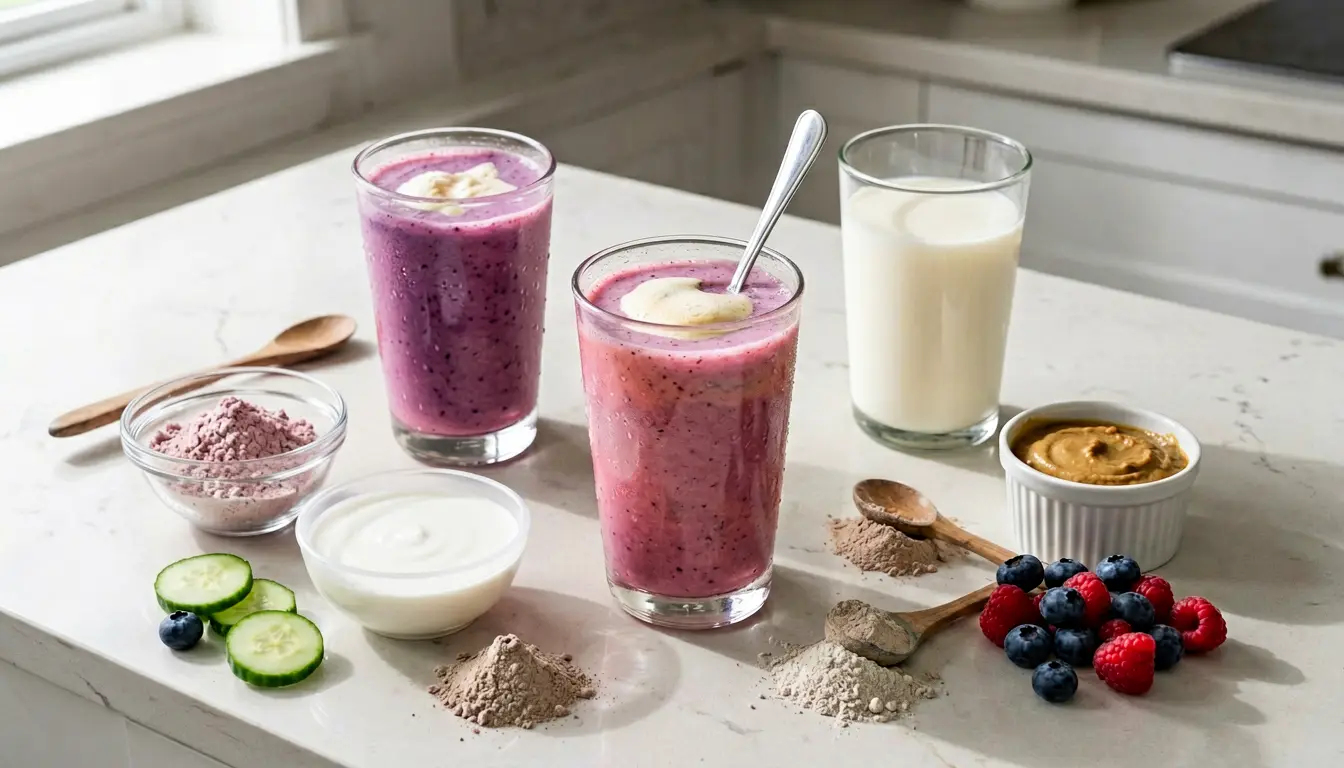
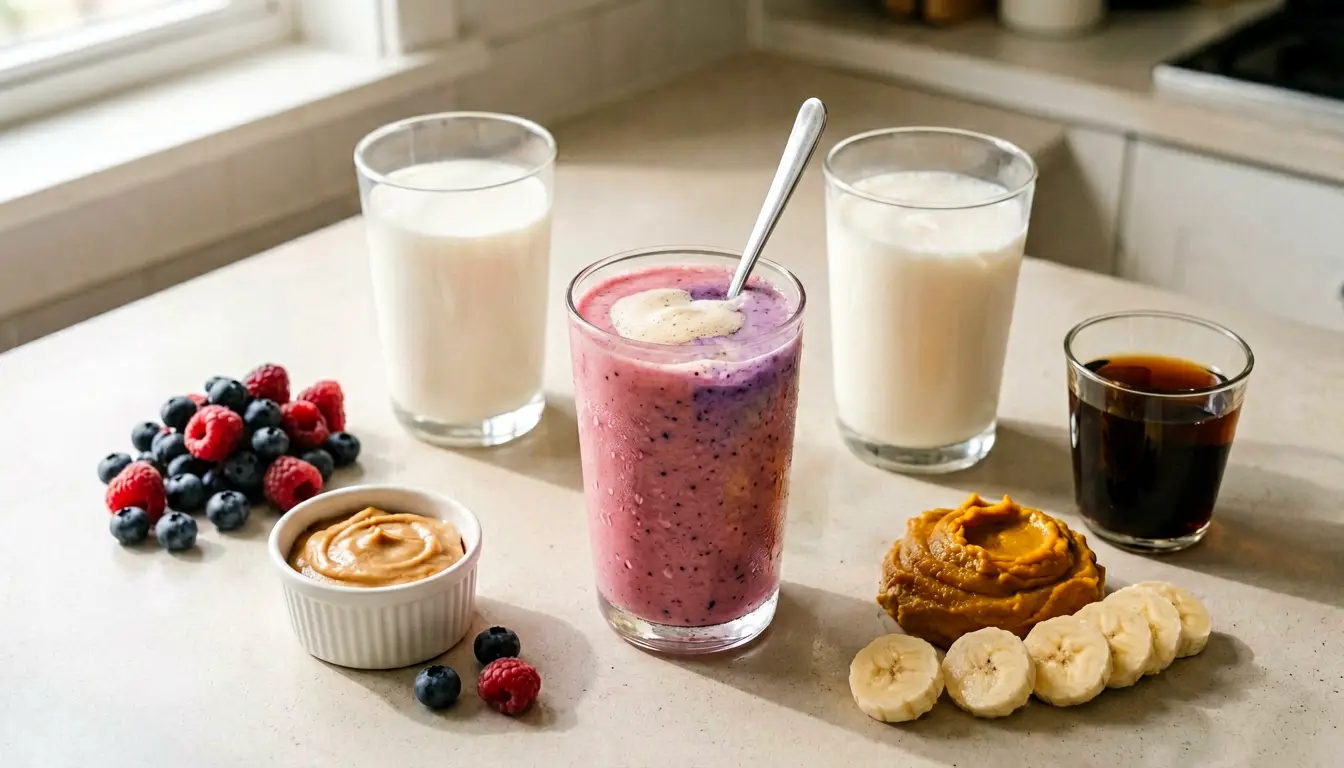
Keep cocoa powder, peanut butter, banana, berries, vanilla yogurt, and maybe a little coffee or mint. That gives you a richer option without needing ice cream every time.
Frequently Asked Questions
What ingredients should every smoothie have?
At minimum, most smoothies need fruit, liquid, and one ingredient that helps the texture. After that, add yogurt, oats, seeds, nut butter, avocado, or another body-building ingredient depending on how filling you want the smoothie to be.
What is the best fruit to always keep for smoothies?
Bananas, berries, and mango are some of the most useful because they help with both flavor and texture.
Do smoothies need yogurt?
No. Yogurt helps with creaminess and tang, but banana, avocado, oats, cottage cheese, tofu, and coconut milk can all do similar jobs in different ways.
What liquid base is best for smoothies?
It depends on the result you want. Milk and plant milks are more balanced for creamy smoothies, while water and coconut water keep the drink lighter.
What ingredients make smoothies more filling?
Oats, yogurt, cottage cheese, chia, flax, hemp seeds, avocado, nut butter, and protein powder are some of the most practical options.
Is fresh or frozen fruit better for smoothies?
Both work, but frozen fruit usually gives a thicker, colder, and more reliable texture.
For more ingredient practice, use smoothies to try for style ideas, homemade smoothies for a flexible method, smoothies with less sugar for sweetness control, and fruit that works well in smoothies for fruit choice.