
As an affiliate, we may earn a commission from qualifying purchases. We get commissions for purchases made through links on this website from Amazon and other third parties.
Smoothies usually consist of three main parts: a flavor base, a liquid, and something that changes the texture. The flavor base is often fruit, the liquid helps the blender move, and the third part gives the drink more body, creaminess, or staying power.
That is why "what do smoothies consist of" is a little different from "what are smoothies usually made of." This question is less about the shopping list and more about the structure. It asks what parts make a smoothie feel like a smoothie in the first place. If you want the ingredient version next, what smoothies are usually made of is the direct companion page.
Quick Answer
Smoothies consist of a main fruit or produce base, a liquid, and optional ingredients that affect thickness, flavor, or nutrition. Common examples are fruit, milk or water, and add-ins like yogurt, oats, banana, nut butter, greens, seeds, or protein powder.
What matters most is not the exact ingredient list. It is that each part of the smoothie has a clear role.
What It Is / When to Use It
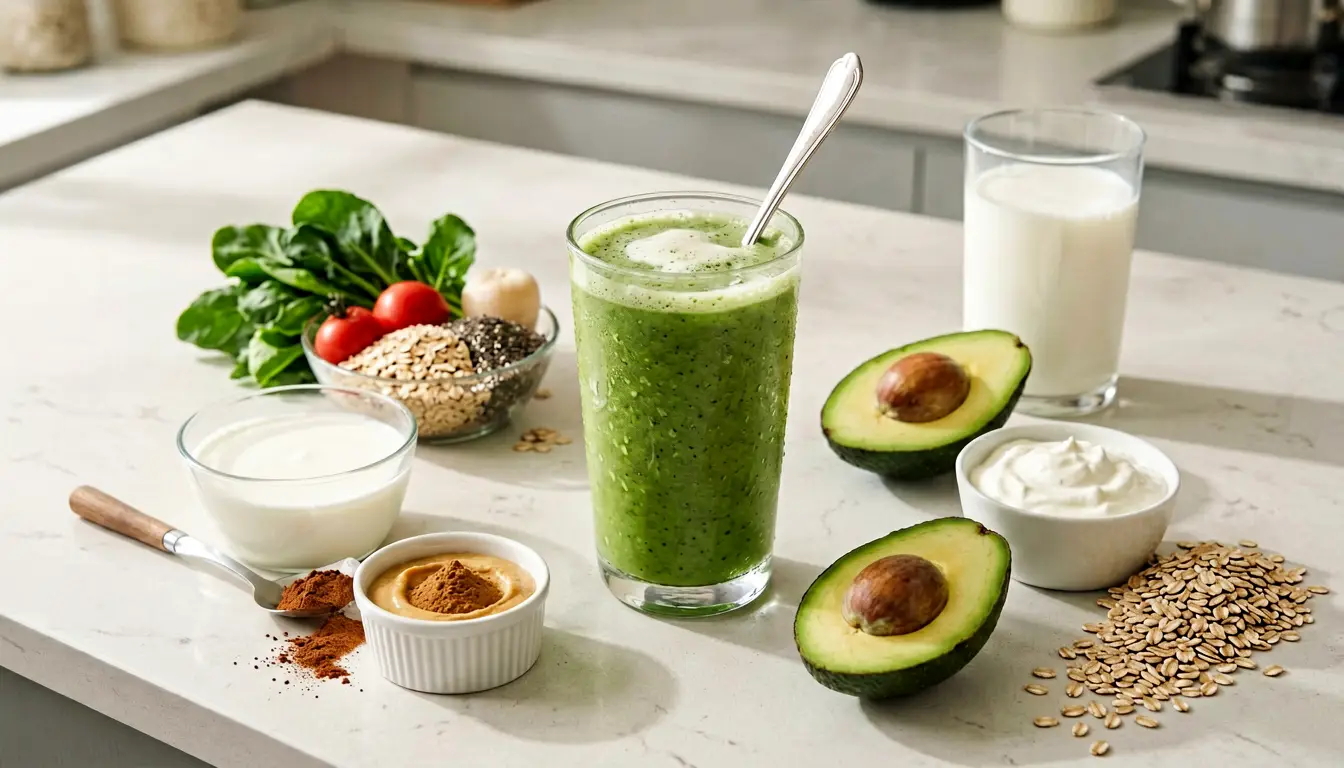
The first part is the main produce. That can be berries, mango, banana, pineapple, peach, greens, or a mix. This part sets the tone of the smoothie and gives it most of its identity.
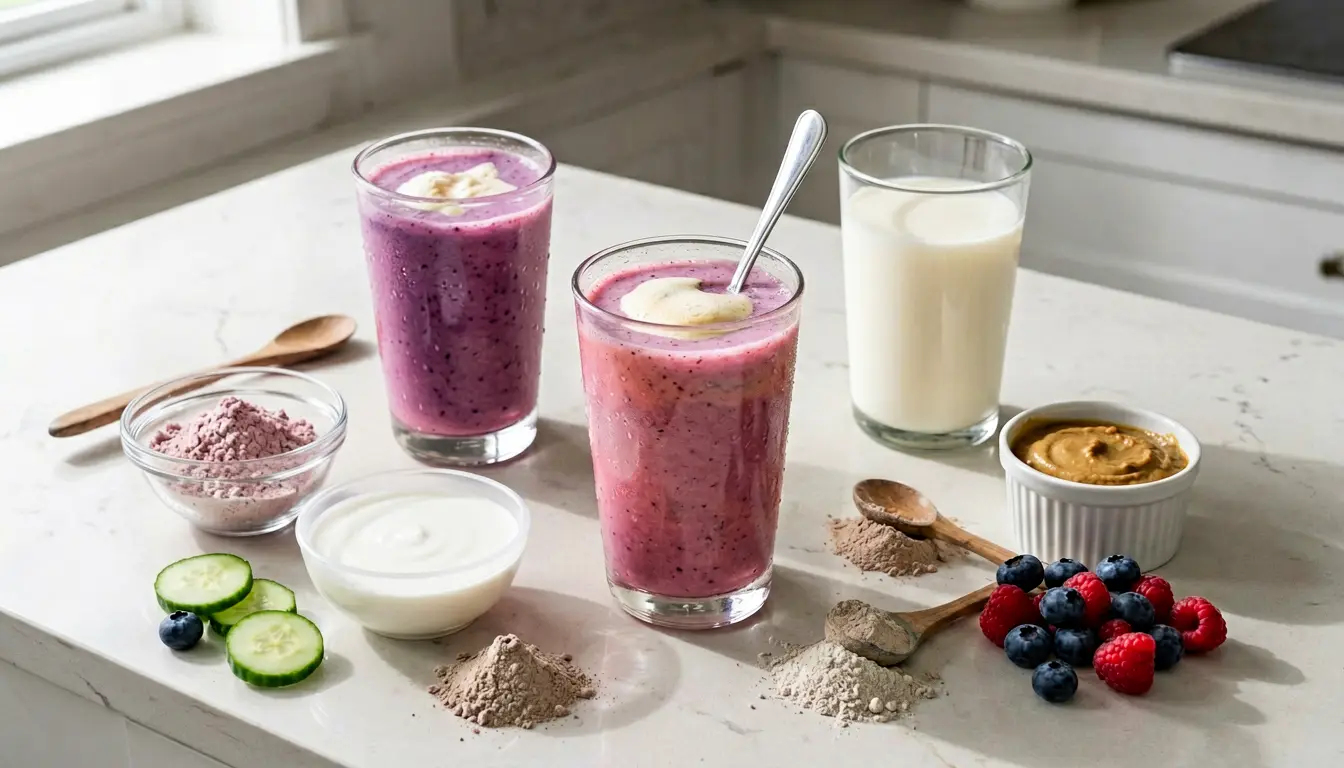
The second part is the liquid. Without it, the blender cannot do its job well. Water, milk, plant milk, coconut water, and juice all work, but they push the smoothie in different directions. Water keeps it lighter. Milk and yogurt make it creamier. Juice makes it brighter and often sweeter. If you are choosing the base, milk versus water for smoothies is the practical comparison.
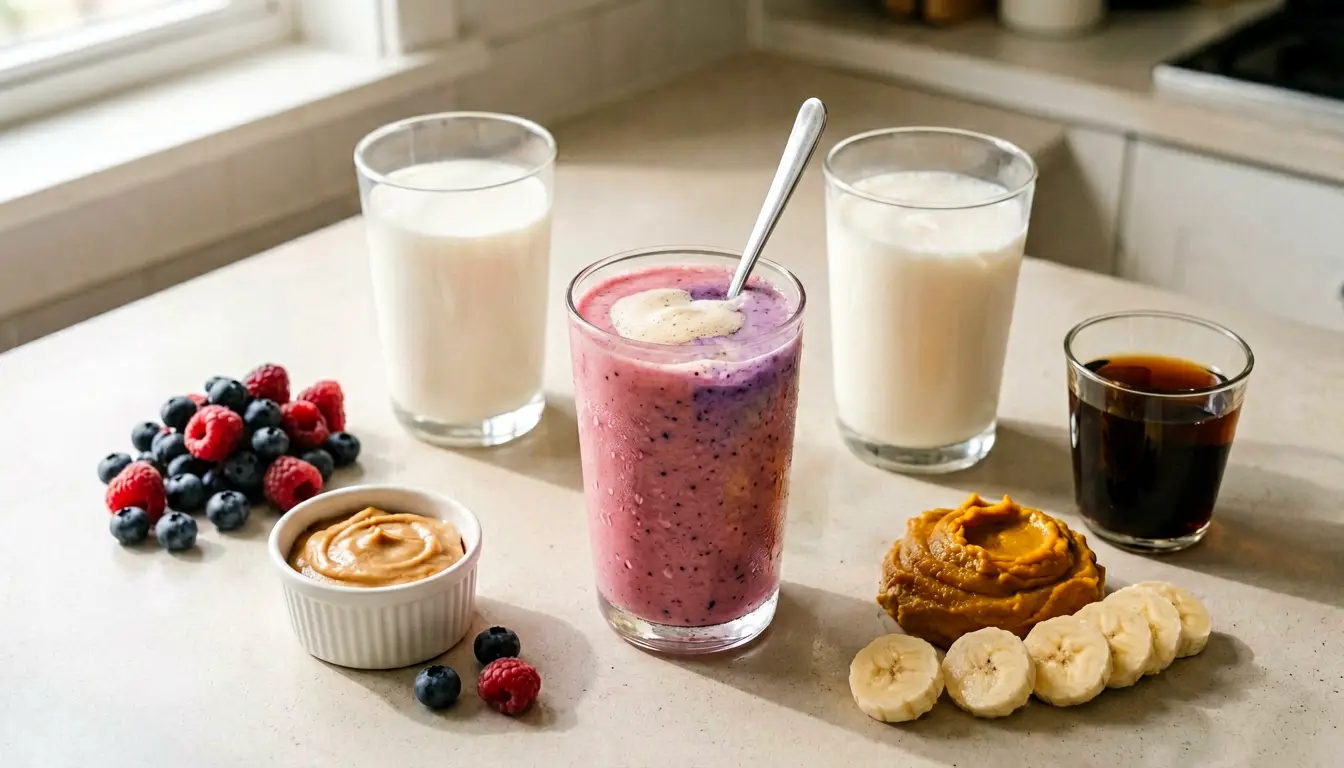
The third part is what turns a thin fruit drink into a real smoothie. That may be frozen fruit, banana, yogurt, oats, avocado, cottage cheese, seeds, or nut butter. This is the part readers usually notice only when it is missing, because that is when the smoothie comes out watery, icy, or unsatisfying.
Substitutes / Swaps
Once you know the three-part structure, swapping gets easier. If you do not have yogurt, use banana, avocado, or oats for body. If you do not want milk, use plant milk, coconut water, or plain water. If the smoothie is already sweet enough, skip juice and let the fruit do the work.
You can also swap within the same function:
- Flavor base: berries, banana, mango, pineapple, peach, apple
- Liquid: milk, nondairy milk, water, coconut water, juice
- Body builder: yogurt, frozen fruit, oats, avocado, nut butter, seeds
That approach is more useful than memorizing one rigid recipe because it helps you build from what is already in the kitchen.
Prep Tips
A lot of smoothie mistakes come from ignoring the role of each part. If you use too much liquid, the whole structure falls apart. If you use only watery fruit and skip the body-building ingredients, the smoothie tastes thin. If you pile in too many extras, the flavors stop making sense.
Layering matters too. Liquid should usually go in first, followed by soft ingredients, then fruit, then frozen items. That helps the blades catch the ingredients without forcing you to add extra liquid too early. If your blends keep turning out uneven, proper smoothie layering and not-smooth texture fixes are the two most practical follow-ups.
The last prep tip is restraint. A smoothie does not need every possible "boost." It just needs each part to do its job well.
Storage / Reheat / Freeze
The parts of a smoothie store differently. Frozen fruit and dry add-ins keep well ahead of time. Liquids and fresh produce are easy to add later. That is why ingredient packs are often smarter than storing the fully blended smoothie.
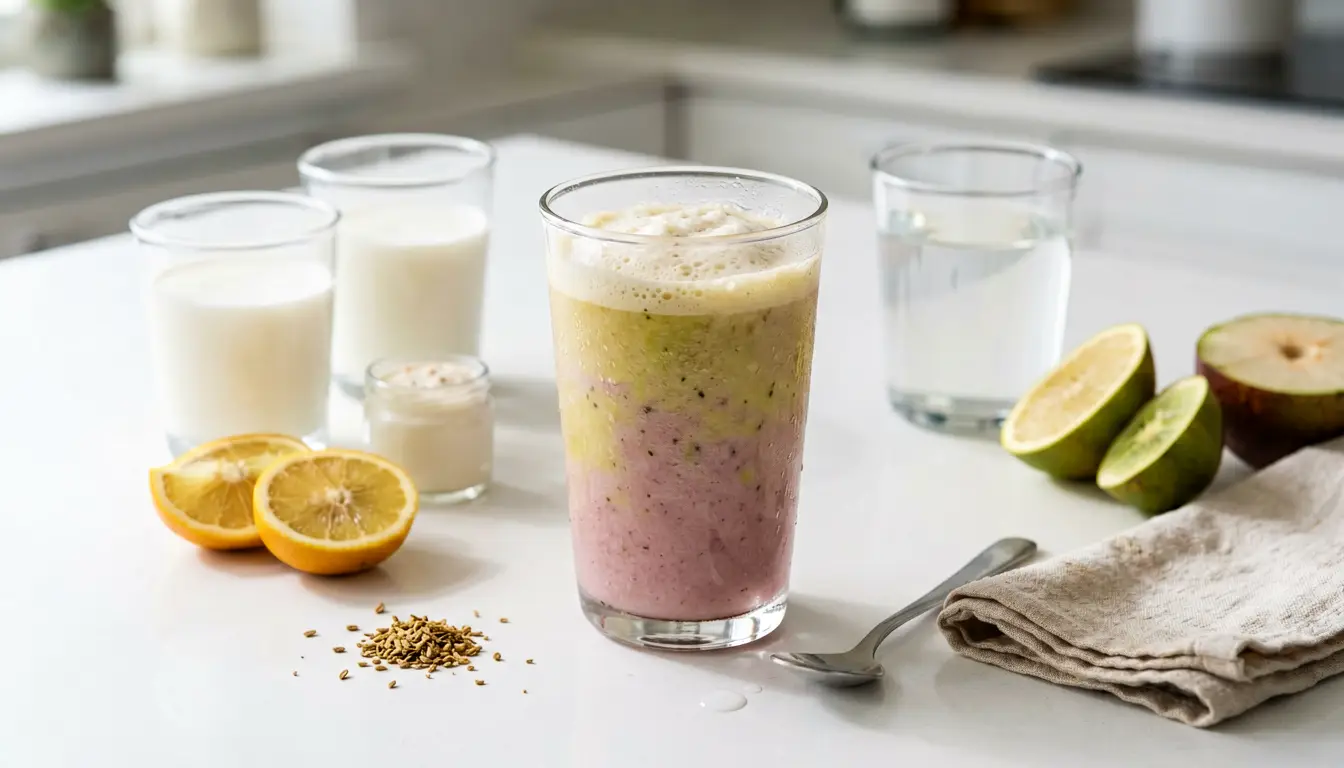
Once blended, the parts can drift apart. Separation is common, especially in lighter smoothies. A quick shake or reblend usually brings things back together, but the best texture still comes from blending close to serving time.
Frequently Asked Questions
What are the three main parts of a smoothie?
Most smoothies have a produce base, a liquid, and a texture-building ingredient or two.
Do smoothies need dairy to work?
No. They can work with plant milk, water, coconut water, fruit, and nondairy thickeners just fine.
What makes a smoothie feel thick instead of watery?
Frozen fruit, banana, yogurt, oats, avocado, nut butter, and similar ingredients help give a smoothie body.
Is juice required in a smoothie?
No. Juice is optional and usually used for sweetness or brightness, not because every smoothie needs it.
Why do smoothies separate after sitting?
The blended ingredients naturally settle over time, especially when the smoothie is lighter or lower in thickening ingredients.
For method, read how smoothies are made before changing ingredients. If texture is the weak point, use what makes smoothies thicker or the guide to fixing a watery smoothie base. If you are still choosing ingredients, must-have smoothie ingredients keeps the shopping list focused.