
As an affiliate, we may earn a commission from qualifying purchases. We get commissions for purchases made through links on this website from Amazon and other third parties.
Which smoothies are best for weight loss? Not always the ones with the fewest calories. The best weight-loss smoothies are the ones that help you feel full, control sweetness, and fit your whole day.
A good weight-loss smoothie uses measured fruit, vegetables, protein, fiber, and an unsweetened liquid. It should replace a weaker meal or snack, not get added on top of everything else. For recipe-specific ideas, compare this with best smoothies for weight loss and best breakfast smoothies for weight loss.
Quick Answer
The best smoothies for weight loss are high-protein, high-fiber smoothies with berries or measured fruit, spinach or another mild vegetable, Greek yogurt or protein powder, chia or flax, and water or unsweetened milk. They keep the drink filling without relying on juice, syrup, sweetened yogurt, or huge fruit portions.
Use a smoothie as breakfast, lunch, or a planned snack. If you drink it with a full meal, it may add calories instead of helping with weight loss.
If you need a repeatable routine more than another recipe idea, compare these homemade options with the Smoothie Diet review. That keeps the choice practical: flexible recipes when you like adjusting ingredients, structure when consistency is the harder part.
At a Glance
| Smoothie | Best For | Main Watchout |
|---|---|---|
| Berry Greek yogurt smoothie | Filling breakfast | Use plain yogurt |
| Green protein smoothie | Lower-calorie volume | Add enough protein |
| Chocolate peanut butter smoothie | Cravings | Measure nut butter |
| Coffee protein smoothie | Busy mornings | Avoid sweetened coffee drinks |
| Fruit and spinach smoothie | Beginner-friendly | Keep fruit measured |
| Smoothie bowl | Spoonable meal | Watch toppings |
If you are watching sugar closely, low-sugar smoothie ingredients will help. If you have diabetes or insulin resistance, use smoothies for blood sugar control before making a daily plan.
Why This Recipe Works
A weight-loss smoothie works when it makes a calorie deficit easier without leaving you miserable. Protein and fiber are the main tools.
Protein helps the smoothie feel like a meal. Fiber slows the drink down and adds body. Vegetables add volume. Whole fruit adds sweetness and flavor. An unsweetened liquid keeps the base from turning sugary.
The goal is not to make the smallest smoothie possible. The goal is to make a smoothie that replaces a less helpful choice and keeps you steady until the next meal.
Ingredients
Use this base for one weight-loss smoothie:
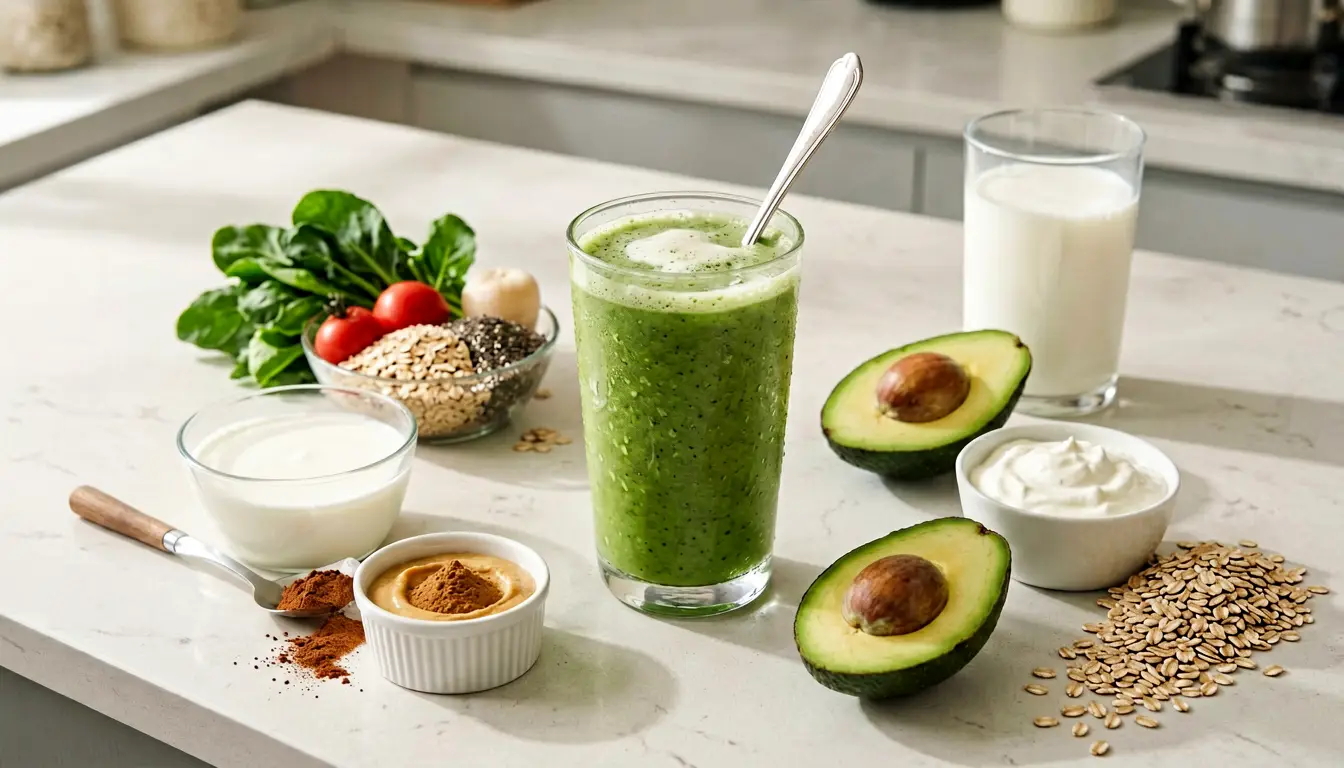
- 1 cup water, unsweetened almond milk, soy milk, dairy milk, or kefir
- 1/2 to 1 cup berries or measured fruit
- 1 to 2 handfuls spinach, kale, cucumber, zucchini, or cauliflower
- 1 protein serving, such as Greek yogurt, cottage cheese, tofu, whey, pea protein, or soy milk
- 1 tablespoon chia, flax, oats, or hemp seeds
- 1/4 avocado or 1 tablespoon nut butter, optional
- Cinnamon, vanilla, cocoa, ginger, lemon, lime, or mint
- Ice or frozen fruit for thickness
Ingredients To Use Carefully
- Fruit juice
- Sweetened yogurt
- Honey, syrup, agave, and dates
- Large bananas
- Granola
- Big spoonfuls of nut butter
- Sweetened plant milks
- Multiple protein powders or boosters in one cup
These ingredients are not forbidden. They just need portion control.
Equipment You Need
Use a blender, measuring cups, a spoon, and a glass or jar. A freezer bag system helps because it keeps portions consistent.
Pack fruit and vegetables ahead. Add liquid, protein, chia, flax, and nut butter when blending. This gives better texture and helps you measure the calorie-dense parts.
Step-by-Step Method
1. Start With The Liquid
Add 3/4 to 1 cup unsweetened liquid. Water and unsweetened almond milk keep calories lighter. Soy milk, dairy milk, kefir, and Greek yogurt add more protein.
2. Add Vegetables For Volume
Spinach, cucumber, zucchini, and cauliflower are easy because they do not bring much sweetness. Kale works if your blender is strong.
For a thicker smoothie without extra banana, use frozen cauliflower or avocado.
3. Add Measured Fruit
Use 1/2 to 1 cup fruit. Berries are the easiest weight-loss choice because they bring flavor and fiber without making the smoothie too sweet.
Banana, mango, pineapple, and dates can fit, but measure them. If fruit is your favorite smoothie style, use best fruit smoothies for weight loss for balanced options.
4. Add Protein
Choose one protein source. Greek yogurt, cottage cheese, tofu, whey, pea protein, kefir, soy milk, and milk all work.
If the smoothie does not hold you for at least a few hours, protein is the first place to adjust.
5. Add Fiber Or Fat
Add chia, flax, oats, hemp seeds, avocado, or nut butter. Keep it measured. These ingredients are helpful, but they are also dense.
6. Blend Thick
Blend until smooth. A thicker smoothie often feels more satisfying than a thin drink. Add ice or frozen fruit if needed.
Drink it slowly. If you finish it in two minutes, it may not feel like a meal.
Time and Temperature Guide
Most smoothies take 5 minutes. Freezer packs make mornings faster.
Use frozen fruit for a cold, creamy texture. Use fresh fruit when you want something lighter. Chill your liquid if the smoothie tastes warm after blending.
If you make it ahead, store it in a sealed jar and drink it the same day. Shake well before serving.
Best Variations
Berry Greek Yogurt Smoothie
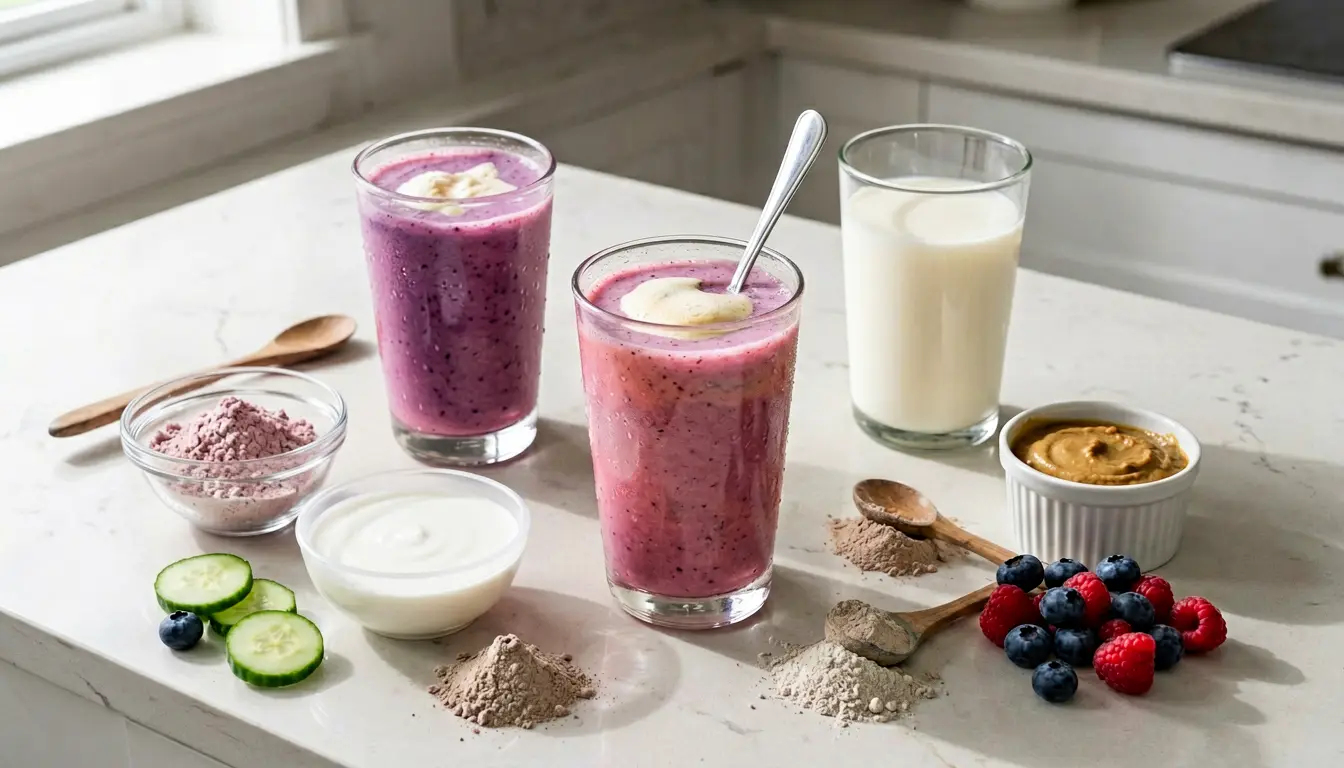
Blend 1 cup berries, 1 handful spinach, 1/2 cup plain Greek yogurt, 1 tablespoon chia, and 1 cup unsweetened almond milk.
This is the best everyday weight-loss smoothie because it is simple, filling, and not too sweet.
Chocolate Peanut Butter Protein Smoothie
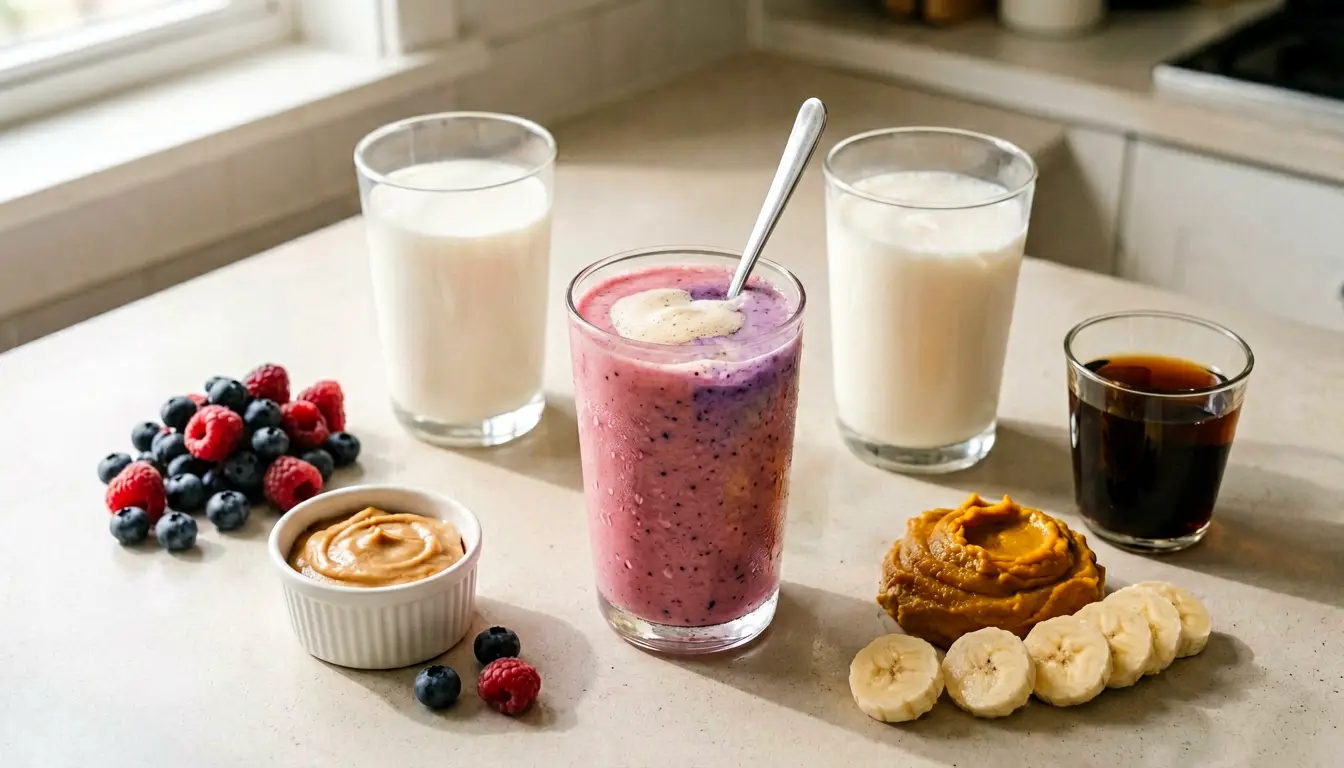
Blend 1/2 banana, 1 tablespoon peanut butter, cocoa powder, 1 scoop protein powder or 1/2 cup Greek yogurt, frozen cauliflower, and unsweetened milk.
It works well when cravings are the issue. Measure the peanut butter.
Green Citrus Protein Smoothie
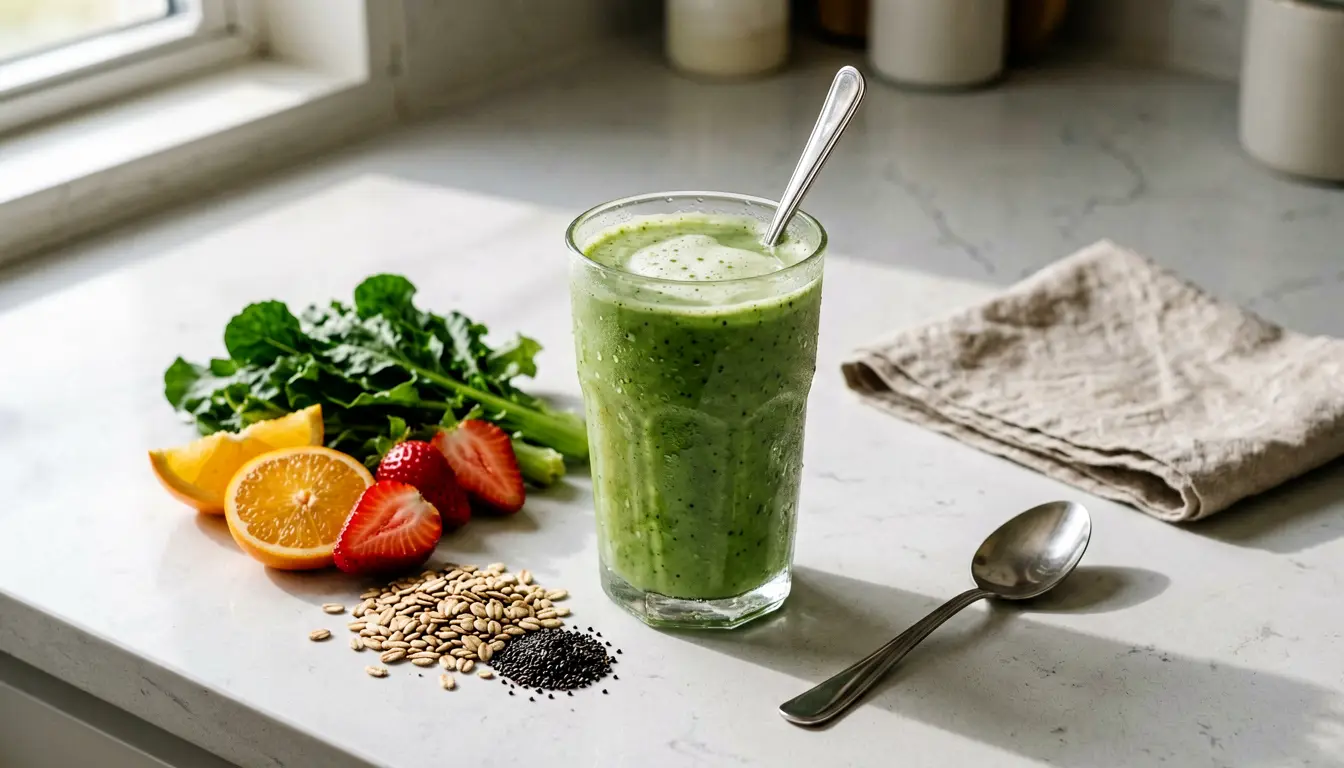
Blend spinach, cucumber, lime, 1/2 cup pineapple, tofu or protein powder, and water or unsweetened almond milk.
This is bright and refreshing, with enough protein to keep it from becoming just a green drink.
Coffee Breakfast Smoothie
Blend chilled coffee, plain Greek yogurt, cocoa, frozen cauliflower, chia, and a splash of milk. Add half a banana only if you want more sweetness.
This helps when your usual breakfast is sweet coffee and a snack.
Strawberry Cottage Cheese Smoothie
Blend strawberries, cottage cheese, vanilla, chia, and unsweetened milk. Cottage cheese adds creaminess and protein.
Smoothie Bowl With Measured Toppings
Blend frozen berries, Greek yogurt, spinach, and a small splash of milk until thick. Top with a small amount of berries, seeds, or granola.
Keep toppings small. They are the easiest place to overdo a smoothie bowl.
Common Mistakes
The first mistake is using smoothies as an add-on instead of a replacement. If you drink a meal-size smoothie with a full breakfast, it may work against your goal.
The second mistake is building a fruit juice smoothie. Juice, banana, mango, honey, and sweetened yogurt can make a smoothie taste like dessert.
The third mistake is cutting calories too hard. A tiny smoothie may save calories at breakfast and trigger snacking all afternoon. If that happens, add protein and fiber.
The fourth mistake is ignoring your own hunger. Some people do better with solid breakfast and smoothie snacks. Others do well with a breakfast smoothie. Use what keeps you consistent.
What to Serve With It
If the smoothie is a meal, it may not need a side. If it is light, pair it with eggs, cottage cheese, turkey, tofu, or whole-grain toast.
If you use a smoothie after a workout, pair protein with fruit or oats. If you use it as an afternoon snack, keep it smaller and lower in sweet add-ins.
For very light options, smoothies under 100 calories and smoothies under 200 calories fit better than meal smoothies.
Storage and Reheating
Smoothies are best fresh. Prep freezer packs with fruit and vegetables, then add liquid and protein when blending.
If you refrigerate a blended smoothie, use a sealed jar and drink it the same day. Shake hard before drinking.
Do not reheat smoothies. If it thickens too much, add a splash of water or milk and shake or re-blend.
Frequently Asked Questions
Which smoothies are best for weight loss?
High-protein, high-fiber smoothies with berries, greens, Greek yogurt or protein powder, chia or flax, and unsweetened liquid are usually best.
Are fruit smoothies good for weight loss?
They can be when fruit is measured and paired with protein or fiber. Fruit-only smoothies are often less filling.
What should I avoid in a weight-loss smoothie?
Limit fruit juice, sweetened yogurt, honey, syrup, large fruit portions, granola, and oversized spoonfuls of nut butter.
Is a smoothie better for breakfast or lunch?
Breakfast is usually easier, but lunch can work if the smoothie is filling enough and you still eat a balanced dinner.
Should I add protein powder?
You can, but it is not required. Greek yogurt, cottage cheese, tofu, soy milk, kefir, and milk can also add protein.
Can smoothies make you gain weight?
Yes, if they add calories on top of your meals or use many calorie-dense ingredients. Portion and purpose matter.
How thick should a weight-loss smoothie be?
Thick enough to drink slowly. Frozen fruit, chia, flax, Greek yogurt, tofu, avocado, and cauliflower can all help.
For related decisions, compare do smoothies help you lose weight, do smoothies make you gain weight, will smoothies make you lose weight, and smoothies low carb if carbs are your main limit.