
As an affiliate, we may earn a commission from qualifying purchases. We get commissions for purchases made through links on this website from Amazon and other third parties.
Nutritious smoothies work best when they feel balanced, not overloaded. The goal is not to cram every possible add-in into one blender jar. The goal is to combine fruit, vegetables, protein, fiber-rich ingredients, fat, and liquid in a way that still tastes good enough to make again tomorrow.
That is why one good base method matters more than chasing random smoothie trends. Once the structure is right, you can shift the fruit, greens, protein, and texture depending on whether you want a lighter morning smoothie, a more filling breakfast, or a gentler yogurt-style option. If your main question is fruit technique first, how to make smoothies with fruit is the better starting point. If you want a fruit-led list instead of one base formula, balanced fruit smoothie ideas goes further in that direction.
Quick Answer
The easiest way to make a nutritious smoothie is to use one fruit, one vegetable or booster ingredient, one protein source, one fiber-rich or creamy ingredient, and just enough liquid to blend smoothly. That gives you a drink that tastes more complete and usually holds longer than fruit plus juice alone.
In practice, that often looks like a base of berries, mango, banana, peach, or pineapple paired with spinach, cucumber, carrots, cauliflower, or avocado. Then you build from there with Greek yogurt, kefir, tofu, chia, flax, oats, or nut butter depending on the job you want the smoothie to do. That is the difference between a smoothie that feels steady and one that tastes sweet but thin.
At a Glance
Nutritious smoothies are best for readers who want something fast, flexible, and lighter than a full cooked meal first thing in the morning. They work especially well when you need breakfast on the go, an after-activity snack, or a lighter afternoon reset that still has some staying power.
They are not all trying to do the same thing, though. Some variations are lighter and more hydrating, like pineapple-spinach or papaya-ginger. Some are more filling, like peanut butter oat or avocado berry. If you want something that acts more like a real breakfast, lean toward yogurt, oats, nut butter, or seeds. If you want something fresher and easier to sip, keep the smoothie lighter and let fruit plus greens lead.
Why This Recipe Works
This base method works because each part has a job. Fruit gives flavor and natural sweetness. Vegetables or greens add freshness. Protein helps the smoothie hold you longer. Fiber-rich and creamy ingredients improve body and staying power. The liquid controls whether the drink feels light, creamy, or thick enough for breakfast.
The second reason it works is restraint. A nutritious smoothie gets better when the ingredient roles are clear. Berries plus yogurt plus chia plus milk makes sense. Mango plus spinach plus avocado plus coconut water makes sense. But once the jar gets crowded with fruit juice, honey, protein powder, greens powder, nut butter, seeds, and three kinds of fruit, the result often tastes muddled.
Ingredients
For the fruit layer, bananas, berries, mango, pineapple, peaches, papaya, apples, and oranges all show up often because they either blend smoothly, add brightness, or help with texture. Bananas and mangoes are useful when you want the smoothie thicker. Berries and citrus are better when you want a brighter finish.
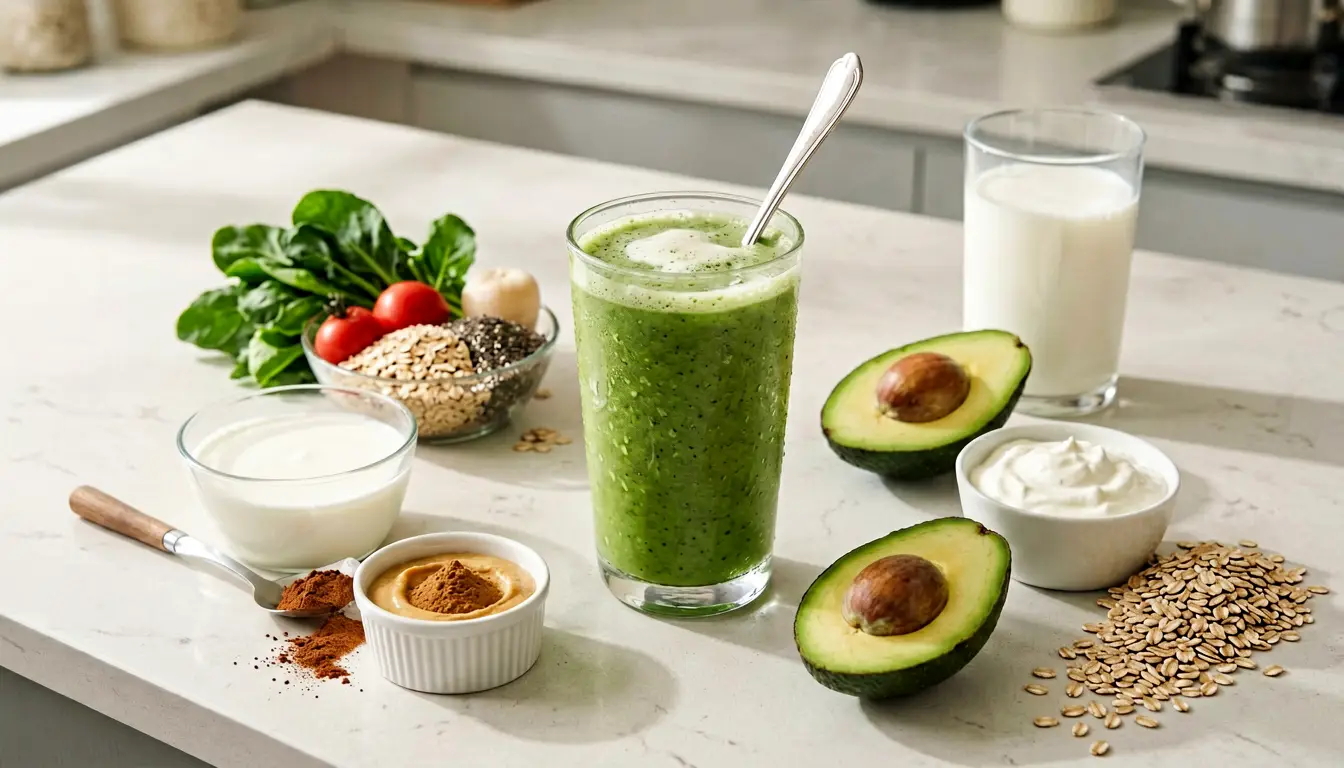
For the vegetable and produce side, spinach, kale, cucumber, carrots, cauliflower, avocado, and zucchini are some of the most practical options. Spinach is easy to hide. Kale tastes stronger but brings more edge. Cucumber keeps the blend lighter. Avocado adds body without making the smoothie sweeter.
For protein and staying power, Greek yogurt, kefir, silken tofu, soy milk, protein powder, cottage cheese, hemp seeds, chia, flax, oats, almond butter, and peanut butter all show up. You do not need all of them. One or two is usually enough.
Equipment You Need
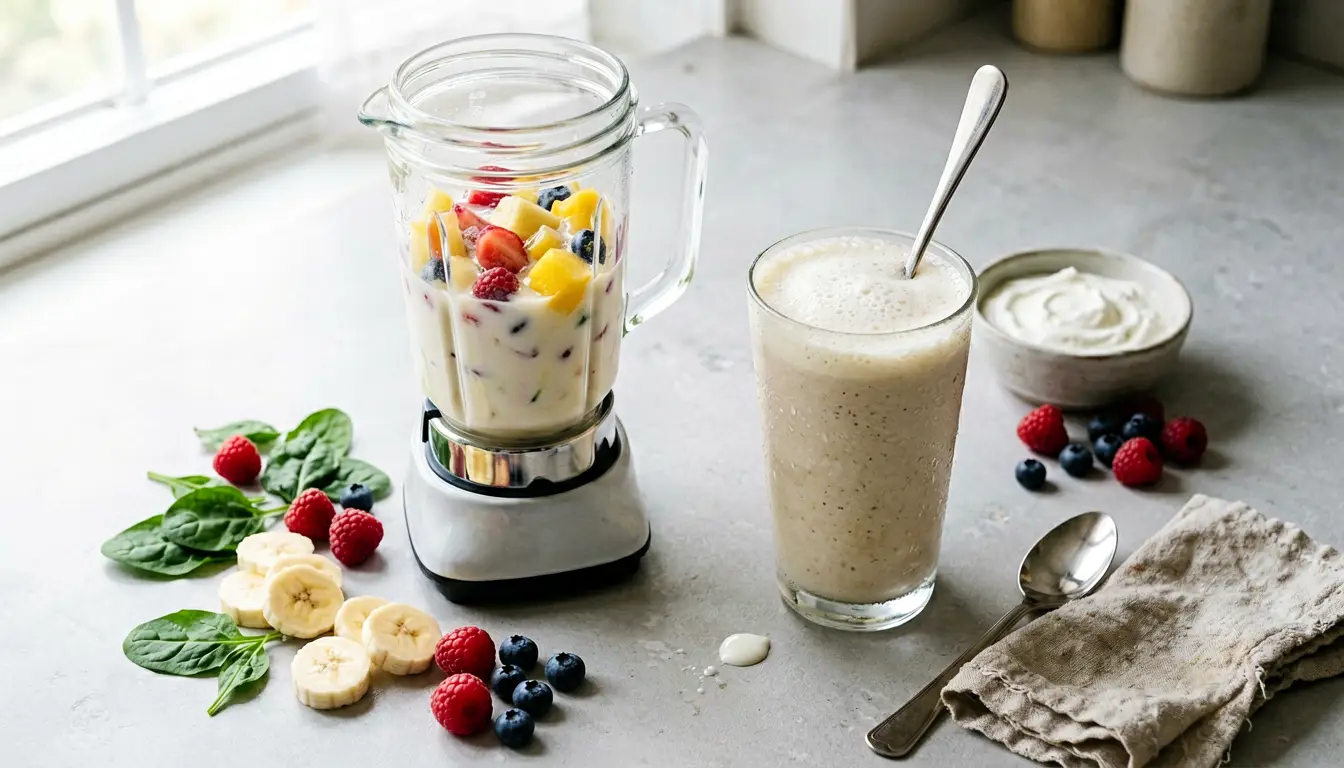
You only need a blender, but blender habits matter. A high-speed blender makes greens, oats, seeds, and raw produce easier to smooth out. A regular blender still works well enough if you respect the order: liquid first, softer ingredients next, frozen fruit last.
A measuring cup and freezer-safe bags also help if you want to prep ingredients in advance. Nutritious smoothies are easier to repeat when you can portion fruit, greens, and boosters ahead of time instead of rebuilding the ingredient list every morning.
If your current blender leaves greens flecked through the drink or oats gritty at the bottom, compare blenders built for smoothies before adding more liquid. For the nutrition side, protein powders for smoothies, smoothie-friendly yogurts, and oats that blend smoothly are the add-ins most likely to change how long the glass holds you.
Step-by-Step Method
Start with about 1 cup of liquid in the blender. Milk, soy milk, almond milk, coconut milk, kefir, coconut water, or water can all work, depending on how light or creamy you want the smoothie.
Add your protein and creamy ingredients next. This might be Greek yogurt, tofu, nut butter, avocado, oats, chia, or flax. Let these hit the liquid early so the blender does not have to fight through frozen fruit first.
Then add the produce and fruit. If you are using greens, blend them with the liquid first when the blender struggles with leafy ingredients. Frozen fruit should go in last, since it helps create the final texture and chill.
Blend until smooth, stop to scrape if needed, and then adjust in small steps. If it is too thick, add a small splash of liquid. If it is too thin, add more frozen fruit, a spoonful of yogurt, or half a banana instead of ice.
Time and Temperature Guide
Most nutritious smoothies are best cold and freshly blended. Frozen fruit helps with both texture and temperature, while all-fresh fruit often needs more help from ice or a colder liquid. The trick is to use enough frozen ingredients for body without making the drink so stiff that the blender stalls.
If you are prepping ahead, it usually works better to portion ingredients into freezer bags or smoothie cups and wait to blend until morning. Fully blended smoothies can be stored short-term, but the texture is usually best right after blending. If you need a make-ahead system, keeping the yogurt or liquid separate until blending day often gives a better result.
Best Variations
Here are 10 nutritious smoothie directions that work especially well with this base method:
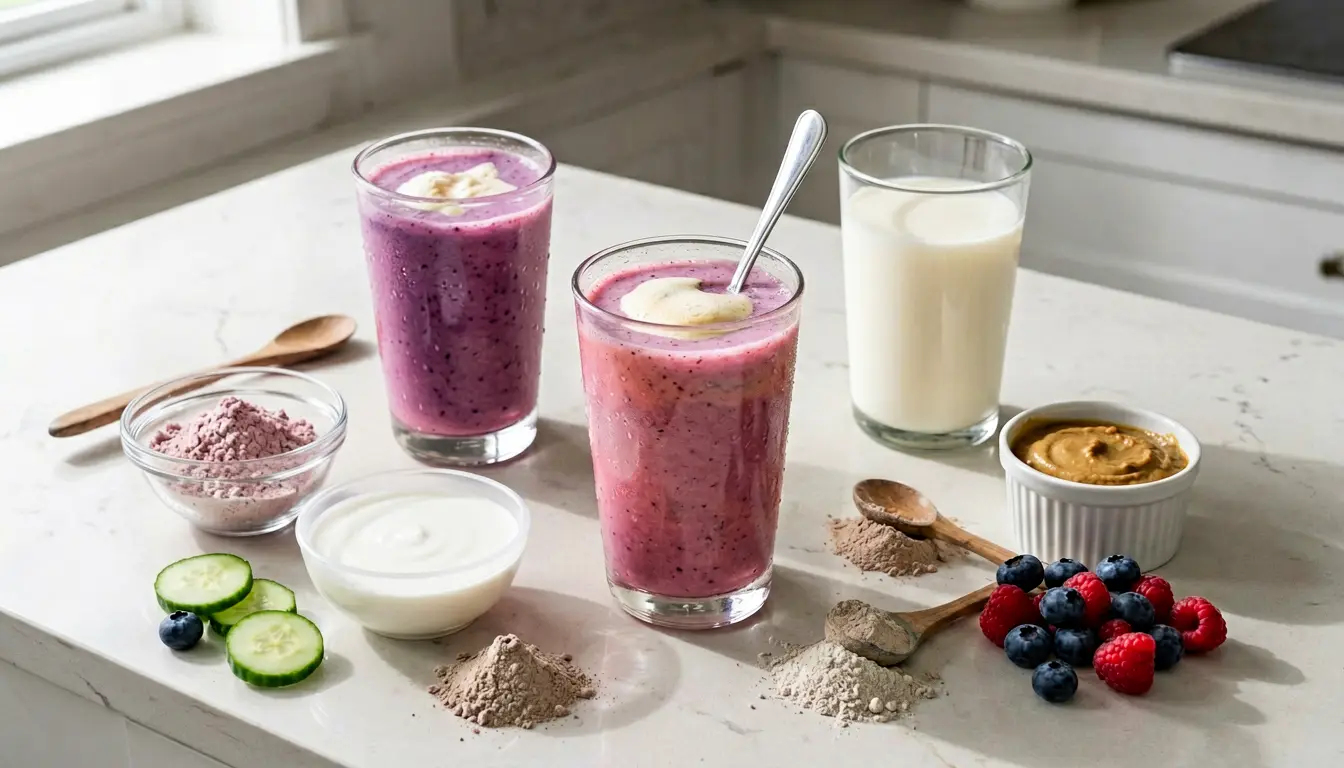
- Berry yogurt smoothie: berries, Greek yogurt, chia, and milk for a bright breakfast blend.
- Green mango smoothie: mango, spinach, avocado, and coconut water for a fresher tropical option.
- Papaya ginger smoothie: papaya, banana, ginger, and kefir for a softer yogurt-style blend.
- Carrot orange smoothie: carrots, orange, yogurt, and a little ginger for a sharper, brighter drink.
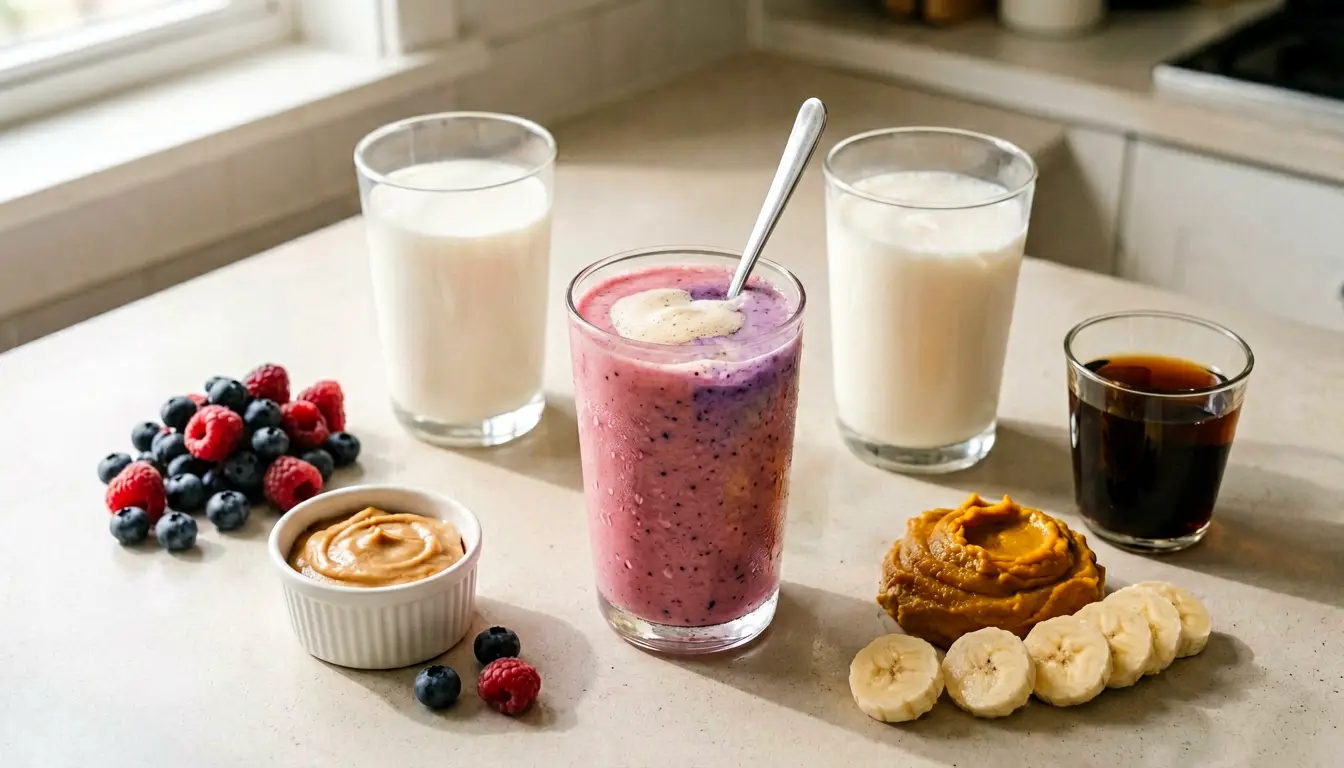
- Peanut butter oat smoothie: banana, oats, peanut butter, and milk for the most filling breakfast version.
- Pineapple spinach smoothie: pineapple, spinach, cucumber, and yogurt for a lighter green blend.
- Avocado berry smoothie: berries, avocado, yogurt, and flax for a thicker lower-sweetness direction.
- Chocolate peanut butter smoothie: banana, cocoa, peanut butter, and yogurt when you want dessert energy with more structure.
- Apple cinnamon smoothie: apple, oats, yogurt, and cinnamon for a smoothie that feels more breakfast-like than snack-like.
- Tropical kefir smoothie: mango, pineapple, kefir, and lime for a brighter tangy variation.
If you want more fruit-specific inspiration around those blends, berry smoothies keep the flavor bright, peanut butter banana smoothies make the glass more filling, and mango pineapple smoothies move the same structure in a tropical direction.
If you are considering a paid smoothie plan instead of building your own balanced routine, read the Smoothie Diet review before paying for a fixed program.
Common Mistakes
The biggest mistake is building the smoothie around sweetness only. Fruit juice, lots of banana, and extra honey can make the smoothie easy to drink, but not especially balanced. Protein, fiber-rich ingredients, or creamy fats are what usually keep it from feeling thin and short-lived.
Another mistake is asking one smoothie to do everything. A lighter hydrating smoothie is not supposed to feel like a meal replacement. A heavy peanut butter oat smoothie is not supposed to feel refreshing like watermelon. The better move is to choose the variation that fits the moment instead of forcing one blend to solve every need.
Overloading the blender is another common issue. One fruit, one or two support ingredients, a protein source, and a liquid are usually enough. Once the smoothie starts tasting muddy, the answer is usually fewer ingredients, not more.
What to Serve With It
If the smoothie is lighter, serve it with something that gives you a little more chew and staying power. Eggs, toast, nut butter toast, oatmeal, or yogurt with granola all work better than trying to make the smoothie itself unrealistically huge.
If the smoothie is already built like breakfast, especially the peanut butter oat or avocado berry versions, it can stand on its own more comfortably. That is one reason these fuller versions are often better for busy mornings.
Storage and Reheating
Reheating is not relevant here, but storage still matters. The best prep method is usually freezer packs: portion the fruit, greens, and boosters ahead of time, then blend with liquid when needed. That keeps the texture closer to fresh and prevents a blended smoothie from separating overnight.
If you do refrigerate a blended smoothie, store it in a tightly sealed jar and plan to drink it within about a day. Shake it well before serving, because separation is normal. The longer it sits, the more likely the texture and flavor are to drift.
Frequently Asked Questions
What makes a smoothie nutritious?
Usually it is the balance of fruit, vegetables, protein, fiber-rich ingredients, creamy ingredients, and liquid rather than one single add-in. A smoothie gets more useful when it feels steady and satisfying instead of sweet and short-lived.
Do nutritious smoothies need protein powder?
No. Greek yogurt, kefir, tofu, cottage cheese, soy milk, chia, flax, oats, hemp seeds, and nut butters can all help with staying power.
What fruit works best in nutritious smoothies?
Berries, bananas, mangoes, pineapple, peaches, papaya, apples, and oranges all work well. Some help more with thickness, while others help more with brightness.
Are green smoothies automatically more nutritious?
Not automatically. Greens can help with freshness, but a smoothie still works better when it is balanced with enough protein, fiber-rich ingredients, creamy body, and a flavor that makes it easy to keep drinking.
Can I drink a nutritious smoothie for breakfast every day?
That can work for many people if the smoothie is balanced and you still feel satisfied afterward. The fuller variations usually work better for this than very light fruit-only versions.
How do I make a nutritious smoothie that still tastes good?
Keep the flavor path simple, use ripe fruit, and make sure one ingredient adds brightness or creaminess on purpose. Good texture and clear flavor matter just as much as nutrition.
For more fruit-led options, balanced fruit smoothie ideas stay close to this formula. Best smoothies gives a broader set of styles, while what fruit makes good smoothies helps when the flavor still feels flat.