
As an affiliate, we may earn a commission from qualifying purchases. We get commissions for purchases made through links on this website from Amazon and other third parties.
Which smoothie is healthiest? Usually, it is a homemade, balanced smoothie with vegetables, low-sugar fruit, protein, fiber, and an unsweetened liquid.
That means a berry spinach Greek yogurt smoothie is usually healthier than a large juice-based tropical smoothie. The point is not to make the greenest drink possible. The point is to make a smoothie that tastes good, keeps you full, and does not turn into dessert in a cup.
Quick Answer
The healthiest smoothie is a berry-green protein smoothie made with whole fruit, spinach or another mild vegetable, Greek yogurt or tofu, chia or flax, and water or unsweetened milk. It has fruit for flavor, vegetables for volume, protein for fullness, and fiber to slow the drink down.
If blood sugar is your main concern, use smoothies for blood sugar control as your guide. If you want the "healthiest in the world" version, this healthiest smoothie breakdown gives you the flexible formula.
If you are comparing a single healthy smoothie with a more structured plan, read The Smoothie Diet vs homemade smoothies before choosing. A healthy smoothie is one recipe; a routine has to work across breakfast, snacks, hunger, and variety.
At a Glance
| Smoothie Type | Healthiest Use | Watchout |
|---|---|---|
| Berry green protein smoothie | Everyday breakfast or snack | Needs enough protein |
| Avocado cucumber smoothie | Lower-sugar, creamy option | Can get high in calories |
| Fruit and yogurt smoothie | Family-friendly breakfast | Use plain yogurt |
| Tropical smoothie | Post-workout or hot day | Mango, pineapple, and juice add up |
| Smoothie bowl | Spoonable breakfast | Toppings can turn heavy |
| Store-bought smoothie | Emergency option | Often low in fiber or high in sugar |
For most home cooks, the healthiest smoothie is the one you can repeat without turning it into a sugar bomb. Berries, spinach, yogurt, tofu, chia, flax, avocado, cucumber, and unsweetened milk are the most reliable building blocks.
Why This Recipe Works
The healthiest smoothie works because it balances sweetness with staying power. Fruit brings flavor, but protein and fiber make it feel like food.
Spinach is useful because it blends softly and does not fight the fruit. Berries are useful because they bring bright flavor and fiber. Greek yogurt, cottage cheese, tofu, soy milk, whey, or pea protein makes the smoothie more filling.
Chia, flax, oats, avocado, and nut butter help texture. Use them in measured amounts. They can make the smoothie creamier, but too many add-ins can turn a healthy smoothie into a very large meal.
Ingredients
For one healthy everyday smoothie, use:
- 1 cup unsweetened almond milk, soy milk, milk, kefir, or water
- 1 cup frozen berries
- 1 large handful spinach
- 1/2 cup plain Greek yogurt, cottage cheese, or silken tofu
- 1 tablespoon chia or ground flax
- 1/4 avocado or 1 tablespoon nut butter, optional
- Lemon juice, vanilla, cinnamon, or cocoa for flavor
- Ice, if needed
Helpful Optional Add-Ins
- Cucumber for lightness
- Frozen cauliflower for thickness
- Zucchini for volume
- Hemp seeds for a small protein and fat boost
- Ginger for brightness
- Mint for a fresh finish
- Cocoa for a dessert-style smoothie without syrup
If you need more flavor choices, low-sugar smoothie ingredients will help you build a sweeter-tasting smoothie without pouring in juice.
Equipment You Need
Use a blender, measuring cup, spoon, and a glass or jar. A high-speed blender makes greens, frozen fruit, seeds, and cauliflower smoother, but a regular blender works if you add liquid first and blend long enough.
For prep, use freezer containers. Pack berries, spinach, cucumber, zucchini, and cauliflower together. Add liquid, yogurt, tofu, protein powder, chia, or flax when you blend.
Step-by-Step Method
1. Add Liquid First
Pour in 1 cup unsweetened liquid. Use water for the lightest smoothie, unsweetened almond milk for a neutral base, soy milk for more protein, or dairy milk for a creamier finish.
2. Add Greens Or Vegetables
Add spinach, cucumber, zucchini, or cauliflower. Spinach is the easiest starter green. Kale works too, but it tastes stronger and needs more blending.
3. Add Fruit
Add 1/2 to 1 cup fruit. Berries are the best everyday choice when you want lower sugar. Half a banana can help texture, but it is not required.
For fruit-focused weight goals, best fruit smoothies for weight loss gives more ideas with measured fruit.
4. Add Protein
Add Greek yogurt, cottage cheese, tofu, kefir, soy milk, whey, or pea protein. A healthy smoothie without protein may not hold you very long.
5. Add Fiber Or Fat
Add chia, flax, oats, avocado, seeds, or a measured spoon of nut butter. Pick one or two. Do not add every booster in the pantry.
6. Blend And Adjust
Blend until smooth. If it is too thick, add liquid slowly. If it is too thin, add frozen berries, ice, chia, flax, or cauliflower.
Taste it before serving. Add lemon or lime if it tastes flat. Add cinnamon or vanilla if it needs warmth. Add cocoa if you want chocolate flavor.
Time and Temperature Guide
A healthy smoothie takes about 5 minutes if your ingredients are ready. Freezer packs make it faster.
Use frozen fruit for a cold, thick smoothie. Use fresh fruit when you want a lighter drink. If you use fresh fruit, add ice or frozen cauliflower.
Drink it soon after blending for best texture. If you need to store it, refrigerate it in a sealed jar and drink it the same day. Shake well before serving.
Best Variations
Berry Spinach Yogurt Smoothie
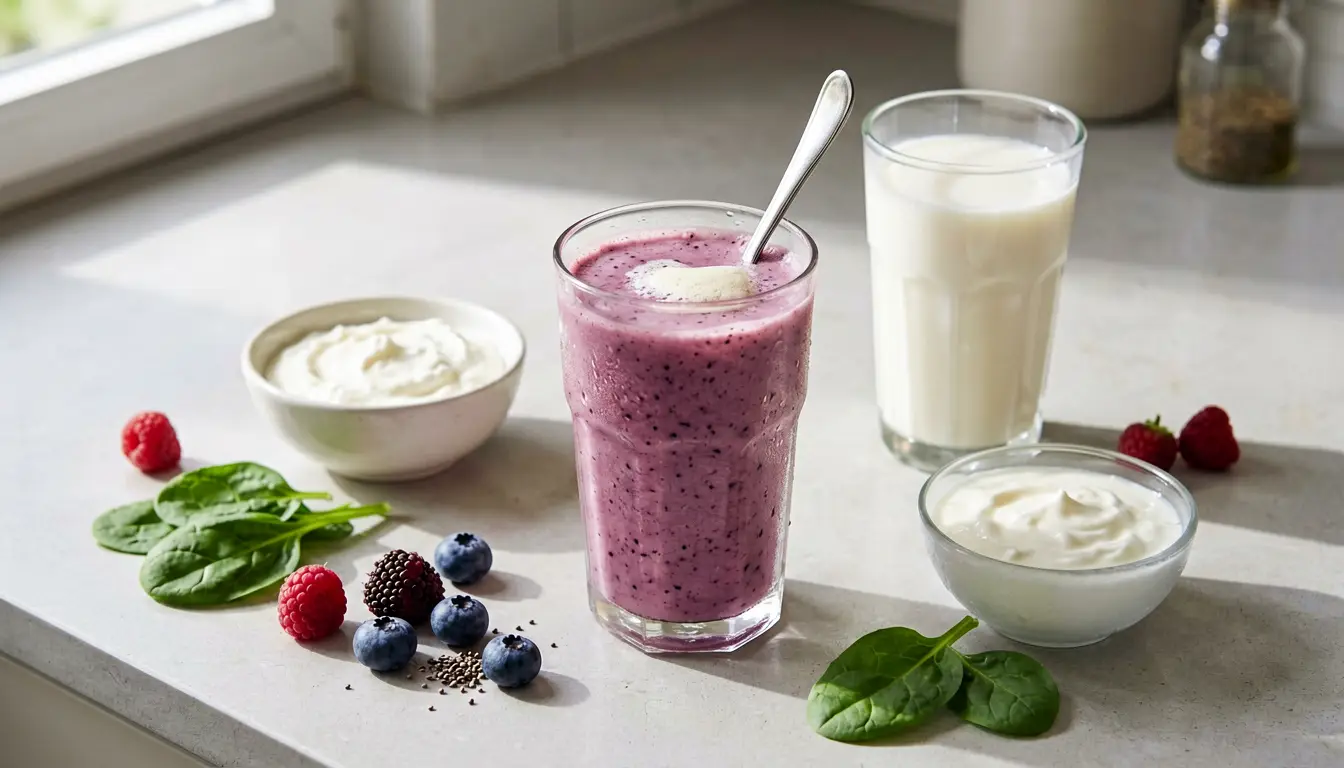
Blend berries, spinach, Greek yogurt, chia, and unsweetened almond milk. This is the best everyday healthy smoothie because it is simple, creamy, and not too sweet.
Cucumber Avocado Green Smoothie
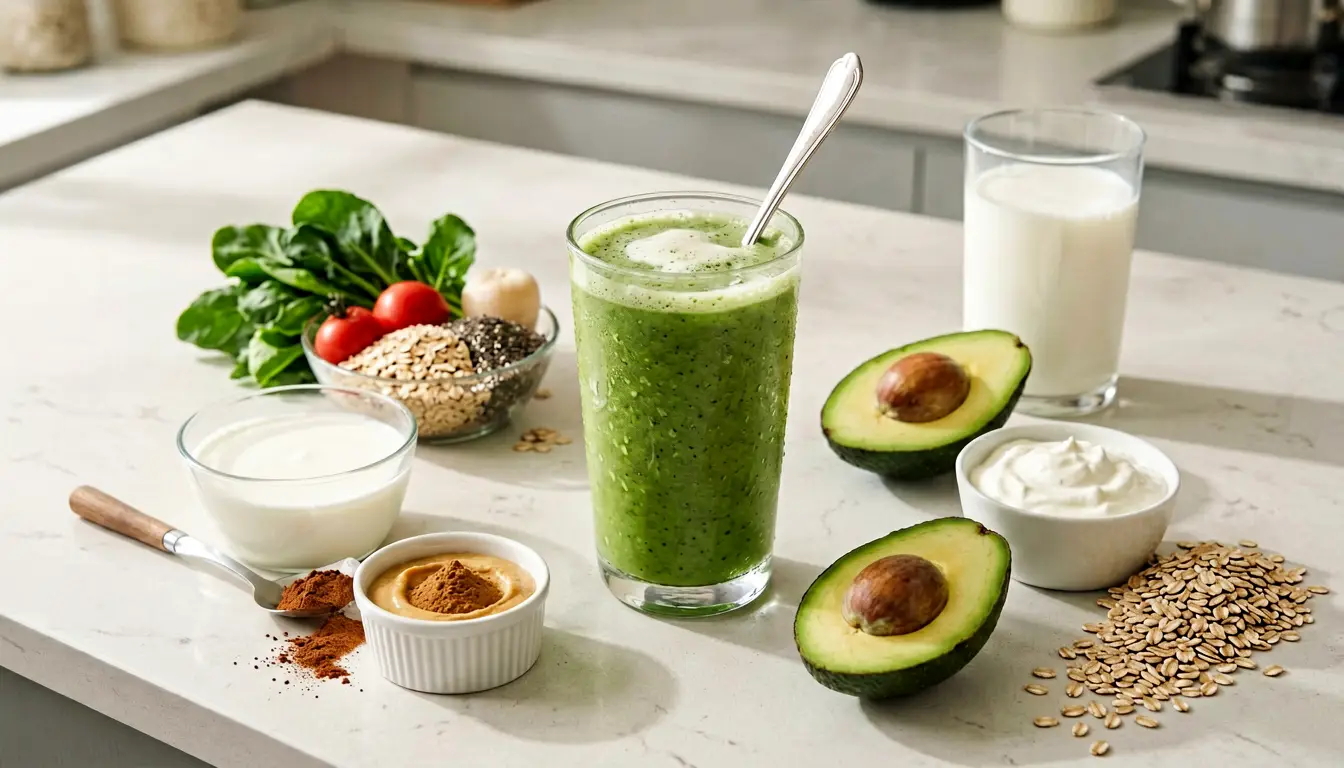
Blend cucumber, spinach, avocado, lime, tofu or protein powder, and unsweetened milk. This is a good lower-sugar option when you want something fresh and creamy.
Chocolate Berry Protein Smoothie
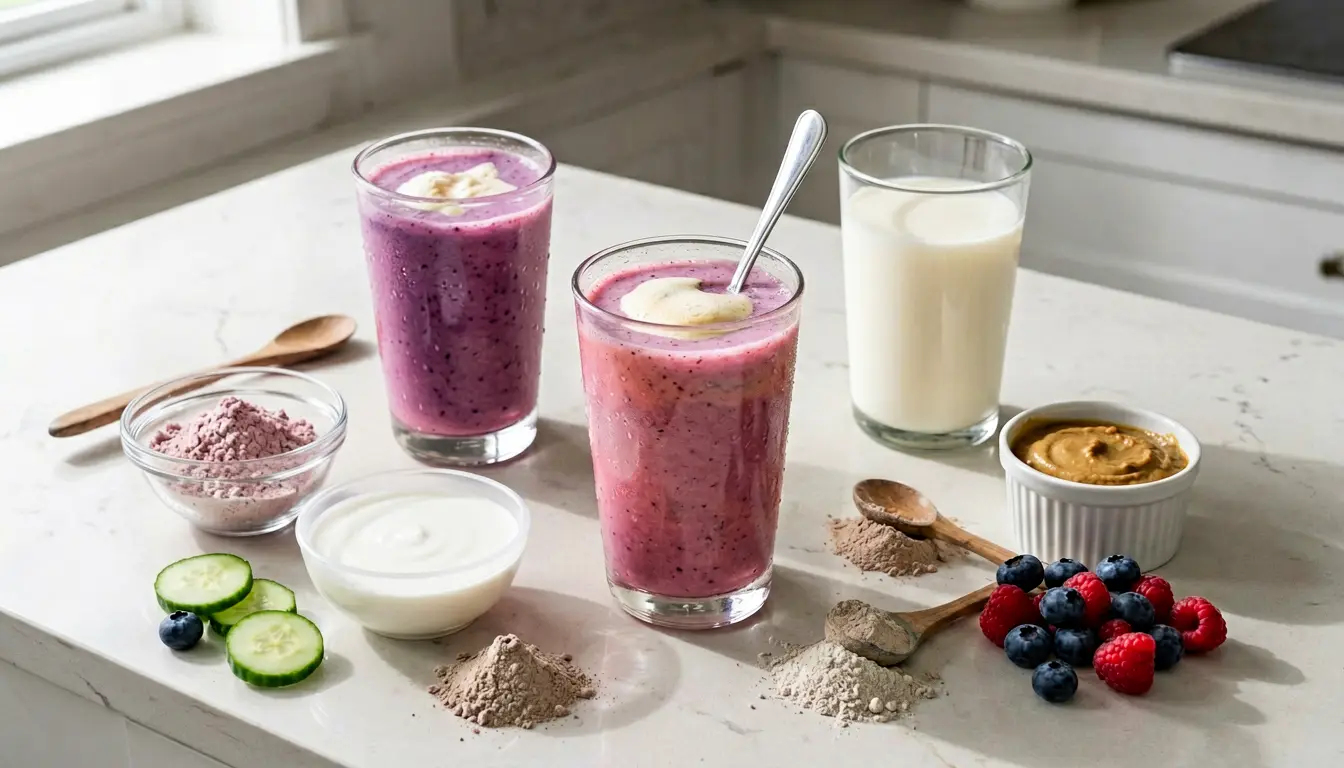
Blend berries, cocoa, Greek yogurt or tofu, chia, and unsweetened milk. It tastes richer without needing chocolate syrup.
Strawberry Cauliflower Smoothie
Blend strawberries, frozen cauliflower, plain yogurt, vanilla, and milk. Cauliflower adds body without a strong flavor.
Apple Cinnamon Smoothie
Blend apple, spinach, Greek yogurt, oats, cinnamon, and milk. This is a good choice when you want a breakfast smoothie that feels less tropical.
Common Mistakes
The biggest mistake is using fruit juice as the base. Juice makes the smoothie easy to drink quickly and can push the sugar load higher than expected.
The second mistake is skipping protein. Fruit and greens are useful, but a meal smoothie needs something more. Plain Greek yogurt, tofu, cottage cheese, soy milk, or protein powder can help.
The third mistake is making the smoothie too large. A healthy ingredient list does not cancel out portion size. Measure nut butter, avocado, oats, seeds, and dried fruit.
The fourth mistake is sipping a sweet acidic smoothie for hours. Drink it with a meal or in one sitting, then rinse with water.
What to Serve With It
If the smoothie is breakfast, it can stand alone when it has protein, fiber, and enough calories. If it is lighter, pair it with eggs, cottage cheese, a small bowl of oatmeal, or whole-grain toast with nut butter.
If the smoothie is a snack, keep it smaller. If it is part of lunch, pair it with something you chew, like a salad with chicken or tofu, a bean bowl, or leftovers.
If weight loss is the goal, best breakfast smoothies for weight loss may be a better fit than a larger all-purpose smoothie.
Storage and Reheating
Do not reheat smoothies. Store freezer packs unblended, then blend fresh when possible.
For a blended smoothie, use a sealed jar and refrigerate it. Drink it the same day for best color and texture. Shake hard because separation is normal.
If it thickens too much, add a splash of water or unsweetened milk. If it tastes dull after storage, add a squeeze of lemon or lime.
Frequently Asked Questions
Which smoothie is healthiest?
A berry green protein smoothie is one of the healthiest everyday choices because it has fruit, greens, protein, fiber, and an unsweetened base.
Are fruit smoothies healthy?
They can be healthy when made with whole fruit and balanced with protein or fiber. Fruit-only smoothies can be too sweet and not very filling.
Are green smoothies healthier than fruit smoothies?
Green smoothies often add more vegetables, but they are only healthier if they still taste good and include protein or fiber.
What is the healthiest smoothie liquid?
Water, unsweetened almond milk, soy milk, milk, and kefir can all work. Choose based on sweetness, protein, and texture.
Should I put yogurt in a healthy smoothie?
Plain Greek yogurt is a good choice because it adds protein and creaminess. Use unsweetened yogurt when possible.
Is a smoothie bowl healthier than a smoothie?
Not automatically. Smoothie bowls can be healthy, but toppings like granola, honey, coconut, and nut butter can add up fast.
How do I make a smoothie healthier?
Use whole fruit, add vegetables, include protein, add fiber, choose an unsweetened liquid, and skip juice or syrup.
For more ideas, use smoothies healthy recipes for flavor options, smoothies no yogurt if you want a dairy-free texture, smoothies with oat milk for a creamy plant base, and why smoothies are not healthy if you want to avoid the common traps.